
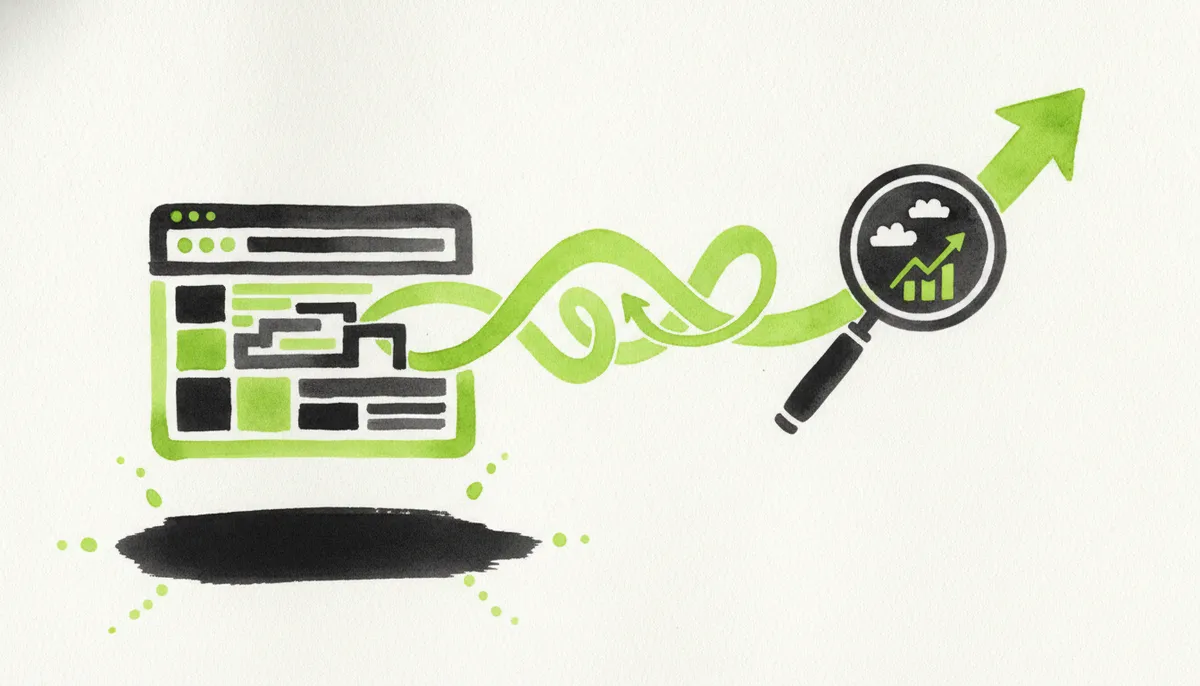
For B2B SaaS founders, integrated web development and SEO services are not a luxury but a foundational necessity for sustainable growth. This approach ensures your platform is engineered for search engine visibility and user conversion from day one, preventing costly technical debt and accelerating your path to acquiring qualified leads.
- Why Siloed Services Are Killing Your SaaS Growth
- 5 Core Pillars of SEO-First Web Development for SaaS
- Choosing Your Service Model: Integrated Agency vs. The Alternatives
- How to Choose the Right Web Development and SEO Services Company in 2026
- Frequently Asked Questions
- What is the difference between web development and SEO services?
- How much do web development and SEO services cost in 2026?
- Why is technical SEO important for web development?
- Can I do SEO on my own after my website is built?
- How long does it take to see results from SEO services?
- What’s the role of progressive web application development services in this?
- Sources & Further Reading
- Related in this topic
Key Takeaways
- Integrated Approach is Crucial: Combining web development and SEO from the initial wireframe prevents costly technical debt and ensures your SaaS platform is built for both discovery and conversion.
- SEO Informs Development: Keyword research and user intent analysis should dictate site architecture, URL structure, and content hierarchy—not the other way around.
- Development Enables SEO: A technically sound website with fast load times (Core Web Vitals), mobile-first design, and clean code is the non-negotiable foundation for any successful SEO campaign.
- AI is a Game-Changer: AI tools accelerate both development (code generation, QA testing) and SEO (intent analysis, content optimization, predictive analytics), offering a significant competitive edge in 2026.
- Choosing a Partner: For SaaS founders, the ideal partner has proven experience in your niche, understands the full customer lifecycle (from awareness to retention), and uses an integrated, data-driven approach.
- Business Impact: The goal isn’t just traffic; it’s qualified leads, lower customer acquisition costs (CAC), and higher lifetime value (LTV). An integrated service directly targets these critical business metrics.
For a SaaS founder in 2026, the digital landscape is more competitive than ever. Your product might be revolutionary, but if potential customers can’t find it, it doesn’t exist. This is where the strategic fusion of web development and SEO services becomes your most powerful growth lever. The traditional model of building a website and then hiring an SEO team to “optimize” it is fundamentally broken. A modern, growth-oriented approach requires SEO principles to be woven into the very fabric of your website’s code and architecture from the first line. This guide will break down why this integrated strategy is essential for attracting high-intent users, reducing customer acquisition costs, and building a scalable foundation for long-term success.
Why Siloed Services Are Killing Your SaaS Growth
The old way of doing things—build first, optimize later—is a recipe for wasted time, budget overruns, and missed opportunities. In the fast-moving SaaS world, this fractured approach creates a significant drag on your growth engine just when you need to be accelerating.
The Problem with the Traditional ‘Build Then Optimize’ Model
The typical scenario is painfully common: a founder hires a web development agency to build a sleek, feature-rich website. The developers focus on functionality and aesthetics. Months later, with traffic stagnating, an SEO agency is brought in. Their first task? A comprehensive audit that uncovers a mountain of foundational problems.
This flawed model leads to predictable and costly consequences:
- Poor Site Architecture: The site structure is based on internal logic, not on how potential customers actually search for solutions. This makes it difficult for both users and search engines to navigate.
- Non-SEO-Friendly URLs: URLs are often cluttered with parameters or are unintelligible, missing the opportunity to include relevant keywords that signal content relevance to Google.
- Slow Page Speed: Developers, unguided by SEO best practices, may use bloated code, unoptimized images, and inefficient JavaScript, leading to slow load times that kill user experience and tank rankings.
- “SEO Technical Debt”: This is the accumulated cost of retrofitting SEO onto a poorly built foundation. It involves expensive and time-consuming re-architecting, URL restructuring, and code refactoring—work that could have been avoided by planning ahead.
The Synergy of Integrated Web Development and SEO
When SEO strategists and web developers collaborate from the project’s inception, the result is a powerful synergy that builds growth into your platform’s DNA. This unified strategy isn’t about compromise; it’s about building a better, more effective product from the ground up.
The benefits are immediate and substantial:
- Foundational SEO is Baked In, Not Bolted On: SEO considerations influence every decision. Developers build with crawlability in mind, creating logical URL structures, implementing clean code, and choosing JavaScript frameworks that search engines can easily render and understand.
- Faster Time-to-Market for a High-Performing Product: By eliminating the need for a post-launch SEO overhaul, you can start acquiring organic traffic and leads from day one. Your product launch isn’t followed by months of technical fixes; it’s followed by growth.
- Cost Efficiency: You avoid the redundant work and inflated costs associated with fixing foundational issues after the fact. The investment is made correctly the first time, leading to a lower total cost of ownership.
The importance of being visible from the start cannot be overstated. Research from Google has shown that 89% of B2B researchers use the internet during their research process, and a significant portion of that research begins with a generic search query. If your new SaaS website isn’t built to rank from launch, you’re invisible during the most critical phase of your customer’s buying journey.
5 Core Pillars of SEO-First Web Development for SaaS
To build a SaaS website that ranks and converts, your development team must prioritize five key technical pillars. These aren’t just “nice-to-haves”; in 2026, they are the table stakes for competing in organic search. This is a core component of our integrated web development and SEO services.
1. Performance & Core Web Vitals
Google’s Core Web Vitals are a set of specific metrics that measure the real-world user experience of a webpage. They are a direct ranking factor. For a founder, they translate to: how fast does my site feel to a user?
- Largest Contentful Paint (LCP): How quickly the main content of a page loads.
- Interaction to Next Paint (INP): How quickly the page responds to user interactions (like clicks or taps).
- Cumulative Layout Shift (CLS): How visually stable the page is as it loads (i.e., do elements jump around?).
A slow, clunky site frustrates users, leading to high bounce rates and lost conversions. Development practices that ensure excellent Core Web Vitals scores include aggressive image optimization, lazy loading for off-screen assets, minifying code, and leveraging a high-performance hosting environment with a Content Delivery Network (CDN).
2. Mobile-First & Responsive Design
Since Google implemented mobile-first indexing, the mobile version of your website is the primary one it uses for ranking and indexing. This means your site must not just “work” on mobile; it must provide a seamless, intuitive experience. For a SaaS business, this is critical. A potential lead might discover your blog post on their phone during their commute, then sign up for a demo on their desktop later. The experience must be consistent and flawless across all devices. This positive user engagement is a powerful signal to search engines that your site provides value.
3. Crawlable & Indexable Site Architecture
A beautifully designed website is useless if search engine bots can’t understand its structure and content.
Technical SEO is the practice of building and optimizing a website to meet the technical requirements of search engines, with the goal of improving organic rankings. It’s not a separate task but a core component of quality web development.
Key development considerations include:
- Clean HTML & Logical Structure: Using proper semantic HTML (e.g.,
) helps bots understand the hierarchy of your content. - Internal Linking Strategy: Creating a logical “silo” structure where related pages link to each other helps distribute authority and signals topical relevance. A well-structured SaaS development company will plan this with an SEO strategist.
- Crawl Directives: Properly configuring
robots.txtto guide bots and creating a comprehensive XML sitemap are essential for ensuring all your important pages are discovered. - JavaScript SEO: Many modern SaaS sites rely heavily on JavaScript. Developers must implement server-side rendering (SSR) or dynamic rendering to ensure that content is visible to search engine crawlers, not just to users’ browsers.
4. Structured Data (Schema Markup)
Structured data, often called schema markup, is a standardized vocabulary that you add to your site’s HTML. It doesn’t change how the page looks to a user, but it gives search engines explicit context about your content. This helps them understand your pages more deeply and can make you eligible for “rich snippets” in the search results.
For a SaaS company, this is a powerful tool:
SoftwareApplicationSchema: Use this on your product pages to display pricing, user ratings, and operating system compatibility directly in the search results.FAQPageSchema: Mark up your FAQ sections to have questions and answers appear as a dropdown in the search results, answering user questions instantly.ArticleSchema: Apply this to your blog posts to help Google understand authorship and publication dates, improving visibility in news and “Top Stories” carousels.
These rich snippets significantly increase click-through rates (CTR) by making your search listings more prominent and informative than your competitors’.
Choosing Your Service Model: Integrated Agency vs. The Alternatives
As a SaaS founder, you have three primary options for sourcing your web development and SEO. The model you choose will have a profound impact on your speed, cost, and ultimate success.
For most SaaS startups and scale-ups, the integrated agency model offers the optimal balance of expertise, agility, and cost-effectiveness. It provides access to a team of specialists without the prohibitive overhead of building a large in-house department.
How to Choose the Right Web Development and SEO Services Company in 2026
Vetting a potential partner is critical. The right agency becomes an extension of your team, while the wrong one can set you back by a year or more. In 2026, the criteria for a top-tier partner have evolved beyond a simple portfolio.
Check for Proven SaaS Experience
B2B SaaS is not e-commerce. It’s not a local service business. It has a unique sales funnel, complex customer personas, and specific metrics like Monthly Recurring Revenue (MRR), churn, and Lifetime Value (LTV). Your agency partner must understand this world.
- Ask for Case Studies: Request specific examples of other SaaS companies they have helped grow. Look for measurable results tied to business outcomes (e.g., demo requests, trial sign-ups), not just vanity metrics like traffic.
- Probe Their Strategy: How do they approach keyword research for a niche B2B audience? How do they build topical authority to appeal to sophisticated buyers? Their answers will reveal their depth of experience. A great partner will offer a comprehensive SEO strategy for startups tailored to your specific market.
Evaluate Their AI & Automation Stack
An agency not leveraging AI in 2026 is operating with one hand tied behind its back. AI is no longer a novelty; it’s a core driver of efficiency and insight in both development and marketing.
- Inquire About Their Tools: Ask specifically how they use AI. Top agencies use it for:
- SEO: Advanced keyword clustering, user intent analysis, automated technical SEO audits, and generating high-quality content briefs using protocols like MCP (Model Context Protocol).
- Development: AI-assisted code generation and completion, automated quality assurance (QA) testing, and predictive performance modeling.
- Look for Efficiency: An agency that has invested in an advanced AI-powered web development and marketing stack can deliver better results faster. This efficiency translates directly into a better ROI for you.
Demand a Unified Strategy and a Single Point of Contact
The primary benefit of an integrated service is seamless execution. You should not have to act as the mediator between your developers and your marketers.
- Understand Their Process: Ask how their project management works. How do the SEO and development teams collaborate on a daily or weekly basis? Who is the one person ultimately responsible for your project’s success?
- Confirm Accountability: A single point of contact ensures clear communication, eliminates confusion, and establishes a clear line of accountability. This structure is essential for moving quickly and cohesively toward your growth goals.
Frequently Asked Questions
What is the difference between web development and SEO services?
Web development is the technical process of building and maintaining a website’s code and infrastructure. SEO (Search Engine Optimization) is the strategic process of optimizing that site to rank higher in search engines like Google. For modern success, they are not separate functions but two interdependent parts of a single growth strategy.
How much do web development and SEO services cost in 2026?
Costs vary widely based on the project’s complexity, scope, and the agency’s expertise. A simple marketing site might cost a few thousand dollars, while a complex SaaS platform can run into six figures. It’s best to view this as an investment; an integrated service may have a higher upfront cost but saves significant money long-term by avoiding expensive rework and accelerating revenue generation.
Why is technical SEO important for web development?
Technical SEO is the part of SEO that ensures a website meets the technical requirements of search engines. It’s a core part of development because it directly involves foundational elements like site speed, mobile-friendliness, crawlability, and security. These elements are built into the site’s code and architecture, not added on later.
Can I do SEO on my own after my website is built?
While a founder can learn to handle basic on-page SEO tasks like writing title tags, effective and competitive SEO requires deep expertise, especially on the technical side. A website that was not built with a solid SEO foundation will have a very low performance ceiling, making any subsequent SEO efforts far less effective.
How long does it take to see results from SEO services?
You can see results from foundational technical SEO improvements (like improved site speed) almost immediately after implementation. However, ranking for competitive, high-value keywords is a long-term strategy that typically takes 6 to 12 months to show significant traction. An integrated approach accelerates this timeline by ensuring the foundation is perfect from day one.
What’s the role of progressive web application development services in this?
A Progressive Web App (PWA) is a specific type of web development that creates a user experience similar to a native mobile app. From an SEO perspective, PWAs require specialized handling (particularly around JavaScript rendering) to ensure all content is crawlable and indexable by search engines, making an experienced, integrated dev/SEO team even more critical for success.
Sources & Further Reading
- Core Web Vitals | Google Search Central — The official documentation from Google explaining these critical user experience metrics.
- The Beginner’s Guide to SEO – Moz — A comprehensive resource covering the fundamentals of search engine optimization.
- How to Create an SEO-Friendly Website Architecture – Ahrefs — An in-depth guide on planning a site structure that both users and search engines will love.
- Mobile-first indexing best practices | Google Search Central — Google’s official best practices for ensuring your site is optimized for the mobile-first index.
- Schema Markup for SEO: A 2026 Guide – Semrush — A detailed look at how to use structured data to enhance your search engine listings.
Have a similar challenge? Contact us or explore our services.
Related in this topic
- Frontend Web Development Services: The Ultimate Guide for SaaS Founders (2026)
- The Core Web Development Companies Services Your SaaS Needs to Scale in 2026
- 10 Best Web Development Services Companies for SaaS Founders (2026)
- 10 Essential Services of a Web Development Company for SaaS Founders in 2026
- Web Development Services: The Ultimate Guide for SaaS Founders (2026)
- Web Apps Development Services: The Ultimate Guide for SaaS Founders (2026)