
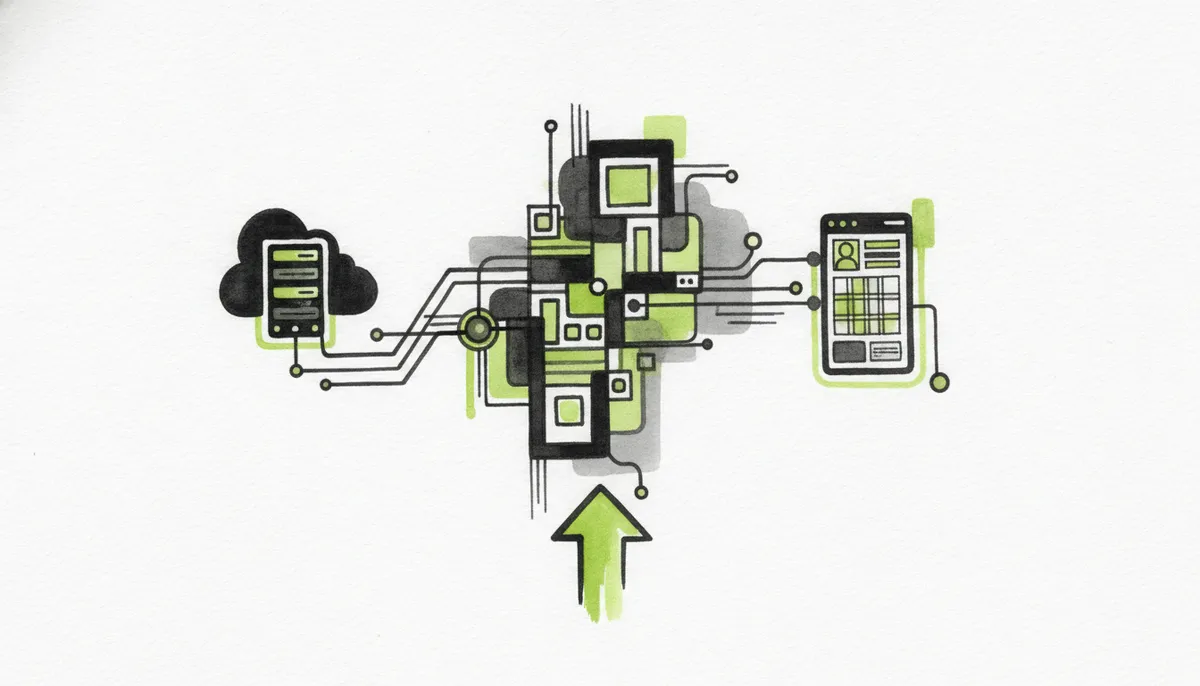
For B2B SaaS founders, exceptional web design development services are not a cost center but a core revenue driver. A modern SaaS website must be an intelligent, high-performance growth engine that integrates seamlessly with your product, leveraging AI for personalization and conversion to attract, activate, and retain customers in a competitive 2026 landscape.
- Introduction: Why Your SaaS Website is More Than Just a Brochure
- The Core Components of Modern Web Design & Development Services
- The AI Advantage: Transforming Your Website into an Intelligent Asset
- How to Choose the Right Web Design Development Partner for Your SaaS
- Measuring Success: KPIs That Truly Matter for a SaaS Website
- Frequently Asked Questions
- What is the difference between web design and web development?
- How much do professional web design development services cost in 2026?
- How long does it take to build a new SaaS website?
- What tech stack do you recommend for a SaaS marketing website?
- Why is a mobile-first approach critical for a B2B SaaS website?
- Can you integrate our new website with our existing CRM and marketing tools?
- Sources & Further Reading
Key Takeaways
- AI is Non-Negotiable: Modern web services must include AI for personalization, intelligent support, and predictive analytics to stay competitive.
- Performance = Revenue: Every millisecond of load time directly impacts user sign-ups and monthly recurring revenue (MRR). Core Web Vitals are a baseline requirement.
- Full-Stack is Essential: Success requires a partner who understands high-level strategy, user experience (UX/UI), scalable backend development, and post-launch growth marketing.
- Scalability is Paramount: Your website’s architecture must be built to handle user growth from 100 to 100,000 without a complete rebuild, using technologies like headless CMS and serverless functions.
- Security is Foundational: For any SaaS business, trust begins with a secure and compliant web presence that protects user data and maintains brand integrity.
- Integration is Key: Your website isn’t an island. It must connect flawlessly via APIs to your core SaaS product, CRM (like HubSpot), and marketing automation platforms.
Introduction: Why Your SaaS Website is More Than Just a Brochure
In the fast-evolving B2B SaaS landscape, your website is the epicenter of your growth strategy. It’s no longer a static digital brochure but the primary engine for user acquisition, activation, and retention. For founders aiming to scale in 2026, understanding the nuances of modern web design development services is critical to building a sustainable competitive advantage.
The Shift from Static Sites to Dynamic Growth Engines in 2026
The old model of web development—a template-based, set-and-forget project—is obsolete. Today’s high-performing SaaS websites are dynamic, data-driven platforms. Superior web design and development in 2026 are defined by three pillars: seamless AI integration, data-driven personalization that speaks directly to your Ideal Customer Profile (ICP), and flawless technical performance that converts visitors into users. This new paradigm requires an iterative, AI-enhanced, and deeply integrated approach that transforms your website from a simple storefront into an intelligent asset that actively drives business growth.
The Core Components of Modern Web Design & Development Services
A successful SaaS website isn’t built on guesswork. It’s the result of a structured, multi-phase process that aligns technical execution with strategic business goals. A professional partner will guide you through each stage, ensuring the final product is not just beautiful but effective.
Phase 1: Discovery & AI-Powered Strategy
This foundational phase goes far beyond simply asking what pages you want. It involves a deep dive into your business to create a strategic blueprint for the entire project.
The process includes competitive analysis, mapping your ICP, defining detailed user journeys for different segments (e.g., a startup founder vs. an enterprise buyer), and establishing key performance indicators (KPIs) like trial sign-ups, demo requests, and feature adoption rates. In 2026, AI tools are leveraged here to analyze competitor SEO strategies for startups, identify content gaps, and even predict user behavior patterns on proposed site structures. A well-defined strategy is the single greatest predictor of project success.
Phase 2: UX/UI Design for Conversion & Usability
This phase translates the strategy into a tangible user experience. It’s crucial to differentiate between its two core components:
- User Experience (UX) Design: This is the invisible architecture of the user’s journey. It focuses on logic, information hierarchy, and flow. For SaaS, the primary goal of UX is to reduce friction in the path to conversion, making it effortless for a visitor to understand your value proposition and sign up for a trial or demo.
- User Interface (UI) Design: This is the visual layer—the branding, typography, colors, and interactive elements that create the look and feel. A great UI is clean, intuitive, and reinforces your brand’s credibility.
This process involves creating wireframes and interactive prototypes using tools like Figma, followed by user testing with platforms like Maze to validate design decisions with real users before a single line of code is written. A key aspect is designing for accessibility (WCAG 2.2 compliance), which not only broadens your market reach but also signals that your brand is modern and inclusive.
Phase 3: Agile Development & Scalable Architecture
This is where the design comes to life. Development is split between the front-end (what users see and interact with) and the back-end (the server, database, and application logic).
Choosing the right technology stack is paramount for a SaaS marketing site. A modern, high-performance stack often includes:
- Front-End: A JavaScript framework like Next.js (built on React) for its speed, server-side rendering (SSR) capabilities for superior SEO, and component-based architecture.
- Back-End: A headless Content Management System (CMS) like Strapi, Sanity, or Contentful. This decouples the content repository from the front-end presentation layer, giving marketing teams the freedom to manage content easily while developers can build fast, secure experiences.
Crucially, this phase should follow an API-first design. This means the website is built to communicate seamlessly with other systems, including your core SaaS product, a CRM like HubSpot, and various marketing automation platforms.
The AI Advantage: Transforming Your Website into an Intelligent Asset
In 2026, AI is no longer a futuristic buzzword; it’s a foundational component of effective web design development services. Integrating AI transforms your website from a passive information repository into an active, intelligent participant in your sales and marketing funnel.
AI-Powered Personalization and Content Delivery
Forget basic personalization like adding a user’s first name. Modern AI-powered personalization dynamically alters the website experience based on visitor data. This can include changing headlines, calls-to-action (CTAs), and featured case studies based on firmographics (like industry or company size, often identified via IP address lookup) or on-site behavior.
For example, a visitor from a Fortune 500 company’s IP address could be shown enterprise-level features and a “Book a Demo” CTA, while a visitor from a known startup incubator might see pricing pages and a “Start Free Trial” CTA. This level of granular personalization, fueled by Customer Data Platforms (CDPs), dramatically increases conversion rates by showing the right message to the right person at the right time.
Intelligent Automation: From Chatbots to Lead Qualification
Chatbots have evolved into sophisticated AI agents. Powered by Large Language Models (LLMs), these agents can do much more than answer simple FAQs. An intelligent agent on your SaaS website can:
- Answer complex, nuanced questions about your product’s features.
- Qualify leads in real-time by asking strategic questions.
- Book demos directly into a sales representative’s calendar, checking for availability via API.
- Handle initial support queries, freeing up your human team for high-value interactions.
Technically, this involves integrating LLMs via APIs and using open standards like the Model Context Protocol (MCP) to ensure the AI has the right context to provide accurate, helpful answers. These AI agents can save businesses 100+ hours per month in manual work.
Predictive Analytics and SEO Automation
AI can analyze thousands of user session recordings at scale, identifying friction points in the user journey that human analysis would likely miss. It can pinpoint where users are getting stuck or dropping off, providing actionable data for A/B testing and conversion rate optimization.
In the realm of SEO, AI tools are revolutionizing content strategy. They can perform sophisticated content gap analyses, automate the creation of an internal linking structure to boost topical authority, and even predict the potential traffic and conversion performance of different blog topics before you invest resources in writing them. According to a report from MarketsandMarkets, the AI in marketing market size is projected to grow significantly, underscoring the rapid adoption of these technologies.
Ready to build with AI? We can help you build an intelligent growth engine from the ground up.
How to Choose the Right Web Design Development Partner for Your SaaS
Selecting the right partner is the most critical decision you’ll make in this process. The quality of your partner will directly determine the quality and performance of your website.
Key Evaluation Criteria for a Tech Partner
When vetting potential agencies or consultants, go beyond their portfolio’s visual appeal. Ask targeted questions to assess their suitability for a SaaS project:
- Portfolio Relevance: Have they worked with B2B SaaS companies before? Can they show you case studies with measurable business results, such as a 40% increase in demo requests or a 25% lift in trial-to-paid conversions?
- Technical Proficiency: Can they clearly articulate their approach to performance, security, and scalability? Ask about their preferred tech stack and why it’s a good fit for SaaS. Do they have demonstrable experience with AI integration and API development?
- Process & Communication: Do they follow an agile methodology with iterative sprints? What are their communication protocols? Look for partners who offer a dedicated Slack channel, weekly progress demos, and transparent project management.
- Team Structure: Will you be working with a dedicated, in-house team (project manager, designer, developers)? Or is their work heavily outsourced? A cohesive, dedicated team ensures better communication and a more consistent final product. For more tips, see our guide on choosing a web agency.
Comparison: Agency vs. Freelancers vs. AI-Powered Partner
To help you decide, here’s a comparison of your typical options:
| Feature | Freelancer Marketplace | Traditional Web Agency | AI-Powered Tech Partner |
|---|---|---|---|
| Strategic Input | Low (Task-based) | Medium (Project-based) | High (Business goal-oriented) |
| Scope of Services | Narrow (e.g., UI only) | Broad (Design & Dev) | Full-Stack (Strategy, AI, Dev, Growth) |
| AI/Automation Expertise | Varies (Often limited) | Limited to basic tools | Core Competency (LLMs, Automation) |
| Scalability & Support | Low (Individual-dependent) | Medium (Retainer-based) | High (Ongoing optimization & scaling) |
| Integration Capability | Basic | Standard (CRM, etc.) | Deep (Product, CDP, custom APIs) |
| Cost Structure | Hourly / Per-project | Large Upfront Project Fee | Retainer / Value-based Project |
Red Flags to Watch Out For
Be cautious of partners who exhibit these warning signs during the sales process:
- Vague Promises: A reliance on buzzwords like “game-changing” or “innovative” without a clear, documented process to back them up.
- One-Size-Fits-All Solutions: Pushing a single WordPress template or tech stack for every client, regardless of their specific needs for scalability and security.
- No Post-Launch Plan: A good partner’s work doesn’t end at launch. They should be discussing ongoing performance monitoring, A/B testing, and optimization strategies.
- Poor Communication: If they are unresponsive, unclear, or disorganized during the initial conversations, it’s a strong indicator of how they’ll operate during the project itself.
Step 1: Deep Dive & Growth Blueprint
Our process begins with a proprietary discovery phase where we map your most important business goals—MRR growth, Lifetime Value (LTV), and churn reduction—to specific website features, user flows, and KPIs. We leverage our expertise in AI-powered digital marketing to build a robust SEO and content strategy directly into the website’s architecture from day one, ensuring you’re built for organic growth.
Step 2: Iterative Design & Development Sprints
We operate on an agile, sprint-based methodology. This means you get to see tangible progress every one to two weeks through live demos. This iterative loop allows for continuous feedback, ensuring the project stays perfectly aligned with your vision. For full transparency, we integrate our project management (Jira) and code repositories (GitHub) directly with your team’s tools.
Step 3: Launch, Optimize & Scale
For us, launch is just the beginning of the journey. Our engagement extends to comprehensive post-launch services, including real-time performance monitoring, A/B testing of critical CTAs and headlines, and continuous tuning of the AI models powering your chatbots and personalization engines. This website becomes the solid foundation for our broader AI-powered digital marketing services, creating a cohesive system for sustainable growth.
Measuring Success: KPIs That Truly Matter for a SaaS Website
A beautiful website is meaningless if it doesn’t move the needle on key business metrics. It’s essential to track the right KPIs to measure the true ROI of your web development investment.
Acquisition & Performance Metrics
These metrics tell you how well your site attracts visitors and how good their experience is.
- Core Web Vitals (LCP, INP, CLS): These are Google’s standardized metrics for measuring user experience, focusing on loading speed (Largest Contentful Paint), interactivity (Interaction to Next Paint), and visual stability (Cumulative Layout Shift). Excellent scores are critical for both SEO rankings and user satisfaction.
- Lead Velocity Rate (LVR): This measures the month-over-month growth rate of your qualified leads. It’s a key predictor of future revenue.
- Keyword Rankings: Tracking your site’s visibility on search engines for core, non-branded keywords that your ICP uses to find solutions like yours.
This highlights the direct link between technical performance and revenue.
Conversion & Revenue Metrics
These metrics measure how effectively your website turns visitors into customers.
- Visitor-to-Trial Rate: For product-led growth (PLG) companies, this is the primary conversion metric. It measures the percentage of unique visitors who sign up for a free trial.
- Trial-to-Paid Conversion Rate: This tracks how many of those trial users eventually become paying customers, reflecting the effectiveness of both your website and your product’s onboarding experience.
- Demo Request Form Submission Rate: For sales-led SaaS businesses, this is a critical top-of-funnel metric.
These KPIs should be meticulously tracked using analytics platforms like Google Analytics 4, combined with product analytics tools like Mixpanel or Amplitude for a full-funnel view.
Struggling with measurement? If you’re unsure how to set up the right analytics stack or define your KPIs, we can help.
Frequently Asked Questions
What is the difference between web design and web development?
Web design focuses on the user-facing aspects of a website: the visual aesthetics (UI) and the overall user journey and usability (UX). Web development is the technical process of writing the code and building the architecture that brings that design to life, including both front-end (client-side) and back-end (server-side) engineering. Modern, effective services must integrate both disciplines seamlessly.
How much do professional web design development services cost in 2026?
Costs vary widely based on complexity and scope. A straightforward marketing website with a headless CMS might range from $25,000 to $75,000. A more complex web application with deep product integrations, AI-powered personalization, and custom APIs could cost $100,000 or more. It’s best to view this as an investment in a core business asset, with the ROI measured in lead generation and revenue growth.
How long does it take to build a new SaaS website?
A typical timeline for a comprehensive SaaS marketing website, from initial discovery to launch, is between 12 and 20 weeks. The exact duration depends on the project’s complexity, the number of integrations, and the client’s feedback velocity. An agile development process allows for the delivery of a Minimum Viable Product (MVP) faster than a traditional waterfall model.
What tech stack do you recommend for a SaaS marketing website?
For most SaaS companies in 2026, we recommend a modern, performant stack like Next.js (a React framework) for the front-end and a headless CMS (like Strapi, Sanity, or Contentful) for the back-end. This combination, often called the Jamstack, offers superior speed, enhanced security, excellent SEO capabilities, and greater flexibility for marketing teams to manage content without developer intervention.
Why is a mobile-first approach critical for a B2B SaaS website?
The myth that B2B decision-making happens only on desktops is long outdated. Founders, executives, and researchers use their mobile devices constantly to discover, vet, and share solutions. A poor mobile experience creates immediate friction and signals that your brand is not modern or user-centric, leading to a significant loss of trust and potential leads.
Can you integrate our new website with our existing CRM and marketing tools?
Yes, absolutely. This is a core requirement for any professional web development service. We specialize in creating seamless, API-driven integrations with common SaaS tools like HubSpot, Salesforce, Marketo, and Segment, as well as with your core SaaS product itself to enable features like in-app messaging and unified user analytics.
Sources & Further Reading
- Google Web Vitals — Official documentation from Google on the core metrics for a healthy site.
- W3C WCAG 2.2 Guidelines — The official standards for web content accessibility.
- Smashing Magazine — A leading online publication for professional web designers and developers.
- Awwwards — A showcase of the world’s best web design and development work for inspiration.
- MarketsandMarkets: AI in Marketing Market — Market research and forecasts on the growth of AI in the marketing industry.
Have a similar challenge? Explore our services.
Related in this topic
- Web Development Design Services: The SaaS Founder’s Guide (2026)
- 7 Essential Responsive Web Development Services for SaaS Growth in 2026
- Top 8 Services in Web Development for SaaS Founders in 2026
- Top Magento Web Development Services for 2026: A Strategic Guide for B2B SaaS Founders
- Web Portal Development Services: The Ultimate Guide for SaaS Founders (2026)
- Front-End Web Development Services: The 2026 Guide for AI-Powered SaaS