
- Key Takeaways: Scaling B2B SaaS with Intelligent Automation
- What is Intelligent Automation? (RPA vs. Cognitive AI in 2026)
- High-Impact Intelligent Automation Use Cases for Marketing & Sales
- Core Automation Projects for Product & Engineering Teams
- Overcoming Key Intelligent Automation Challenges
- How Techno Believe Can Help
- Frequently Asked Questions
- What are the most common intelligent automation use cases in B2B SaaS?
- What are the primary intelligent automation challenges for early-stage startups?
- How do cloud automation services fit into an enterprise automation strategy?
- Are there recommended artificial intelligence and automation courses for non-technical founders?
- What is the Model Context Protocol (MCP) and why does it matter for automation projects?
- Sources
TL;DR
Intelligent automation use cases in 2026 involve moving beyond simple scripts to agentic workflows that leverage LLMs and the Model Context Protocol (MCP). By deploying these systems, B2B SaaS founders can drastically reduce customer acquisition costs (CAC) and scale complex operational workflows in engineering, marketing, and cloud infrastructure.
Key Takeaways: Scaling B2B SaaS with Intelligent Automation
- The 2026 Intelligent Automation Landscape: Modern systems now integrate AI, machine learning, and RPA to handle complex, decision-based tasks that go far beyond rule-based triggers.
- Agentic Workflows: To stay competitive, SaaS companies must transition from static automation to autonomous agents that can self-correct and reason.
- Economic Impact: Implementing these technologies directly improves net revenue retention (NRR) and lowers CAC by optimizing lead routing and onboarding.
- Strategic Prioritization: Focus automation efforts on your highest growth bottlenecks, such as outbound lead generation or technical onboarding.
- Foundation First: Ensure data security and compliance are baked into your automation architecture from day one.
- Expert Integration: Leverage specialized partners like Techno Believe to build custom AI platforms that integrate seamlessly with your existing stack.
What is Intelligent Automation? (RPA vs. Cognitive AI in 2026)
The Evolution from Robotic Process Automation to Cognitive AI
Intelligent automation (IA) is the integration of artificial intelligence, machine learning, and robotic process automation (RPA) to handle complex, decision-based workflows. While traditional RPA is limited to rigid, repetitive user-interface tasks like data entry between legacy systems, IA brings cognitive capabilities to the table. By incorporating Large Language Models (LLMs), these systems can process unstructured data, make nuanced decisions, and self-correct. According to McKinsey, up to 50% of current work activities can be automated using existing, commercially viable technologies, providing a massive efficiency lever for lean SaaS teams.
The Role of Model Context Protocol (MCP) in Modern AI Workflows
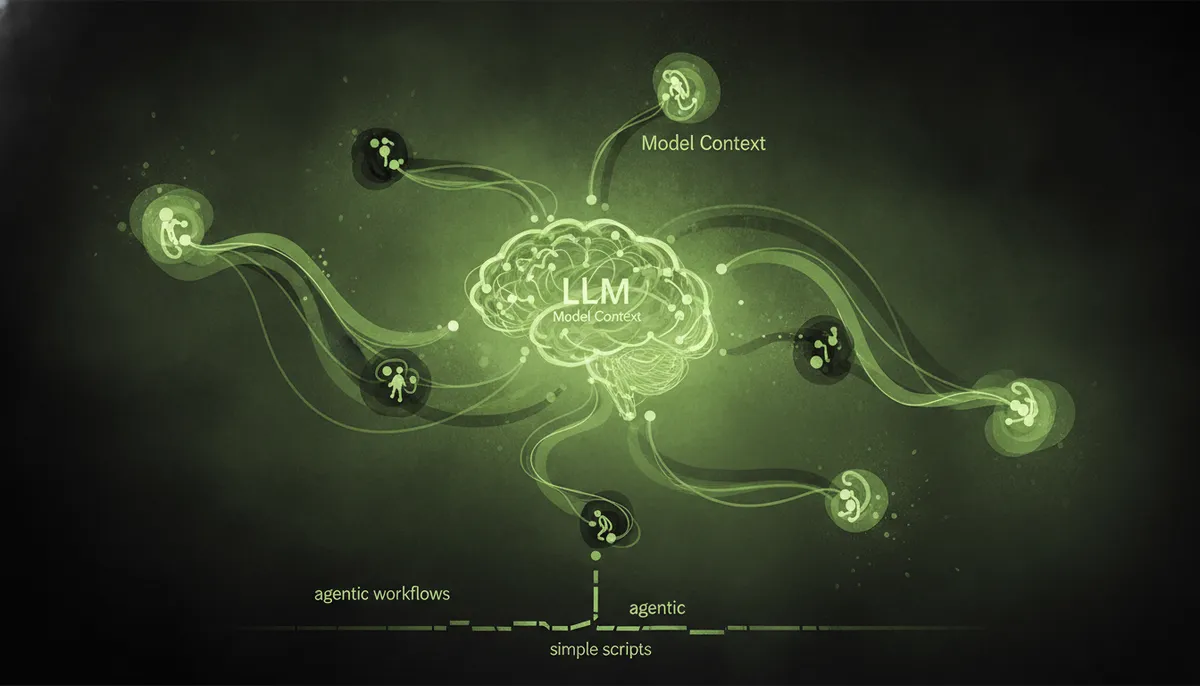
The Model Context Protocol (MCP) is an open standard, originally championed by Anthropic, that enables secure, standardized data sharing between AI agents and local or remote data sources. It eliminates the need for developers to write custom API wrappers for every new data source, which significantly speeds up the deployment of automation projects. For SaaS companies, MCP allows for the creation of highly contextual customer support and product analytics agents that can read database schemas and documentation safely without exposing sensitive environments.
Leveraging Cloud Automation Services
Modern cloud automation services from providers like AWS, Google Cloud, and Azure provide the serverless orchestration necessary for complex AI pipelines. These platforms ensure high availability, auto-scaling, and seamless integration with vector databases, which are essential for RAG-based AI applications. By utilizing cloud-native automation, SaaS founders can effectively manage the variable compute costs associated with running heavy LLM workloads while maintaining production-grade reliability.
High-Impact Intelligent Automation Use Cases for Marketing & Sales
1. Hyper-Personalized Outbound Email and LinkedIn Outreach
Modern outbound requires more than bulk messaging; it requires deep context. AI agents can analyze a prospect’s recent LinkedIn activity and company news to craft highly contextual icebreakers, while automated follow-up sequences dynamically adjust messaging based on industry-specific pain points.
Struggling with outbound scale? If you are tired of manual prospecting and low reply rates, we can build custom agentic workflows to handle your lead research and outreach — explore our services.
2. Programmatic SEO and Content Marketing Pipelines
Scaling organic traffic in 2026 requires a mix of human-led strategy and automated execution. Programmatic SEO involves using automated workflows to audit existing content, identify optimization opportunities, and update internal linking structures programmatically. HubSpot data indicates that 85% of marketers using AI say it has fundamentally changed how they create content, enabling rapid production without sacrificing quality. For a deeper dive into this, check out our guide on 15 Top Digital Marketing Tips for 2026.
3. Intelligent Lead Scoring and Predictive Pipeline Routing
Static lead scoring is no longer sufficient for high-growth SaaS. By replacing manual rules with predictive machine learning models, companies can analyze historical conversion data to identify high-intent leads instantly. These leads are then routed to sales representatives, while lower-scoring leads are moved into automated nurturing sequences. Conversational AI agents can even qualify inbound website traffic in real-time, booking meetings directly onto sales calendars without human intervention.
Core Automation Projects for Product & Engineering Teams
4. Automated Code Review and CI/CD Quality Gates
The speed of development is a primary competitive advantage for startups. Deploying AI-driven code review agents allows teams to check for security vulnerabilities, formatting errors, and architectural patterns before human review occurs. GitHub data demonstrates that developers using AI-powered automation tools like GitHub Copilot complete tasks up to 55% faster. To learn more about optimizing your dev cycle, read our insights on Copilot for Business: 2026 Proven Guide.
5. Dynamic Infrastructure Scaling and Cost Optimization
Cloud costs can spiral quickly if not managed with intelligent automation. Intelligent cloud automation services monitor resource utilization and dynamically scale server capacity up or down based on real-time traffic. By automating the detection of idle cloud resources and using predictive analytics to forecast traffic spikes, engineers can prevent downtime and ensure they only pay for the compute they actually use.
6. Self-Healing Systems and Automated Incident Response
Reliability is paramount in SaaS. By configuring monitoring tools to automatically detect system anomalies, trace root causes, and apply standard hotfixes, teams can drastically reduce Mean Time to Resolution (MTTR). Automated incident reporting ensures that engineering teams are only notified when their expertise is truly needed, while synthetic user monitoring scripts continuously test critical application paths like signup and checkout.
| Feature | Legacy RPA | Intelligent Automation |
|---|---|---|
| Data Handling | Structured only | Structured & Unstructured |
| Decision Making | Rules-based (If/Then) | Cognitive (Reasoning/LLM) |
| Adaptability | Rigid, breaks on UI change | Self-correcting/Adaptive |
Overcoming Key Intelligent Automation Challenges
Navigating Data Silos and Integration Complexity
A primary intelligent automation challenge is connecting legacy databases with modern AI models without compromising security. The best approach is to adopt standard protocols like MCP and build centralized data lakes. Partnering with a consultancy like Techno Believe ensures your data pipelines are clean, secure, and ready to feed your AI engines.
Addressing the Skills Gap and Internal Resistance
Employees often fear job displacement when automation projects are introduced. The most effective way to manage this is to position automation as an augmentation tool that frees team members from mundane tasks to focus on strategic work. Encouraging team members to upskill through specialized artificial intelligence and automation courses fosters a culture of innovation rather than fear.
Need to upskill your team? If you want to integrate AI into your product roadmap without disrupting your current operations, book an audit and we will map out a strategy.
Managing LLM Hallucinations and Output Accuracy
Generative AI models can occasionally produce incorrect information, which is a risk for customer-facing workflows. Implementing Retrieval-Augmented Generation (RAG) and strict validation layers helps ground AI responses in verified company data. Always keep a “human-in-the-loop” for high-stakes tasks, such as contract generation or financial reporting, to ensure accuracy and compliance.
How Techno Believe Can Help
If you are trying to scale your B2B SaaS operations through intelligent automation, you likely face the challenge of fragmented data and limited engineering bandwidth. At Techno Believe, we specialize in bridging the gap between high-level AI strategy and technical implementation. We don’t just advise; we build the agentic workflows, custom AI platforms, and automated marketing pipelines that turn your growth bottlenecks into competitive advantages.
Whether you need to automate your outbound sales, implement programmatic SEO, or build a self-healing infrastructure, we tailor our approach to your specific stack and business goals. By utilizing modern standards like MCP and cloud-native orchestration, we ensure your automation projects are secure, cost-effective, and highly performant.
If you are ready to move from manual processes to an automated, AI-powered growth engine, book an audit and we will map out a customized plan for your B2B SaaS.
Frequently Asked Questions
What are the most common intelligent automation use cases in B2B SaaS?
The most common use cases include automated outbound marketing, programmatic SEO content generation, intelligent lead scoring, automated code reviews, dynamic cloud infrastructure scaling, and self-healing customer support ticketing systems.
What are the primary intelligent automation challenges for early-stage startups?
Key challenges include dealing with siloed or messy data, managing the high compute costs of LLMs, overcoming internal resistance or skills gaps, and preventing AI hallucinations in customer-facing applications.
How do cloud automation services fit into an enterprise automation strategy?
Cloud automation services provide the underlying serverless infrastructure, orchestration tools, and managed AI services needed to scale automation pipelines securely without heavy manual DevOps overhead.
Are there recommended artificial intelligence and automation courses for non-technical founders?
Yes, founders should look for courses focusing on AI product management, prompt engineering for business, and applied machine learning strategies from platforms like Coursera, deeplearning.ai, or specialized executive programs.
What is the Model Context Protocol (MCP) and why does it matter for automation projects?
MCP is an open standard developed by Anthropic that allows AI agents to securely connect to data sources and tools without custom API integrations, drastically simplifying the architecture of complex automation projects.
Sources
- McKinsey & Company: The economic potential of generative AI — Detailed research on productivity gains from AI.
- GitHub: The economic impact of developer tools and AI Copilot — Data on how AI-powered automation accelerates coding tasks.
- Anthropic: Model Context Protocol (MCP) Introduction — Technical documentation on the open standard for AI agent integration.
Have a similar challenge? Explore our services.