
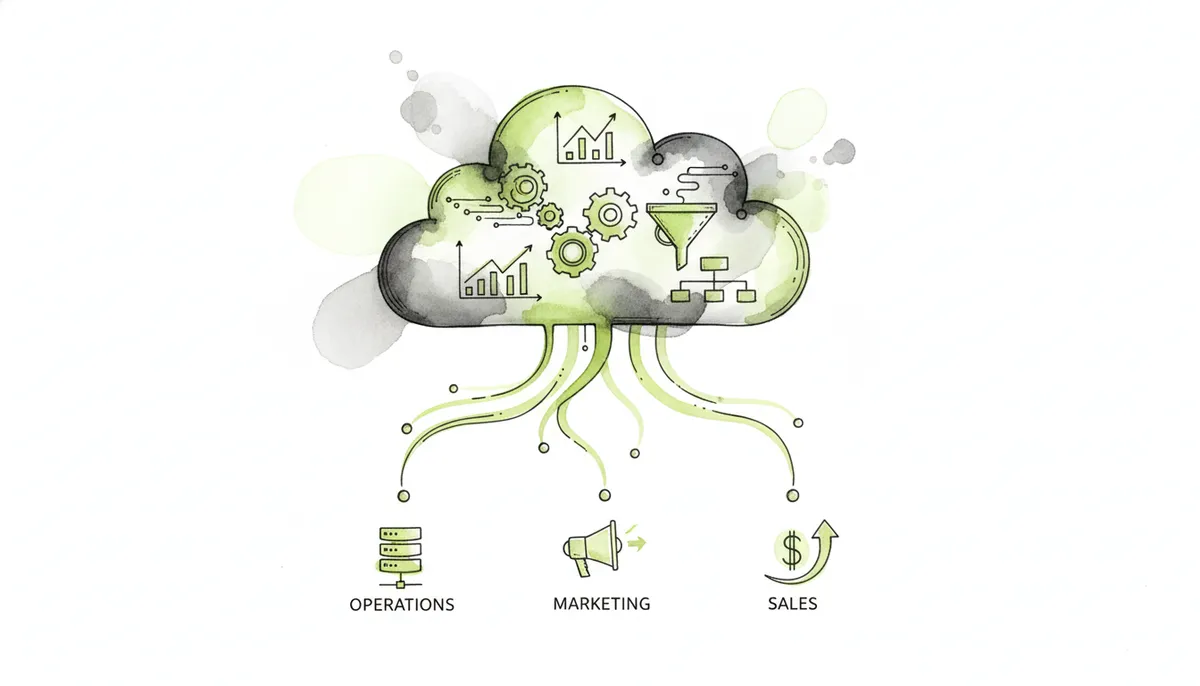
Custom cloud automation services are bespoke engineering solutions that connect disparate software stacks, automate multi-tiered business logic, and orchestrate serverless cloud infrastructure for modern software companies. In 2026, these tailored workflows eliminate manual data synchronization, reduce operational churn, and maintain real-time system performance across complex enterprise software architectures without continuous developer intervention.
- Key Takeaways
- Introduction: Why Manual Operational Drag Kills SaaS Momentum in 2026
- What Are Custom Cloud Automation Services? (The 2026 Paradigm)
- 7 High-Impact Ways Custom Cloud Automation Services Drive SaaS Growth
- 1. Supercharging AI-Driven Marketing & Behavioral Outreach
- 2. Automating SEO Intelligence & Technical Site Operations
- 3. Streamlining User Onboarding & Reducing Early-Stage Churn
- 4. Infrastructure as Code (IaC) & Continuous Delivery Optimization
- 5. Unifying Disparate Data Silos into Real-Time Business Intelligence
- 6. Automating Complex Revenue Operations & Usage-Based Invoicing
- 7. Continuous Security Posture & Compliance Automation
- Implementation Strategies: Agency Partner vs. No-Code Tools vs. In-House DIY
- Technical Architecture of Modern Cloud Automation Systems
- Step-by-Step Implementation Blueprint: Deploying Custom Cloud Automation
- How to Calculate the ROI of Custom Cloud Automation
- How to Choose the Right Custom Cloud Automation Partner
- How Techno Believe Can Help
- FAQ
- What are custom cloud automation services?
- How do custom cloud automation services differ from no-code integration tools?
- Can custom cloud automation help maintain SOC 2 and ISO 27001 compliance?
- How does custom cloud automation integrate with our existing SaaS application?
- When is a SaaS company ready to transition from no-code tools to custom automation?
- How do custom cloud automation pipelines handle external API downtime?
- Frequently Asked Questions
- Sources
- Related in this topic
Key Takeaways
- Scale Beyond Generic Integrators: Off-the-shelf integration platforms hit architectural limits at enterprise transaction volumes; custom cloud automation handles complex logic, high throughput, and strict security requirements without silent drop-offs.
- Unify Modern SaaS Tech Stacks: Bespoke workflows dissolve data silos between product usage telemetry, customer relationship management (CRM) tools, financial systems, and support platforms to establish an automated operational backbone.
- Drive Autonomous Revenue Operations: Automated event triggers convert in-app product usage telemetry into targeted sales outreach, retention triggers, and automated billing reconciliations in real time.
- Optimize Cloud Spending and Infrastructure: Custom provisioning pipelines and event-driven architectures dynamically allocate serverless resources to reduce cloud infrastructure waste by 30% to 45% in 2026.
- Continuous Compliance and Security Governance: Automated compliance logging and infrastructure policy enforcement maintain enterprise compliance frameworks such as SOC 2 Type II, ISO/IEC 27001, and HIPAA without manual audit prep.
- High Capital Efficiency and ROI: Strategic cloud automation architectures routinely deliver 4x to 8x returns on investment within the first twelve months through direct headcount cost avoidance, recovered revenue, and churn mitigation.
Introduction: Why Manual Operational Drag Kills SaaS Momentum in 2026
For B2B SaaS founders and engineering executives in 2026, the primary objective is compounding expansion while protecting operating margins. Software teams invest aggressively in product development, organic search visibility, and customer acquisition. However, as an application’s user base expands from dozens of initial pilot clients to thousands of paying accounts, an insidious operational friction begins to erode gross margins: workflow fragmentation.
Tasks that required ten minutes when managing twenty accounts quickly balloon into full-time administrative bottlenecks when supporting enterprise scale. Engineering teams often react by slapping together brittle cron jobs, manual webhook listeners, and third-party no-code automations. Over time, these temporary fixes break, silently fail during usage spikes, and leave business units operating on inconsistent data.
The 2026 SaaS Scaling Paradox
The SaaS scaling paradox defines a predictable operational inflection point: commercial traction increases structural operational complexity to the point where it threatens future expansion. When customer acquisition accelerates, raw data volume surges across customer support desks, subscription billing gateways, CRM records, and product telemetry databases.
+-------------------------------------------------------------------------+
|                       THE SAAS SCALING PARADOX                          |
|                                                                         |
|   User Base Expands --> Data Volume Surges --> Manual "Glue" Labor      |
|          ^                                             |                |
|          |                                             v                |
|   Growth Caps & Margins Fall <-- Engineering Stalls & Systems Break     |
+-------------------------------------------------------------------------+
                                     |
                   [Custom Cloud Automation Services]
                                     |
                                     v
+-------------------------------------------------------------------------+
|                    SCALABLE EVENT-DRIVEN FLYWHEEL                       |
|                                                                         |
|   Automated Telemetry --> Event Bus Workflows --> Unified Platform Data |
|          ^                                             |                |
|          |                                             v                |
|   Expanding Net Margins <-- Deterministic Logic <-- Zero Human Latency  |
+-------------------------------------------------------------------------+
Without an automated operational backbone, cross-functional teams resort to manual data synchronization, ad-hoc spreadsheet reconciliations, and reactive troubleshooting. A customer success manager spends six hours every week verifying whether product usage dropped before a renewal conversation; a sales engineer manually provisions private staging databases for enterprise trials; finance teams spend days matching usage metrics against Stripe billing invoices.
This operational drag drains operating margins, distracts senior software engineers from core product roadmaps, and introduces costly human errors into mission-critical customer workflows. In the 2026 software ecosystem, standard point-and-click no-code tools cannot reliably resolve these distributed operational bottlenecks. Custom cloud automation services deliver the architectural foundation required to decouple enterprise revenue growth from manual administrative headcount.
The Hidden “Glue Tax” on Engineering Resources
When non-technical operators face software silos, they submit tickets to backend engineering teams. Engineers are pulled away from shipping core features to write internal data extractors, fix broken CSV ingestion scripts, or manually update customer entitlements. Industry benchmarks indicate that growing SaaS organizations dedicate up to 25% of their core engineering capacity to maintaining internal tooling, operational scripts, and glue code.
This “glue tax” produces an opportunity cost that compounds over quarters. While your competitors ship differentiating features, improve backend database performance, and deploy agentic AI workflows, your internal engineering team acts as an expensive operational patch. Custom automation eliminates this technical debt by externalizing, systematizing, and orchestrating these background processes onto robust, self-healing cloud architectures.
What This Comprehensive Guide Covers
This guide breaks down how custom cloud automation functions as an essential growth lever for software companies in 2026. You will explore:
- The architectural boundaries separating off-the-shelf integration platforms from bespoke cloud automation services.
- Seven mission-critical business domains radically transformed by custom event-driven workflows.
- A comparative evaluation of specialized agency partnerships, commercial no-code platforms, and in-house engineering.
- Production blueprints for designing decoupled, event-driven architectures using modern cloud primitives.
- Practical quantitative formulas to forecast and calculate automation return on investment (ROI).
What Are Custom Cloud Automation Services? (The 2026 Paradigm)
To evaluate cloud engineering investments, technical leadership must distinguish between basic task automation and custom cloud engineering. While entry-level visual tools are sufficient for rapid prototyping, production-grade B2B software companies require hardened pipelines designed for their exact data schemas, performance demands, and compliance requirements.
Defining Cloud Automation vs. Custom Cloud Automation
Clarifying these terms prevents costly architectural misalignment:
Cloud Automation refers to using vendor-managed templates, managed scripts, and basic cloud configurations to automate isolated technical tasks within an infrastructure environment. Standard implementations include scheduling nocturnal snapshots, provisioning virtual machines via scripts, or scaling compute capacity using standard autoscaling policies on AWS Lambda or Google Cloud Functions.
Custom Cloud Automation Services represent the strategic software engineering of end-to-end, event-driven pipelines that link underlying cloud infrastructure, production databases, external SaaS application programming interfaces (APIs), and customer applications. Rather than running isolated IT maintenance tasks, custom cloud automation embeds complex, domain-specific business logic directly into resilient, scalable cloud architectures.
+-------------------------------------------------------------------------+
|               OFF-THE-SHELF NO-CODE VS. CUSTOM CLOUD AUTOMATION         |
+------------------------------------+------------------------------------+
| Off-The-Shelf Integration Tools    | Custom Cloud Automation Services   |
+------------------------------------+------------------------------------+
| Periodic polling (5-15 min delays) | Millisecond real-time event buses  |
| Hard limits on payload size (<10MB)| Petabyte-scale streaming pipelines |
| Explosive task-based pricing models| Predictable, serverless micro-costs|
| Opaque execution; silent drop-offs | Distributed tracing & strict DLQs  |
| Shared multi-tenant infra security | Isolated VPCs & Zero Trust IAM     |
| Rigid schemas; weak error recovery | Custom retry backoffs & idempotency|
+------------------------------------+------------------------------------+
Consider how off-the-shelf integration software (such as Zapier or Make) operates compared to enterprise-grade custom engineering:
- Off-the-shelf integration software: These platforms rely on periodic polling cycles, enforce strict limitations on API payload sizes, and execute logic inside shared multi-tenant runtime environments. When downstream vendor APIs return rate limits or require complex transformation arrays, generic platforms frequently drop transactions silently, fail to guarantee execution ordering, or incur prohibitive task-based licensing fees.
- Custom cloud automation architectures: Engineered using serverless compute primitives, high-throughput message brokers, and enterprise event buses—such as AWS EventBridge, Apache Kafka, or Google Cloud Pub/Sub. They support transaction idempotency, enterprise-grade field-level encryption, dynamic error handling policies, and asynchronous processing of millions of continuous transactions without data degradation.
Overcoming Architectural Bottlenecks: When off-the-shelf integration tools begin throttling your throughput or dropping customer webhooks during peak usage hours, Techno Believe designs dedicated serverless data pipelines engineered for enterprise scale — explore our bespoke services.
The Core Benefits for Lean SaaS Operations in 2026
For a scaling software venture in 2026, bespoke cloud automation produces four measurable operational advantages:
- Reclamation of Core Engineering Bandwidth: High-performing backend engineers should spend their time enhancing product stickiness, optimizing core database queries, and improving customer-facing features—not building maintenance scripts to push Stripe events into HubSpot. Custom automation offloads operational data pipelines to resilient background architectures.
- Deterministic Process Reliability: Manual data handoffs between operations, support, and sales create average error rates between 2% and 6% across operational workflows. Custom cloud automation operates deterministically, eliminating transcription errors, dropped customer provisioning tickets, and mismatched user permissions.
- Near-Zero Latency Execution: Modern customers expect in-app events to trigger instant downstream actions. Whether provisioning an enterprise single-tenant cluster or alerting an account director to an urgent renewal risk, modern event-driven architectures execute within milliseconds.
- Sustainable Infrastructure Unit Economics: By substituting expensive subscription-based middleware platforms with serverless cloud primitives, scaling software platforms maintain flat operational software expenses even while scaling transaction volumes by an order of magnitude.
7 High-Impact Ways Custom Cloud Automation Services Drive SaaS Growth
Custom automation is not merely an efficiency mechanism; it is a direct driver of customer expansion, retention, and enterprise platform security. Below are seven high-leverage domains where custom cloud automation delivers asymmetric competitive advantages for B2B SaaS organizations in 2026.
+-------------------------------------------------------------------------+
|           7 PILLARS OF HIGH-IMPACT SAAS CLOUD AUTOMATION                |
+-------------------------------------------------------------------------+
| [1] Behavioral AI Marketing      <---> [5] Real-Time Business Data Hubs |
| [2] Autonomous Search Ops        <---> [6] Dynamic Usage-Based Billing  |
| [3] Predictive Client Activation <---> [7] Continuous SOC 2 Compliance  |
| [4] IaC & Self-Healing CI/CD                                            |
+-------------------------------------------------------------------------+
1. Supercharging AI-Driven Marketing & Behavioral Outreach
The Problem: Traditional static drip campaigns produce low engagement from modern B2B buyers. Modern software buyers expect outreach to reflect their real-time feature usage, team collaboration metrics, and workspace configuration status. However, manually correlating real-time database events with external marketing automation platforms is structurally impossible at scale.
The Custom Automation Solution: Cloud architects engineer low-latency telemetry collectors using serverless message brokers that ingest user interactions directly from backend event buses. When a free trial account invites three colleagues, enables a native integration, or executes an export, a background microservice updates the customer data profile instantly.
This streaming data layer feeds autonomous agents powered by modern open frameworks like the Model Context Protocol. These automated agents combine real-time product behavioral metrics, historical CRM conversations, and firmographic data to generate contextual email sequences, suggest relevant workflows, and trigger account alerts. To master autonomous pipeline generation, review our guide to AI marketing consultancy.
[In-App Event Emitter: user.invited_team]
                    |
                    v
[Serverless Ingestion Worker (Schema Validation & Idempotency Check)]
                    |
                    v
[Context Enrichment Engine (Firmographic Data + Telemetry Aggregation)]
                    |
                    v
[Autonomous Agent via MCP (Generates Contextual Persona Email)]
                    |
                    v
[Transactional Messaging Gateway (Dispatched to User in Under 90s)]- Step 1: The application backend emits a structured telemetry payload (
team_member_added). - Step 2: A serverless worker verifies payload authenticity, deduplicates the message ID, and fetches company account tier data from the database.
- Step 3: The enrichment layer generates targeted onboarding tips based on the workspace’s specific configuration.
- Step 4: The transactional communication engine delivers the customized message to the workspace administrator within 90 seconds of the event.
2. Automating SEO Intelligence & Technical Site Operations
The Problem: High-performing organic discovery engines in 2026 require continuous technical health, programmatic content rendering, and rapid responses to search intent updates. Manually auditing indexation, schema validation, and rendering performance across thousands of programmatic pages drains marketing and technical teams.
The Custom Automation Solution: Bespoke cloud pipelines run scheduled and event-triggered workers that consume data directly from search engine search console APIs, headless browser scrapers, and analytics databases. These serverless workers analyze page speeds, catch broken redirect paths, and confirm JSON-LD schema validity across dynamic directories.
[Search Console & Analytics APIs]      [Headless Crawler Microservice]
               |                                      |
               +------------------+-------------------+
                                  |
                                  v
            [Centralized Anomaly Detection & Schema Engine]
                                  |
                +-----------------+-----------------+
                |                                   |
                v (Error Detected)                  v (Performance Normal)
    [Automated Cache Invalidation         [Weekly Analytics Table Update
     & Slack SRE Alert]                    in Snowflake]
When crawl errors or performance degradations occur, automated self-healing scripts clear edge content delivery network (CDN) caches, regenerate XML sitemaps, or alert growth engineers via Slack webhooks. By utilizing custom background workers, SaaS companies maintain peak technical performance across high-volume programmatic assets. Discover comprehensive implementation frameworks in our guide on automated performance optimization.
3. Streamlining User Onboarding & Reducing Early-Stage Churn
The Problem: The first 72 hours of a trial determine customer lifetime value. If a user encounters technical setup friction, fails to invite colleagues, or misses the core value milestone, they silently abandon the product.
The Custom Automation Solution: Custom cloud services construct dynamic onboarding engines that track individual user progress against mathematically proven activation milestones. Rather than sending generic time-delayed email drips, the system evaluates real-time state machines built on cloud infrastructure.
+-------------------------------------------------------------------------+
|              EVENT-DRIVEN ONBOARDING & ACTIVATION ENGINE                |
+-------------------------------------------------------------------------+
|                                                                         |
|   Trial Signup Completed --> Workspace Provisioned --> State Engine     |
|                                                             |           |
|         +---------------------------------------------------+           |
|         |                                                               |
|         v                                                               |
|   Did workspace connect production API key within 24 hours?             |
|         |                                                               |
|         +---------------------------+-------------------+               |
|         | NO                        | YES               |               |
|         v                           v                   v               |
|   Trigger interactive setup   Set Health: Active   Notify Sales AE:     |
|   troubleshooting via in-app  Schedule Module 2    High-intent trial    |
|   guide & alert CS team       walkthrough          ready for demo       |
+-------------------------------------------------------------------------+
When a high-value prospect gets blocked during setup, the automated system notices the stalled state machine, dispatches an automated setup assistant, and places a priority outreach ticket directly onto the customer success dashboard. By coupling product telemetry with targeted operational interventions, SaaS companies prevent churn before it materializes.
4. Infrastructure as Code (IaC) & Continuous Delivery Optimization
The Problem: Rapidly scaling SaaS products often suffer from configuration drift across staging, testing, and production environments. Manual infrastructure provisioning leads to unplanned downtime, brittle deployment workflows, and misconfigured firewall policies.
The Custom Automation Solution: Implementing Infrastructure as Code using declarative frameworks like Terraform automates the configuration, networking, and governance of all cloud assets. Combined with custom CI/CD pipelines, engineering teams deploy microservices rapidly and reliably.
[Git Repository Commit] --> [Automated Test Suite & Static Security Linting]
                                      |
                                      v
                         [Terraform Plan Validation]
                                      |
                                      v
                   [Ephemeral Staging Container Deployment]
                                      |
                                      v
                     [Canary Release (10% User Traffic)]
                                      |
                 +--------------------+--------------------+
                 |                                         |
                 v (Error Budget Exceeded)                 v (Metrics Healthy)
     [Automated Canary Rollback]            [100% Production Fleet Deployment]
Automated pipelines execute security linting, run end-to-end integration tests in ephemeral staging containers, and perform canary deployments with automatic rollbacks if error budgets are breached. For founders seeking to scale backend infrastructure sustainably, combining IaC with specialized AI web development services delivers a resilient foundation for mission-critical web applications.
5. Unifying Disparate Data Silos into Real-Time Business Intelligence
The Problem: High-growth SaaS organizations operate across dozens of specialized platforms—Mixpanel for product metrics, HubSpot for marketing, Salesforce for enterprise pipelines, Stripe for billing, and Zendesk for customer support. Siloed data makes reporting on Customer Acquisition Cost (CAC), Lifetime Value (LTV), and cohort retention slow and inaccurate.
The Custom Automation Solution: Custom ETL/ELT pipelines extract raw event logs, webhooks, and transactional data from all operational systems, normalize the payloads, and stream them into a central analytical data warehouse like Snowflake.
[Stripe Billing]   [HubSpot CRM]   [App Telemetry Bus]   [Zendesk Support]
       |                 |                  |                   |
       +-----------------+--------+---------+-------------------+
                                  |
                                  v
                 [Custom Serverless CDC Ingestion Layer]
                                  |
                                  v
                 [Data Staging & Normalization Engine]
                                  |
                                  v
                 [Analytical Data Warehouse (Snowflake)]
                                  |
                                  v
                 [Real-Time Executive Intelligence Dashboards]
                 (Real-Time Net Retention, CAC Payback, LTV)
Automated transformation models process raw database records into clean analytical tables every fifteen minutes. Executive teams gain instant access to accurate, unified business metrics without waiting for end-of-month manual reporting spreadsheets.
6. Automating Complex Revenue Operations & Usage-Based Invoicing
The Problem: Modern software monetization models frequently incorporate consumption metrics, user seats, API calls, and compute tiers. Calculating usage-based invoices manually or via inflexible generic billing tools results in delayed billing cycles, calculation discrepancies, and customer disputes.
The Custom Automation Solution: Cloud engineers build robust, idempotent metering pipelines that aggregate customer usage metrics directly from backend database logs or API gateways. These records are validated, matched to customer contract terms, and synced directly with payment engines such as Stripe.
+-------------------------------------------------------------------------+
|            IDEMPOTENT USAGE-BASED REVENUE PIPELINE                      |
+-------------------------------------------------------------------------+
|                                                                         |
|   [Raw API Gateway Metering Events]                                     |
|                  |                                                      |
|                  v                                                      |
|   [High-Speed Ingestion Buffer (Redis Streams / Amazon SQS)]            |
|                  |                                                      |
|                  v                                                      |
|   [Idempotent Aggregation Engine (Hourly Usage Rollup)]                 |
|                  |                                                      |
|                  v                                                      |
|   [Contract Tier Engine (Applies Custom Pricing & Overages)]            |
|                  |                                                      |
|                  v                                                      |
|   [Stripe Invoicing API Sync & Automated Dunning Engine]                |
+-------------------------------------------------------------------------+
Furthermore, custom dunning automations handle failed payment recovery intelligently—retrying credit cards based on predictive banking hours, issuing customized notification sequences, and automatically downgrading account permissions only after designated grace periods expire.
7. Continuous Security Posture & Compliance Automation
The Problem: Enterprise B2B deals require strict security compliance, including SOC 2 Type II, ISO/IEC 27001, and GDPR certifications. Maintaining continuous compliance through manual audits, spreadsheet inventories, and ad-hoc permission reviews is expensive and error-prone.
The Custom Automation Solution: Custom cloud automation continuously monitors infrastructure configurations against defined security baselines. Serverless scripts verify encryption-at-rest settings, inspect IAM role permissions for least-privilege compliance, and track automated rotation of database credentials.
[Cloud Infrastructure Assets (VPC, Databases, Serverless Microservices)]
                                   |
                                   v
         [Continuous Security Scanner & Policy Compliance Engine]
                                   |
                 +-----------------+-----------------+
                 |                                   |
                 v (Compliance Met)                  v (Violation Detected)
    [Automated Audit Evidence Store]        [Automated Remediation Engine]
                                            (Revokes IAM Policy, Encrypts
                                             Bucket & Alerts Security SRE)
When a policy violation is detected (such as an inadvertently exposed S3 bucket or an unrotated access key), automated remediation routines isolate the resource and alert the security team immediately. Automated pipelines gather infrastructure evidence continuously, turning multi-week audit preparation into automated exports.
Reviewing Cloud Automation Pipelines: If your current data pipelines suffer from latency bottlenecks, dropped payloads, or fragile integration scripts that break during traffic surges, get a comprehensive technical review of your cloud infrastructure — book an audit.
Implementation Strategies: Agency Partner vs. No-Code Tools vs. In-House DIY
Every SaaS leadership team must decide how to execute their cloud automation initiatives. The optimal strategy depends on your development capacity, data throughput, and architectural complexity.
+-------------------------------------------------------------------------+
|               AUTOMATION EXECUTION MODEL EVALUATION                     |
+-----------------------+-----------------------+-------------------------+
| Specialized Agency    | Off-The-Shelf Tools   | In-House Engineering    |
+-----------------------+-----------------------+-------------------------+
| Built to proprietary  | Fast setup for simple | Complete architectural  |
| data schemas & scale  | linear webhook tasks  | control and ownership   |
| Zero engineering drag | High risk of failure  | Severe engineering drag |
| on core product team  | at scale & high fees  | on product roadmap      |
| Enterprise SLAs &     | Security concerns on  | High salary and         |
| predictable delivery  | multi-tenant platforms| maintenance costs       |
+-----------------------+-----------------------+-------------------------+
Detailed Strategic Comparison Table
| Evaluation Dimension | Custom Cloud Services (Specialized Agency) | Off-the-Shelf Tools (Zapier / Make) | In-House DIY Engineering |
|---|---|---|---|
| Architectural Customization | Complete: Tailored to proprietary database models, private endpoints, and complex business logic. | Low-Medium: Restricted to pre-built application connectors and basic conditional routing. | Complete: Limited only by your developers’ time, domain experience, and technical focus. |
| High-Volume Scalability | Extremely High: Built on serverless cloud primitives designed to process millions of transactions. | Low: Performance throttles and per-task fee structures make high-volume throughput cost-prohibitive. | High: Dependent on internal architectural patterns and long-term infrastructure maintenance. |
| Upfront Capital Investment | Predictable Project Scope: Fixed sprint costs or scoped deliverables with zero hidden hiring overhead. | Minimal: Low entry subscription tiers that escalate rapidly as usage scales. | Very High: Specialized cloud engineers command high compensation packages and recruitment fees. |
| Core Product Distraction | Zero: External specialists design, build, and support the automation infrastructure. | Low: Non-technical operators can configure initial connections independently. | Significant: Senior engineers spend time maintaining internal glue code rather than core platform features. |
| Security & Data Isolation | Enterprise Grade: Executes inside dedicated VPC environments with Zero Trust IAM policies. | Shared Multi-Tenant: Data passes through third-party servers, raising compliance concerns. | Enterprise Grade: Executes within private infrastructure boundaries governed by internal policies. |
| Deployment Velocity | Rapid (2-6 Weeks): Dedicated teams build, test, and deploy production-ready systems quickly. | Immediate (Hours): Instant configuration for simple point-to-point webhook tasks. | Slow (Months): Must be prioritized against the primary product roadmap and sprint backlog. |
For most scaling SaaS companies, combining off-the-shelf tools for trivial marketing tasks with a specialized agency for mission-critical core business workflows yields the highest return on invested capital. To review transparent resource allocation models, explore our guide on custom AI for business growth.
Technical Architecture of Modern Cloud Automation Systems
To understand why bespoke automation outperforms generic integration tools, technical leaders must inspect the underlying cloud primitives. A resilient, scalable automation pipeline in 2026 relies on decoupled, event-driven architectures.
+-------------------------------------------------------------------------+
|               EVENT-DRIVEN CLOUD AUTOMATION ARCHITECTURE                |
+-------------------------------------------------------------------------+
|                                                                         |
|   [Event Producers]                                                     |
|   (Production Database CDC, In-App Telemetry, Webhooks, Third-Party APIs|
|                           |                                             |
|                           v                                             |
|   [Ingestion Layer] (API Gateway + Web Application Firewall)            |
|                           |                                             |
|                           v                                             |
|   [Event Bus & Message Broker] (AWS EventBridge / Apache Kafka)         |
|                           |                                             |
|         +-----------------+-----------------+                           |
|         |                                   |                           |
|         v                                   v                           |
|   [Serverless Function Workers]       [Dead-Letter Queue (DLQ)]         |
|   (Idempotent Processing & Logic)     (Exponential Backoff & Healing)   |
|         |                                   |                           |
|         +-----------------+-----------------+                           |
|                           |                                             |
|                           v                                             |
|   [Target Destinations]                                                 |
|   (Analytics Warehouses, Stripe Billing, CRM Profiles, Client Webhooks) |
|                           |                                             |
|                           v                                             |
|   [Observability Tier] (Distributed Traces via OpenTelemetry)           |
+-------------------------------------------------------------------------+
1. Ingestion and Message Brokering
Incoming events (such as a customer signing an enterprise contract or exceeding an API threshold) enter through an authenticated API Gateway. The payload is validated and pushed onto a high-throughput message broker such as AWS EventBridge, Google Cloud Pub/Sub, or Apache Kafka. This guarantees zero message loss, even during sudden traffic spikes.
2. Idempotent Serverless Compute
Serverless worker functions consume events from the message broker. Every worker is engineered to be idempotent—meaning that if a network glitch causes an event to be processed more than once, the system recognizes the unique transaction ID and prevents duplicate records, erroneous billing charges, or repeated emails.
3. Observability and Automated Error Recovery
Unlike consumer automation tools that silently fail when an endpoint returns a 502 Bad Gateway, custom architectures leverage OpenTelemetry and Dead-Letter Queues (DLQs). If an external API is down, the event is routed to a retry queue with exponential backoff algorithms. If failures persist, on-call engineers receive structured alerts containing complete stack traces and execution contexts.
To discover how modern organizations manage these cloud architectures sustainably, evaluate our overview of AI agents saving hours for modern businesses.
Step-by-Step Implementation Blueprint: Deploying Custom Cloud Automation
Transitioning from brittle manual processes to hardened cloud pipelines requires a structured, phased rollout. Enterprise engineering teams should avoid massive, multi-month overhauls in favor of iterative, measurable milestones.
+-------------------------------------------------------------------------+
|               4-PHASE CLOUD AUTOMATION ROADMAP                          |
+-------------------------------------------------------------------------+
| Phase 1: Operational Discovery & Bottleneck Audit (Weeks 1-2)           |
|   - Map manual workflows and quantify headcount drag                   |
|   - Identify data schemas, API rate limits, and latency targets         |
+-------------------------------------------------------------------------+
| Phase 2: Architectural Specification & Security Baselines (Weeks 3-4)   |
|   - Design event schemas, message brokers, and idempotency keys         |
|   - Establish Zero Trust IAM policies, encryption, and staging VPCs     |
+-------------------------------------------------------------------------+
| Phase 3: Pilot Deployment & Real-Time Ingestion Testing (Weeks 5-6)     |
|   - Deploy core microservices and DLQs in parallel with legacy flows    |
|   - Validate payload integrity, error handling, and latency baselines   |
+-------------------------------------------------------------------------+
| Phase 4: Production Cutover, Monitoring & SRE Handover (Weeks 7-8)      |
|   - Reroute live traffic, decommission brittle glue scripts             |
|   - Activate OpenTelemetry dashboards and automated alert monitors      |
+-------------------------------------------------------------------------+
Phase 1: Operational Discovery & Bottleneck Audit
Begin by inventorying every manual operational handoff currently taking place across your organization. Calculate the fully loaded labor cost spent by customer success managers, billing specialists, and backend engineers executing repetitive tasks. Prioritize workflows that satisfy two criteria: high transactional volume and direct influence on customer churn or revenue realization.
Phase 2: Architectural Specification & Security Baselines
Before writing code, define exact JSON event schemas, validation rules, and message broker configurations. Ensure that all automated workflows operate within isolated virtual private clouds (VPCs) governed by least-privilege IAM policies. Establish field-level encryption for personally identifiable information (PII) to maintain continuous compliance with SOC 2 and GDPR frameworks.
Phase 3: Pilot Deployment & Parallel Ingestion Testing
Deploy the automated microservices in parallel with existing manual or no-code systems. Ingest live webhooks and product telemetry concurrently through the new event bus to verify execution speed, idempotency validation, and dead-letter queue behavior under simulated network failures. Ensure zero data loss before deprecating legacy scripts.
Phase 4: Production Cutover, Monitoring & SRE Handover
Reroute production webhooks to the custom cloud endpoints and safely retire manual spreadsheets and brittle cron scripts. Configure distributed tracing via OpenTelemetry and set up automated alerting thresholds for error rates, payload anomalies, and queue depths to guarantee ongoing architectural resilience.
How to Calculate the ROI of Custom Cloud Automation
Investing in custom cloud engineering requires clear financial justification. Founders must evaluate direct operational savings, revenue acceleration, and churn mitigation.
+-------------------------------------------------------------------------+
|                   AUTOMATION ROI CALCULATION MODEL                      |
+-------------------------------------------------------------------------+
|                                                                         |
|   Direct Labor Savings:                                                 |
|   (Hours Saved Weekly) x (Loaded Hourly Wage) x 52 Weeks                |
|   +                                                                     |
|   Recovered Failed Revenue:                                             |
|   (Recovered Failed Billings) + (Expansion Trigger Conversions)         |
|   +                                                                     |
|   Preserved Logo Value:                                                 |
|   (Retained Customer Accounts via Automated Alerts) x (Annual LTV)      |
|   -                                                                     |
|   Automation Investment (Build Cost + Annual Cloud Infrastructure)      |
|   =                                                                     |
|   NET ANNUAL OPERATIONAL RETURN ($ / %)                                 |
|                                                                         |
+-------------------------------------------------------------------------+
Concrete ROI Example: Mid-Market SaaS ($8M ARR)
Consider a growing B2B SaaS platform generating $8M in ARR with 600 active enterprise accounts and a team of 45 employees:
- Manual Data Entry Cost Avoidance: 4 customer support and billing specialists spend an average of 14 hours weekly performing manual data synchronization between billing engines, CRM accounts, and database configurations. At a loaded cost of $50/hour, automating these pipelines saves $145,600 annually in reclaimed labor.
- Early-Stage Churn Prevention: Automated at-risk account alerts identify stalled onboarding workflows early, reducing annual logo churn by 2.1%. On an $8M customer base, retaining these accounts preserves $168,000 in recurring revenue.
- Recovered Failed Payment Invoices: Automated, intelligent dunning workflows recover 38% of previously lost failed credit card transactions, securing $62,000 annually in net cash flow.
- Total Gross Annual Benefit: $375,600.
- Implementation Cost: Scoped agency build and serverless hosting costs total $65,000 in Year 1.
- Net Year 1 ROI: 478% ($310,600 net profit increase).
To evaluate predictable budgeting models for custom engineering, consult our breakdown on transparent development pricing.
How to Choose the Right Custom Cloud Automation Partner
Selecting an automation engineering partner is an architectural decision that directly impacts platform uptime and customer trust. You need an engineering partner that understands SaaS unit economics and enterprise systems design.
+-------------------------------------------------------------------------+
|               PARTNER EVALUATION CHECKLIST                              |
+-------------------------------------------------------------------------+
| [1] Technical Depth: Mastery of serverless, Kafka, EventBridge, and IaC |
| [2] Business Acumen: Fluency in SaaS metrics (CAC, LTV, NRR, Churn)     |
| [3] Security Standards: Built-in SOC 2, HIPAA, and Zero Trust models    |
| [4] Agile Delivery: Phased milestone rollouts rather than big-bang risks|
+-------------------------------------------------------------------------+
Key Vetting Criteria
- Engineering Competence Across Modern Cloud Primitives: Avoid digital agencies that simply configure visual no-code workflows. Insist on partners proficient in distributed event buses, containerized microservices, serverless compute, and Infrastructure as Code.
- Fluency in SaaS Business Metrics: An ideal partner designs automated workflows specifically to improve your core metrics—increasing trial-to-paid conversion rates, accelerating net expansion velocity, and reducing account onboarding latency.
- Comprehensive Security & Data Governance Practices: Your partner must implement enterprise-grade security standards, including least-privilege IAM policies, field-level data encryption, isolated development environments, and comprehensive audit trails.
- Phased, ROI-Driven Implementation Roadmaps: Experienced partners do not recommend multi-month waterfall overhauls. They identify high-friction operational bottlenecks, build high-impact pilot workflows within weeks to prove economic value, and iteratively expand the automation footprint.
By systematically identifying high-friction manual workflows, modern SaaS founders leverage custom cloud automation services to decouple organizational expansion from operational drag, ensuring scalable, predictable, and profitable growth.
How Techno Believe Can Help
If you are scaling a B2B SaaS platform in 2026, manual workflows, fragile integration scripts, and siloed data platforms can quickly restrict your growth. Engineering leaders frequently find their highest-paid backend developers spending valuable sprint cycles maintaining internal scripts rather than shipping core product features that drive ARR. Techno Believe eliminates this friction by engineering dedicated, resilient cloud automation systems built specifically for your proprietary data schemas and business logic.
Our specialized cloud engineers design, deploy, and manage enterprise-grade event-driven architectures, serverless microservice pipelines, and autonomous operational workflows. We build custom ETL/ELT pipelines that stream telemetry directly into unified analytical warehouses, construct idempotent billing and usage-metering systems, and implement automated continuous compliance monitoring for SOC 2 environments. By utilizing battle-tested cloud primitives on AWS and Google Cloud, we ensure your infrastructure handles high transaction volumes without fragile points of failure.
Stop losing engineering bandwidth and customer revenue to manual operational overhead. Book an audit with our senior cloud systems architects today to identify your high-impact automation opportunities.
FAQ
What are custom cloud automation services?
Custom cloud automation services are specialized engineering engagements that design, deploy, and maintain bespoke, event-driven workflows connecting cloud infrastructure, production databases, and third-party software tools. Unlike generic integration software, these solutions are built on dedicated serverless cloud primitives to process high-volume business logic without performance throttling.
How do custom cloud automation services differ from no-code integration tools?
Custom cloud automation uses dedicated serverless compute, high-throughput message brokers, and private virtual cloud networks instead of shared multi-tenant visual builders. This architecture guarantees millisecond latency, complete data isolation, and programmatic dead-letter queue recovery that generic tools cannot match.
Can custom cloud automation help maintain SOC 2 and ISO 27001 compliance?
Yes, custom automation continuously monitors infrastructure configurations against defined compliance baselines and security policies. Automated background workers collect audit evidence, inspect access management roles, verify encryption protocols, and remediate unauthorized configuration drift in real time without manual intervention.
How does custom cloud automation integrate with our existing SaaS application?
Custom automation connects directly to your application via secure REST or GraphQL APIs, event webhooks, and database change data capture streams. Cloud functions securely process these incoming signals inside your virtual private cloud to execute complex downstream workflows across your software ecosystem.
When is a SaaS company ready to transition from no-code tools to custom automation?
A company is ready for custom automation when manual data operations consume significant weekly staff hours, when third-party no-code tools fail due to rate limits or schema constraints, or when security policies demand dedicated private cloud execution.
How do custom cloud automation pipelines handle external API downtime?
Custom automation systems use resilient message queues and dead-letter queues to temporarily buffer event payloads whenever downstream APIs experience outages. The system automatically executes exponential backoff retry algorithms, ensuring zero data loss during third-party service disruptions.
Frequently Asked Questions
What is custom cloud automation services?
custom cloud automation services is covered in depth earlier in this article. See the introduction and main body for the full explanation, real-world examples, and how to evaluate it for your use case.
How do I get started with custom cloud automation services?
The article walks through the full implementation path. Start with the step-by-step section and follow the tool recommendations that match your stack and budget.
How does what are custom cloud automation services? (the 2026 paradigm) actually work?
The section on “What Are Custom Cloud Automation Services? (The 2026 Paradigm)” above breaks this down with specific examples and data. Jump to that section for the full treatment.
How does 7 high-impact ways custom cloud automation services drive saas growth actually work?
The section on “7 High-Impact Ways Custom Cloud Automation Services Drive SaaS Growth” above breaks this down with specific examples and data. Jump to that section for the full treatment.
Sources
- AWS Well-Architected Framework — Comprehensive best practices from Amazon Web Services on building resilient, secure, and automated cloud architectures.
- Google Cloud Architecture Center — Official engineering blueprints for deploying event-driven serverless workflows and scalable data pipelines.
- Terraform by HashiCorp Documentation — Industry standard technical guides and reference documentation for declarative Infrastructure as Code.
- Model Context Protocol Specification — Open standard documentation for connecting autonomous AI systems with private enterprise data layers.
- OpenTelemetry Documentation — Vendor-neutral open source observability framework for monitoring distributed cloud automation systems.
- Stripe Billing & Metering Developer Guides — Official documentation on engineering automated usage-based metering, invoicing, and revenue recognition pipelines.
- NIST Cloud Computing Standards — National Institute of Standards and Technology guidelines for secure cloud infrastructure deployment and automation.
Related in this topic
- The Ultimate Guide to Web Development and Designing Services for SaaS in 2026
- Top Web App Development Services in 2026: A Comprehensive Guide for SaaS Founders
- Custom Web App Development Services: The 2026 Guide for SaaS Founders
- 10 Essential Web Development Services Your Company Needs in 2026
- Top 7 Ecommerce Web Development Services for B2B SaaS in 2026
- The Ultimate Guide to Web Development and Design Services for SaaS Founders (2026)