
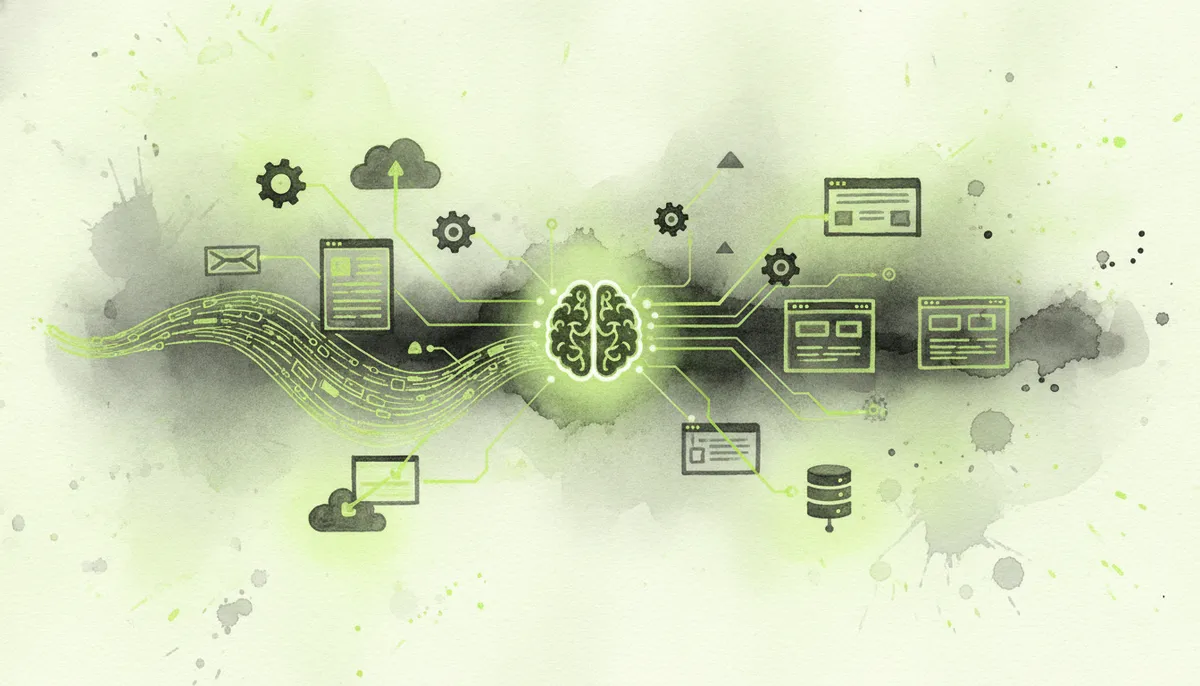
AI-powered web development services are the 2026 standard for B2B SaaS, shifting focus from static code to intelligent, self-optimizing platforms. This approach integrates AI and marketing principles directly into the architecture, enabling hyper-personalization, superior scalability, and a development process that drives revenue growth instead of just accumulating technical debt.
Key Takeaways
Quick Insights for SaaS Leaders
- AI-Integrated Development is the 2026 Standard: Winning SaaS platforms are moving beyond basic automation. They embed intelligence directly into the core architecture to drive dynamic user experiences and operational efficiency.
- Marketing & SEO are Architectural Concerns: Discoverability and user acquisition are no longer post-launch afterthoughts. Your platform must be engineered for search engine visibility and marketing integration from the very first line of code.
- Scalability is Non-Negotiable: True web development services for SaaS must architect for exponential growth, ensuring the platform can seamlessly handle the journey from 10 to 10 million users without costly re-platforming.
- The Model Context Protocol (MCP) Unlocks Innovation: Leveraging open standards like MCP allows for the flexible and powerful integration of various AI models (from OpenAI, Google, Anthropic, etc.), preventing vendor lock-in and future-proofing your tech stack.
- Data-Driven Decisions Trump Guesswork: Modern development leverages real-time user data and predictive analytics to inform feature roadmaps, UX enhancements, and churn reduction strategies, creating a continuous improvement cycle.
- Focus on Business Outcomes, Not Just Features: The ultimate goal is to build a platform that directly impacts key SaaS metrics like Monthly Recurring Revenue (MRR), Lifetime Value (LTV), and overall market share.
Introduction: Why Traditional Web Development Fails SaaS in 2026
For ambitious B2B SaaS founders, the story is often the same: a promising start followed by the slow, grinding friction of a platform that can’t keep pace. You’re battling crippling tech debt, feature deployment cycles that stretch into quarters, and a user retention rate that bleeds MRR. The root of this problem isn’t your team or your vision; it’s an outdated development paradigm. By leveraging modern AI-powered web development services, you can build a platform that acts as a growth engine, not an anchor.
The SaaS Growth Ceiling
The core issue is that traditional web development has long been treated as a cost center—a necessary expense to build a product. This approach creates siloed platforms disconnected from the critical business functions of marketing and sales. The result is a beautiful piece of software that struggles to find users, adapt to their needs, and ultimately retain them.
This disconnect directly impacts the bottom line. With average SaaS churn rates hovering between 5-7% annually, a poor product experience fueled by slow innovation is a direct path to failure. In 2026, winning SaaS platforms are not just built; they are architected with an AI-first, marketing-integrated approach from day one. This guide explains how to build a platform that anticipates user needs, automates growth, and creates a sustainable competitive advantage.
The Shift to Intelligent Platforms
The paradigm has shifted. Web development is no longer just about writing code; it’s about building an intelligent, self-optimizing ecosystem. Artificial intelligence is transforming the entire software lifecycle, from initial architecture design and AI-assisted code generation to delivering hyper-personalized user experiences and leveraging predictive analytics for your product roadmap.
Our philosophy is simple: we don’t just build websites or apps. We architect end-to-end AI platforms designed for market leadership. We believe your software should be your best salesperson, your most insightful analyst, and your most efficient product manager—all at the same time.
Pillar 1: AI-Native Architecture & Scalability
An AI-native platform is not simply a traditional application with an AI feature bolted on. It requires a fundamentally different architectural approach.
AI-Native Architecture is a design philosophy for software systems that are built from the ground up to leverage artificial intelligence. This means utilizing microservices, serverless computing, and containerization to handle the complex, resource-intensive workloads that AI models demand, while ensuring the platform remains agile and scalable.
This modern architecture directly combats tech debt. By breaking the platform into smaller, independent microservices, we can update, scale, or even replace individual components without disrupting the entire system. Using technologies like Kubernetes for container orchestration and serverless solutions from AWS or GCP, we ensure your platform can scale specific functions (like a data processing AI agent) on-demand, optimizing performance and cost-effectively managing growth from your first hundred users to your first million.
Pillar 2: Intelligent Application Development
AI integration happens at two levels: within the development process itself and within the final product delivered to your users.
First, we use AI to accelerate and de-risk the development lifecycle. According to a recent study from GitHub, developers using AI coding assistants like Copilot can complete tasks up to 55% faster. We leverage these tools for AI-assisted coding, automated test generation, and even predictive bug detection, allowing our teams to build more robust software in a fraction of the time.
Second, we embed intelligence directly into your SaaS platform’s features. This goes far beyond a simple chatbot. We build systems for:
- Personalized User Onboarding: AI analyzes user roles and initial behavior to tailor the onboarding flow, dramatically improving activation rates.
- Dynamic UI/UX Adjustments: The platform can learn which features a user segment prefers and subtly adapt the interface to highlight them.
- Intelligent Recommendation Engines: Whether it’s suggesting the next project template or the most relevant analytics report, AI makes your platform feel intuitive and indispensable.
Planning your feature set? Architecting for these intelligent features from day one is critical.
Pillar 3: Integrated AI Marketing & SEO Foundations
We understand that a brilliant SaaS product nobody can find is a business failure. That’s why SEO and marketing capabilities are not afterthoughts; they are foundational elements of the platform’s architecture.
We build your SaaS with technical SEO baked in from the start. This includes:
- Programmatic SEO Capabilities: Architecting the platform to automatically generate thousands of optimized landing pages for different use cases or locations, capturing long-tail search traffic.
- Advanced Structured Data: Implementing schema markup for features, pricing tiers, and reviews so that search engines can understand and feature your offerings directly in search results.
- Core Web Vitals Optimization: Ensuring the underlying code and infrastructure are built for lightning-fast load times, a critical ranking factor in 2026.
This deep integration means your platform is built to seamlessly connect with advanced AI Marketing services, power sophisticated outreach automation, and serve as the central hub for a data-driven growth strategy. The platform doesn’t just support marketing; it is the marketing engine.
Comparing Development Models: AI-Integrated vs. Traditional (2026)
A Strategic Choice for SaaS Founders
Choosing a development partner in 2026 is a critical strategic decision. The model you choose will dictate your speed, your ability to adapt, and ultimately, your capacity for growth.
Step 1: Discovery & AI Opportunity Mapping
Our engagement begins not with a list of features, but with a deep dive into your business challenges and market opportunities. We don’t just ask “what do you want to build?” We ask “what competitive advantage do you want to create?” The output of this phase is a comprehensive strategic document that maps specific AI capabilities to your core business goals, outlining how a custom-built platform will drive revenue and market share. This is a core part of our AI consultancy approach.
Step 2: Intelligent Prototyping & MCP Integration
With a clear strategy in place, we move to rapid, intelligent prototyping. Using AI-powered design and low-code tools, we can visualize core functionality and user flows in days, not weeks. This allows for immediate feedback and iteration, ensuring the architectural blueprint is solid before a single line of production code is written.
A key part of this stage is architecting around the Model Context Protocol (MCP).
The Model Context Protocol (MCP) is an open standard, pioneered by Anthropic, that provides a common format for giving AI models context about the tools and functions they can use. For your SaaS, this means we can build a flexible AI core that isn’t locked into a single provider like OpenAI or Google. We can plug-and-play the best, most cost-effective model for each specific task—one for data analysis, another for text generation, and a third for image recognition—creating a more powerful and efficient system.
Step 3: Agile Sprints & Continuous Optimization
Our development process is built on transparent, agile sprints. You get regular updates, access to staging environments, and a collaborative feedback loop. But we don’t stop at launch. The true power of an AI-integrated platform is its ability to learn. We build in robust analytics and feedback mechanisms so that real-world user data and AI-driven insights feed directly back into the development cycle. This creates a powerful flywheel of continuous improvement, where your platform gets smarter, more personalized, and more valuable with every user interaction.
Ready to build differently? The right process can eliminate months of wasted effort and ensure your investment directly translates to market traction. See how our services overview aligns with your growth goals.
Frequently Asked Questions
What is the difference between standard web development and AI-powered web development?
Standard web development builds a static tool with pre-defined functionality. AI-powered web development builds an intelligent partner that learns from user interaction, automates complex processes, and delivers dynamic, adaptive experiences. It shifts the platform from a passive utility to an active participant in your business’s growth.
How do your web development services improve SaaS marketing and SEO?
We build marketing capabilities directly into the platform’s DNA. This includes creating programmatic SEO frameworks for scalable content, implementing advanced structured data so Google can better understand your services, and ensuring the architecture is optimized for Core Web Vitals. The platform becomes its own self-sustaining marketing engine rather than relying solely on external efforts.
How much do custom AI web development services cost for a SaaS platform?
Costs vary based on the complexity of the AI models and the scale of the platform. However, we frame the investment around value and ROI. Traditional development is often a sunk cost, whereas building an intelligent platform is an investment in a scalable asset that actively generates revenue and reduces churn. Our initial strategy session is designed to define a clear scope and budget aligned with your business goals.
What is the Model Context Protocol (MCP) and why is it important?
The Model Context Protocol (MCP) is an open standard for providing context to AI models. Its primary business value is preventing vendor lock-in. By building with MCP, we create a flexible AI stack for your SaaS, allowing you to use the best and most cost-effective model for each specific task (e.g., from Google, OpenAI, Anthropic) without being tied to a single ecosystem.
Conclusion: Your Next Step Towards an Intelligent SaaS Future
Build for Tomorrow, Today
The verdict for 2026 is clear: the only viable web development services for ambitious SaaS companies are those that are AI-native and marketing-aware from inception. Sticking with the traditional model is no longer a safe bet; it’s a guaranteed path to being out-innovated and outmaneuvered. The future belongs to platforms that are not just built, but are intelligent.
We focus on creating a strategic asset that will drive your growth for the next decade.
Schedule Your AI Strategy Session
Don’t let an outdated development approach cap your potential. If you’re ready to build a SaaS platform that leads the market instead of just competing in it, the next step is a conversation.
Sources
- Gartner – Artificial Intelligence Trends — Insights on the strategic implementation of AI in enterprise applications.
- Anthropic – Introducing the Model Context Protocol (MCP) — The official announcement and technical overview of the open standard for AI model integration.
- GitHub – The economic impact of the AI-powered developer lifecycle — Research and data on productivity gains from tools like GitHub Copilot.
- Google AI Blog — Technical articles and best practices on building for an AI-first world, including SEO considerations.
- McKinsey & Company – The state of AI in 2023: Generative AI’s breakout year — Data on the revenue impact of AI-driven personalization and marketing efficiency.
Have a similar challenge? Explore our services.
Related in this topic
- Custom Web Development Services: The 2026 Guide for B2B SaaS Founders
- The Ultimate Guide to WordPress Web Development Services for SaaS Founders (2026)
- Services in Web Design and Development: The Ultimate Guide for SaaS Growth in 2026
- Progressive Web Application Development Services: The 2026 Guide for SaaS Founders
- Professional Web Development Services: The 2026 Guide for SaaS Founders
- Custom Web Application Development Services: The Ultimate 2026 Guide for SaaS Founders