
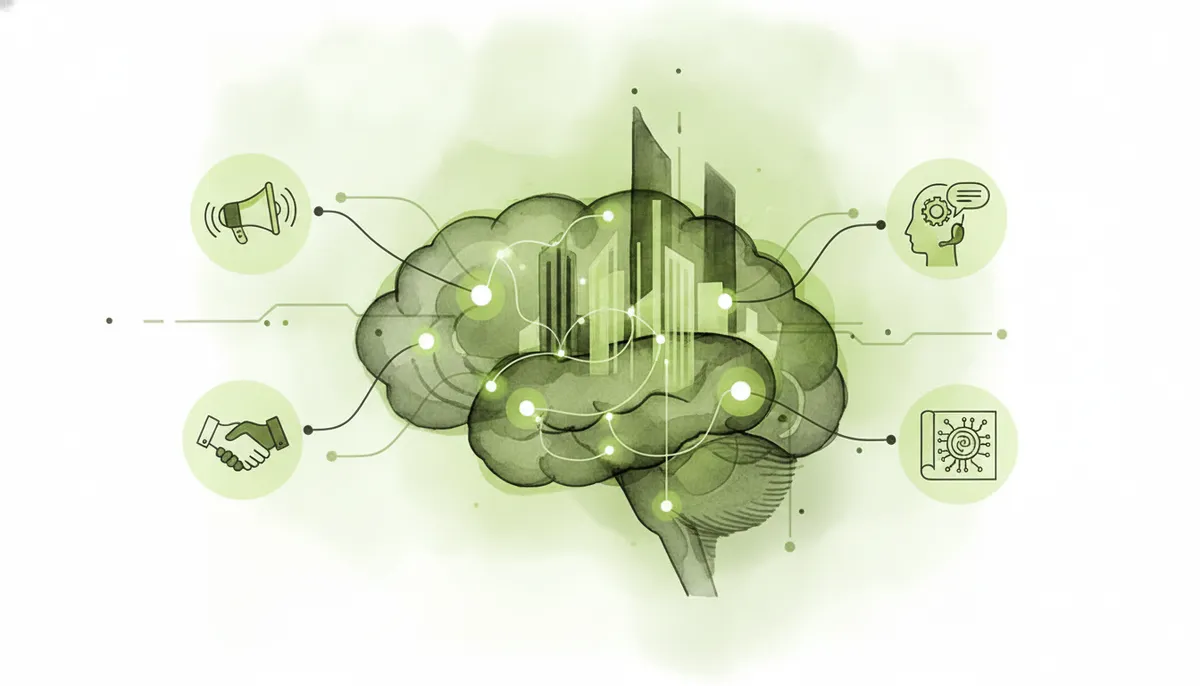
Top AI agents examples for B2B SaaS founders include autonomous systems for marketing, sales, customer service, and product development. These agents automate complex tasks like lead qualification, personalized outreach, advanced customer support, and code generation, driving significant efficiency, enhancing user experience, and providing a critical competitive advantage for business growth in 2026.
- Introduction: The Rise of Autonomous AI Agents in 2026
- What Exactly Are AI Agents in 2026?
- Why AI Agents Are Essential for B2B SaaS Founders in 2026
- Top AI Agent Examples Revolutionizing Business Operations in 2026
- Implementing AI Agents: Strategy and Best Practices for 2026
- The Future of AI Agents: Trends and Opportunities in 2026 and Beyond
- Frequently Asked Questions
- Sources & Further Reading
TL;DR
This guide explores the top AI agents examples transforming B2B SaaS in 2026. We’ll break down what AI agents are, why they are essential for founders, and provide concrete examples across marketing, sales, customer service, and operations to help you leverage this technology for explosive growth.
Key Takeaways
- Agents vs. Tools: AI agents are autonomous systems that can perform multi-step tasks to achieve a goal, unlike single-function AI tools that require constant human input.
- Pivotal Year: 2026 is a key year for adoption due to advanced LLMs, standardized protocols like MCP, and accessible development platforms.
- Core Business Impact: AI agents drive growth by drastically improving operational efficiency, delivering hyper-personalized customer experiences, and freeing up teams for high-value strategic work.
- Marketing & Sales Revolution: Key AI agents examples in this area include systems for lead generation, SEO optimization, personalized outreach, and dynamic ad campaign management.
- Operational Excellence: In development and operations, agents can generate and review code, manage projects, and automate complex data analysis to accelerate innovation.
- Strategic Implementation: Successful adoption requires clear goals, data readiness, ethical considerations, and a human-in-the-loop strategy for oversight.
- The Future is Collaborative: The trend is moving towards multi-agent systems and human-agent teaming, where AI augments human capabilities to achieve superior outcomes.
Introduction: The Rise of Autonomous AI Agents in 2026
The conversation around artificial intelligence has evolved. For years, B2B SaaS founders have focused on AI tools—specialized applications that perform a single task well, like writing copy or generating images. But as we move through 2026, the paradigm is shifting toward something far more powerful: autonomous AI agents. These systems are not just tools; they are digital team members capable of executing complex, multi-step workflows to achieve strategic business goals. This guide provides concrete AI agents examples to show you how.
Beyond AI Tools: Understanding the Shift to AI Agents
The leap from AI tools to AI agents is a significant one. While a tool might help you draft an email, an AI agent can identify a promising lead from your CRM, research their company online, draft a personalized email, schedule it for the optimal time, and then create a follow-up task based on whether the email was opened.
An AI agent is an autonomous, goal-oriented system that perceives its environment through data, makes decisions using reasoning and planning, and takes actions through tools and APIs to achieve specific objectives.
For B2B SaaS startups and established businesses alike, this shift from passive assistance to active execution represents a new frontier of competitive advantage. It’s about delegating entire workflows, not just individual tasks.
Why 2026 Marks a Pivotal Year for AI Agent Adoption
Several converging factors make 2026 the tipping point for AI agent integration. Advancements in Large Language Models (LLMs) have given agents unprecedented reasoning and language capabilities. Simultaneously, the emergence of open standards like the Model Context Protocol (MCP) allows different AI models and agents to communicate seamlessly, enabling more complex and reliable operations.
This technological maturity, combined with accessible agent development platforms and intense competitive pressure, means that integrating AI automation is no longer an option—it’s essential for staying relevant and efficient in the fast-paced SaaS landscape.
What Exactly Are AI Agents in 2026?
To harness their power, founders must first understand what differentiates AI agents from the technologies that came before them. In 2026, an AI agent is a sophisticated entity defined by its ability to operate independently to complete complex objectives.
Defining AI Agents: Core Components and Functionality
At its core, an AI agent operates on an iterative cycle, often called the “observe-orient-decide-act” (OODA) loop. This process is powered by four key components:
- Perception: The agent takes in information from its environment. This can be anything from new data in a CRM, an incoming customer support ticket, website analytics, or API responses.
- Cognition: This is the “brain” of the agent, typically powered by one or more LLMs. It uses reasoning, planning, and memory to decide the best course of action to achieve its primary goal.
- Memory: Agents possess both short-term memory (for the current task context) and long-term memory (for storing learned information, user preferences, and past interactions) to improve performance over time.
- Action: The agent executes its decision by interacting with other systems. This involves using tools, calling APIs, sending emails, updating databases, or controlling other software.
The Role of Model Context Protocol (MCP) in Agent Communication
A major breakthrough enabling the rise of AI agents is the Model Context Protocol (MCP). Think of MCP as a universal language for AI.
Model Context Protocol (MCP) is an open standard designed to facilitate seamless communication and context sharing between different AI models and agents.
Before MCP, getting different AI systems to collaborate was difficult and prone to errors. With MCP, a marketing agent can seamlessly pass a qualified lead’s data and interaction history to a sales agent, ensuring perfect context and continuity. This protocol dramatically reduces AI “hallucinations” and improves the reliability of complex, multi-agent systems, which are becoming the standard in 2026.
AI Agents vs. Traditional Automation & Basic Bots
It’s crucial to distinguish 2026’s AI agents from older forms of automation. While Robotic Process Automation (RPA) and simple chatbots were revolutionary in their time, they operate on rigid, rule-based logic. AI agents are a significant leap forward.
| Feature | Traditional Chatbot / RPA | Autonomous AI Agent (2026) |
|---|---|---|
| Autonomy | Low (Follows predefined scripts) | High (Plans and executes multi-step tasks) |
| Reasoning | None (Rule-based logic) | Advanced (Uses LLMs for problem-solving) |
| Adaptability | Brittle (Fails with unexpected input) | Dynamic (Adapts to new information and errors) |
| Learning | Static (Requires manual reprogramming) | Continuous (Learns from interactions and outcomes) |
| Task Scope | Single, repetitive tasks | Complex, goal-oriented workflows |
| Data Handling | Structured data only | Handles both structured and unstructured data |
AI agents thrive in the dynamic, unpredictable environments where traditional automation fails, making them perfectly suited for the complex challenges B2B SaaS founders face.
Why AI Agents Are Essential for B2B SaaS Founders in 2026
For a B2B SaaS founder, the primary goal is sustainable growth. AI agents are no longer a futuristic concept; they are a fundamental driver of that growth, impacting everything from cost structure to customer loyalty.
Driving Unprecedented Efficiency and Cost Savings
The most immediate benefit of deploying AI agents is the automation of repetitive, time-consuming tasks. Imagine agents handling initial lead research, generating weekly performance reports, or triaging customer support tickets. This frees up your human team to focus on what they do best: building relationships, closing complex deals, and innovating on your product.
Enhancing Customer Experience and Personalization
In a crowded SaaS market, customer experience is a key differentiator. AI agents enable personalization at a scale that was previously impossible. An onboarding agent can guide a new user through your platform with tailored tips based on their stated goals. A support agent can provide instant, 24/7 answers to complex questions by accessing your entire knowledge base.
Furthermore, agents can analyze user behavior data in real-time to proactively identify customers at risk of churning and trigger retention campaigns. This shift from reactive to proactive engagement builds stronger customer relationships and boosts lifetime value.
Fueling Innovation and Competitive Advantage
When your team is no longer bogged down by routine operational tasks, they have more time for strategic thinking. AI agents can accelerate product development cycles by assisting with market research, competitor analysis, and even generating boilerplate code. This allows your engineering team to focus on building core features that delight users.
Early and strategic implementation of AI agents is a powerful moat. While competitors are manually managing workflows, your business can operate with greater speed, intelligence, and efficiency, creating a sustainable competitive advantage in 2026.
Top AI Agent Examples Revolutionizing Business Operations in 2026
Theory is useful, but practical application is what drives growth. Here are some of the most impactful AI agents examples that B2B SaaS founders are deploying across their organizations in 2026.
Marketing & Sales Automation Agents
This is where many businesses see the fastest ROI. Marketing and sales agents act as a force multiplier for your growth team.
- Lead Generation & Qualification Agents: These agents can be tasked with a high-level goal like “Find 50 B2B SaaS companies with 50-200 employees in the fintech sector.” The agent will then browse LinkedIn, company directories, and news sites; enrich the data with contact information; qualify the leads against your Ideal Customer Profile (ICP); and finally, add the validated prospects directly to your CRM.
- Content Creation & SEO Optimization Agents: A content agent can monitor industry trends and competitor content, generate data-backed outlines for blog posts, and draft initial social media copy. An SEO agent can continuously monitor your site’s performance, identify keyword opportunities, and even perform technical SEO audits, suggesting optimizations to improve rankings. To learn more, explore these best SEO tools for small business in 2026.
- Outreach & Email Deliverability Agents: Going far beyond simple mail merge, these agents craft hyper-personalized outreach emails based on a prospect’s recent activity or company news.
- Ad Campaign Optimization Agents: An ad agent can manage your campaigns on Google, LinkedIn, and other platforms. It will monitor performance in real-time, reallocate budget from underperforming ads to successful ones, test new creative variations, and refine audience targeting to maximize ROAS without constant manual oversight.
Customer Service & Experience Agents
AI agents are transforming customer support from a cost center into a retention and growth engine.
- Advanced Customer Support Agents: These are not your old-school chatbots. A modern support agent can understand complex user queries, access knowledge bases and API documentation to provide detailed, multi-step solutions, and troubleshoot technical issues. It can intelligently escalate to a human agent, providing the full context of the conversation so the customer never has to repeat themselves.
- Personalized Onboarding Agents: To combat churn, an onboarding agent can create a tailored experience for every new user. It can guide them through initial setup, suggest features relevant to their role, and proactively check in to see if they’re stuck. This hands-on approach dramatically improves user adoption and time-to-value.
- Feedback Analysis & Sentiment Agents: This agent constantly monitors all customer feedback channels—support tickets, G2 reviews, social media mentions, and NPS surveys. It uses sentiment analysis to gauge customer satisfaction, identify emerging issues or feature requests, and deliver a consolidated report to the product team, ensuring you’re building what your customers actually want.
Product Development & Operations Agents
AI agents can also be deployed internally to streamline operations and accelerate your product roadmap.
- Code Generation & Review Agents: Developers can use agents as coding assistants. These agents can generate boilerplate code, write unit tests, translate code between languages, and review new code submissions for bugs, security vulnerabilities, and adherence to style guides. This frees up senior engineers to focus on complex architectural challenges.
- Project Management Assistants: An AI project manager can integrate with tools like Jira and Slack. It can monitor project progress, flag tasks that are falling behind schedule, identify potential resource bottlenecks, and generate daily or weekly status reports for stakeholders, keeping everyone aligned and informed.
- Data Analysis & Insights Agents: You can task this agent with a goal like, “Analyze user engagement data from the last quarter and identify the top three features correlated with long-term retention.” The agent will query your databases, perform the analysis, visualize the data, and generate a report with actionable insights for your next product planning session.
Need to build your own? If you’re looking to implement these kinds of solutions, developing custom AI for growth in 2026 is the most direct path to gaining a competitive edge.
Specialized Industry Agents
As the technology matures, we’re seeing more agents designed for specific verticals:
- E-commerce Automation Agents (2026): These agents manage the entire e-commerce lifecycle, from inventory management and dynamic pricing to personalized product recommendations and fully automated returns processing.
- Financial Analysis Agents: In fintech, agents monitor market trends, analyze investment portfolios for risk, detect fraudulent transactions in real-time, and assist with complex compliance reporting.
- HR & Recruitment Agents: HR agents can automate the entire top-of-funnel recruitment process, from sourcing candidates on multiple platforms and conducting initial screenings to scheduling interviews with hiring managers.
Implementing AI Agents: Strategy and Best Practices for 2026
Deploying AI agents successfully requires more than just technology; it requires a clear strategy and a thoughtful approach to integration.
Key Considerations Before Adopting AI Agents
Before you begin, your leadership team should work through a strategic checklist:
- Define Clear Goals: What specific business problem are you trying to solve? Are you looking to reduce customer support costs, increase lead velocity, or accelerate development? Start with a well-defined pain point.
- Assess Data Readiness: AI agents need access to clean, well-structured data to function effectively. Assess your data infrastructure and ensure your CRM, product analytics, and other key systems are ready for integration.
- Address Ethics and Security: Plan for data privacy, security protocols, and ethical considerations. How will the agent handle sensitive customer information? What are the guardrails to prevent unintended actions?
- Plan for Human Oversight: Implement a “human-in-the-loop” system. This means having a clear process for humans to review agent decisions, intervene when necessary, and provide feedback to improve the agent’s performance over time.
Integration Challenges and Solutions
Integrating AI agents is not without its hurdles. Common challenges include breaking down data silos between departments, connecting with legacy systems, ensuring a high degree of accuracy, and managing your team’s expectations.
The solution is a phased, methodical rollout. Start with a pilot project in a single department to prove the concept and generate early wins. Use an API-first development approach to ensure seamless connectivity between the agent and your existing software stack. As one study noted, successful AI integration projects in 2026 often rely on dedicated change management strategies, which can increase adoption rates significantly.
Partnering with AI Strategy Consultants for Seamless Implementation
For many B2B SaaS founders, navigating this complexity alone can be daunting. Partnering with an expert AI and technology consultancy like Techno Believe — official site can de-risk the process and accelerate your time-to-value.
An experienced partner can help you develop a comprehensive AI roadmap, identify the highest-impact use cases for your business, and manage the end-to-end development and integration process. Whether you need to build a custom AI platform or implement an AI-powered digital marketing strategy, a consultant provides the strategic guidance and technical expertise to ensure your AI agent initiative succeeds. This is a core focus of our AI marketing consultancy guide.
The Future of AI Agents: Trends and Opportunities in 2026 and Beyond
The AI agent landscape is evolving at an incredible pace. The AI agents examples we see today are just the beginning. Looking ahead, several key trends will define the next wave of innovation.
Towards More Sophisticated Autonomy and Collaboration
The future lies in multi-agent systems, where teams of specialized agents collaborate to solve even more complex problems. Imagine a “product launch” team of agents: a market research agent, a content agent, a social media agent, and a sales outreach agent, all working in concert under the direction of a master project management agent. We will also see the rise of self-improving agents that learn and adapt from their experiences with minimal human intervention, becoming more effective over time.
Ethical AI, Governance, and Trust in Agent Development
As agents become more autonomous and influential, the importance of ethical AI, transparency, and governance will grow exponentially. Businesses will need to build systems that are not only effective but also explainable and trustworthy. Emerging regulatory frameworks will require companies to be transparent about how their agents make decisions, and responsible AI practices will become a prerequisite for long-term customer and public trust.
The Human-Agent Teaming Paradigm
Perhaps the most important trend is the shift in mindset from replacement to augmentation. AI agents are not here to replace human workers but to augment their capabilities. This “human-agent teaming” paradigm allows AI to handle the repetitive, data-intensive tasks, freeing humans to focus on the uniquely human skills of creativity, strategic thinking, empathy, and complex problem-solving. The most successful businesses will be those that master this symbiotic relationship.
Frequently Asked Questions
What is an AI agent?
An AI agent is an autonomous, goal-oriented system that perceives its environment, makes decisions using components like LLMs, memory, and planning, and takes actions to achieve specific objectives. Unlike simple tools, it is capable of executing complex, multi-step tasks independently.
How do AI agents differ from chatbots in 2026?
While chatbots typically handle predefined conversational flows, AI agents in 2026 possess far greater autonomy, reasoning capabilities, and memory. They can perform multi-step tasks, integrate with various tools via APIs, and adapt to dynamic situations to achieve complex goals, often leveraging advanced LLMs and protocols like MCP.
Can AI agents really improve my B2B SaaS marketing in 2026?
Absolutely. AI agents in 2026 can automate lead generation, personalize outreach at scale, optimize SEO, draft content, manage ad campaigns in real-time, and improve email deliverability. This leads to significant efficiency gains, better targeting, and a higher return on investment for B2B SaaS marketing efforts.
What is Model Context Protocol (MCP)?
MCP (Model Context Protocol) is an emerging open standard that facilitates seamless communication and context sharing between different AI models and agents. It enhances collaboration, reduces errors like “hallucination,” and improves the overall reliability of complex multi-agent systems.
What are the biggest challenges in implementing AI agents?
Key challenges include integrating agents with legacy systems, ensuring data quality and accessibility, addressing ethical and privacy concerns, and managing organizational change. Overcoming these hurdles requires robust testing, a phased rollout strategy, and clear human-in-the-loop oversight.
Sources & Further Reading
- Forbes: The Rise Of Autonomous AI Agents: A New Era Of Automation — An overview of how autonomous agents are changing the automation landscape.
- Harvard Business Review: How AI Agents Will Transform Workflows — Insight into the practical impact of AI agents on business processes and work.
- IBM Research: What are AI agents? — A technical and comprehensive guide to the definition and function of AI agents.
- Anthropic: Model Context Protocol Overview — The official source for understanding the standard for inter-model communication.
- McKinsey: The economic potential of generative AI — Data-driven analysis on the economic impact and productivity gains from AI technologies.
Have a similar challenge? Explore our custom AI for growth solutions or learn about our AI marketing consultancy.
Related in this topic
- What is AI Automation? 9 High-Impact Growth Opportunities for SaaS in 2026
- 10 Best AI Automation Platforms for Enterprises in 2026 (Reviewed & Compared)
- Best AI SEO Tools for 2026 (Reviewed)
- AI Consultants in 2026: The B2B SaaS Founder’s Guide to AI & ML Consulting
- 7 Best AI-Driven Document Automation Tools for SaaS Founders in 2026
- AI Consultancy: Your 2026 Guide