
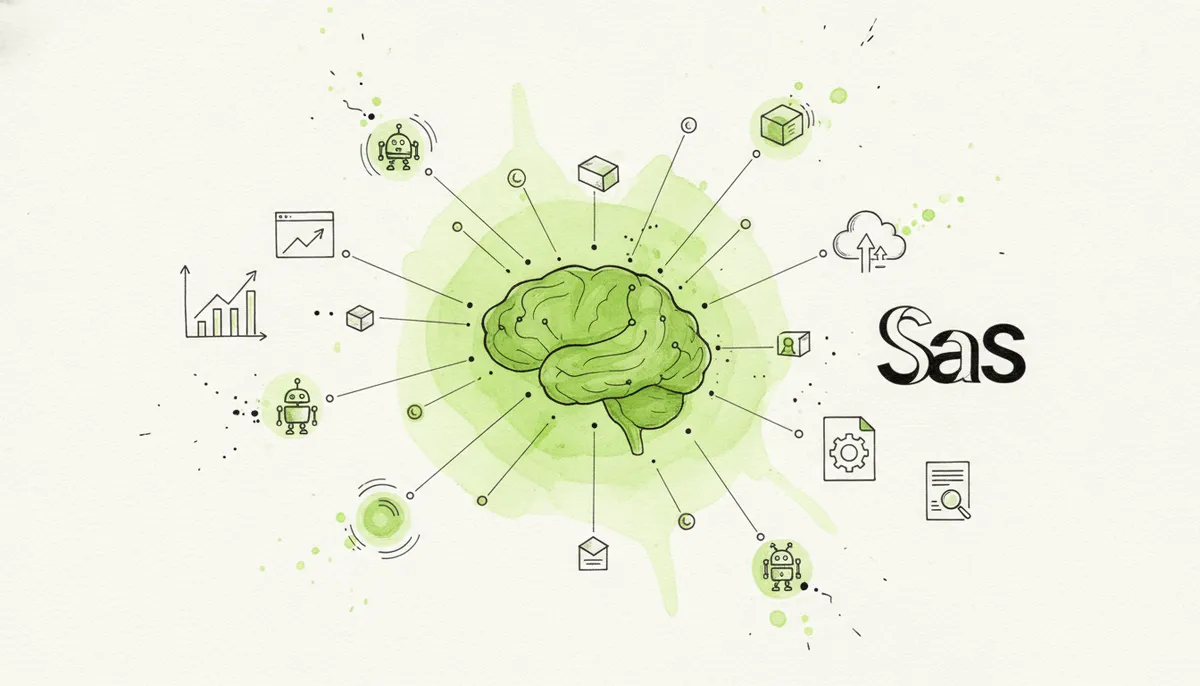
- TL;DR: AI Agents Applications and Use Cases for B2B SaaS in 2026
- Key Takeaways
- Introduction to AI Agents: Defining the Autonomous Future for B2B SaaS
- Transformative Applications of AI Agents in Core Business Operations
- AI Agents in Digital Marketing & Growth: Strategic Use Cases for B2B SaaS
- Industry-Specific Use Cases and Emerging Trends for AI Agents in 2026
- Implementing AI Agents: Challenges, Solutions, and Strategic Consulting
- AI Agents vs. Traditional Automation & Tools: A 2026 Perspective
- Related Reading
- Frequently Asked Questions (FAQ)
- What are the most promising AI-driven e-commerce automation strategies for 2026?
- How do AI agents differ from traditional automation or RPA?
- What are the biggest challenges of AI automation for B2B SaaS companies?
- Can AI agents truly enhance email deliverability and marketing outreach?
- What is MCP (Model Context Protocol) and why is it important for AI agents?
- Frequently Asked Questions
- What is ai agents applications and use cases?
- How do I get started with ai agents applications and use cases?
- How does introduction to ai agents: defining the autonomous future for b2b saas actually work?
- How does transformative applications of ai agents in core business operations actually work?
- How does ai agents in digital marketing & growth: strategic use cases for b2b saas actually work?
- Sources & Further Reading
TL;DR: AI Agents Applications and Use Cases for B2B SaaS in 2026
AI agents are poised to revolutionize B2B SaaS in 2026 by acting as autonomous, goal-oriented entities that drive efficiency and innovation. Their applications span core operations, from streamlining workflows and enhancing data analysis to personalizing customer support. In marketing, these agents enable advanced AI marketing, next-gen SEO, and optimized outreach.
Key Takeaways
- AI Agents are autonomous, goal-oriented entities revolutionizing B2B SaaS by enabling proactive decision-making and continuous learning.
- They offer transformative applications across business operations, from workflow optimization to enhanced data analysis and customer support.
- In digital marketing, AI agents drive advanced AI marketing, next-gen SEO, and superior email deliverability and outreach automation.
- Industry-specific use cases, particularly in e-commerce automation, showcase significant potential for growth and efficiency in 2026.
- Successful implementation requires addressing challenges like data privacy and integration, emphasizing the need for strategic planning and expert AI consulting.
- The distinction from traditional automation lies in their adaptability, learning capabilities, and ability to tackle complex, dynamic tasks.
- For B2B SaaS founders, embracing AI agents is crucial for competitive advantage, scalability, and future-proofing their operations.
Introduction to AI Agents: Defining the Autonomous Future for B2B SaaS
The landscape of B2B SaaS is on the cusp of a profound transformation, driven by the emergence of autonomous AI agents. By 2026, these sophisticated entities will move beyond simple automation to become proactive partners in business operations, product development, and customer engagement. For B2B SaaS founders, understanding and leveraging AI agents is no longer a future consideration but a present imperative for maintaining a competitive edge and achieving scalable growth. This article will delve into the defining characteristics of AI agents, explore their transformative applications across core business functions, and highlight strategic use cases specifically for the B2B SaaS sector.
What Exactly are AI Agents? A 2026 Perspective
In 2026, AI agents represent a significant evolution in artificial intelligence.
Defining AI Agents: Autonomous, goal-oriented software entities that perceive environments, make decisions, and act to achieve specific objectives.
Unlike traditional AI models or scripts, AI agents possess a degree of autonomy, allowing them to operate independently, learn from their experiences, and adapt their strategies without constant human oversight. Their ability to perceive their environment (digital or physical), reason about it, plan actions, and execute them forms the core of their advanced functionality. This proactivity and self-correction capability sets them apart from rule-based automation, which is inherently reactive and limited by predefined parameters.
The growing emphasis on open standards, such as the Model Context Protocol (MCP), is crucial for the widespread adoption and advanced capabilities of AI agents. MCP facilitates interoperability, allowing different AI models and agents to communicate and collaborate seamlessly. This is fundamental for agents to access diverse data sources, leverage multiple AI capabilities, and execute complex, multi-step tasks across various platforms and applications.
The Evolution from Traditional Automation to Autonomous AI Agents
The journey from simple automation to the sophisticated autonomy of AI agents marks a pivotal shift in how businesses operate. Traditional automation, often powered by Robotic Process Automation (RPA) or simple scripting, excels at repetitive, well-defined tasks. It follows a linear, rule-based approach: if X happens, then do Y. While invaluable for efficiency in predictable environments, this approach falters when faced with complexity or variability.
AI agents, conversely, represent a leap towards adaptive intelligence. They are designed to handle dynamic environments, learn from new data, and make informed decisions in situations that were not explicitly programmed. This shift moves from merely executing predefined scripts to proactive problem-solving and dynamic strategy execution. For B2B SaaS companies, this evolution is critical because it unlocks unprecedented levels of scalability, responsiveness, and innovation. The ability of AI agents to continuously optimize processes, identify emerging opportunities, and adapt to market changes without constant human intervention is key to sustainable growth in the fast-paced digital economy.
Why AI Agents Matter for B2B SaaS Founders in 2026
For B2B SaaS founders, the strategic imperative to adopt AI agents in 2026 is clear. The competitive landscape is intensifying, with early adopters already reaping significant rewards. Embracing AI agents offers a substantial competitive advantage by delivering unparalleled efficiency and speed in both product development and service delivery. Imagine agents that can autonomously test new features, identify and fix bugs, or even generate predictive maintenance alerts for your SaaS infrastructure, all before your competitors can even draft an email to their development team.
Furthermore, AI agents unlock new levels of personalization and customer engagement. By analyzing vast amounts of user data, agents can tailor product experiences, predict customer needs, and provide proactive support, fostering deeper loyalty and reducing churn. This isn’t just about incremental improvement; it’s about fundamentally redefining customer relationships. Ultimately, staying ahead in a rapidly AI-driven market means integrating these autonomous capabilities. For B2B SaaS founders, a strategic approach to AI agents is not just about optimization; it’s about future-proofing their business and securing a dominant position in the market.
Transformative Applications of AI Agents in Core Business Operations
The impact of AI agents extends far beyond simple task automation, fundamentally reshaping core business operations for B2B SaaS companies. Their ability to perceive, decide, and act autonomously drives efficiency, intelligence, and responsiveness across the entire organizational structure.
Streamlining Workflow Automation and Process Optimization
One of the most immediate and impactful applications of AI agents lies in their capacity to streamline complex workflows and optimize processes.
Autonomous task execution: From data entry to complex project management.
AI agents can be tasked with managing entire project lifecycles, from initial planning and resource allocation to monitoring progress and flagging potential bottlenecks. This goes beyond simple task delegation; agents can dynamically adjust project plans based on real-time data, team performance, and external factors. For instance, an AI agent could manage development sprints, automatically reassigning tasks, adjusting timelines based on code complexity, and even initiating communication with stakeholders when critical milestones are met or missed.
Furthermore, AI agents excel in dynamic resource allocation. They can monitor server loads, optimize cloud infrastructure usage in real-time to reduce costs, and manage support queues by intelligently routing tickets to the most appropriate agents. A critical application for SaaS businesses is predictive maintenance for SaaS infrastructure. AI agents can continuously monitor system logs and performance metrics, identifying subtle anomalies that predict potential failures. This allows for proactive maintenance, significantly reducing downtime and ensuring a more reliable user experience.
Enhancing Data Analysis and Business Intelligence with AI Agents
In the data-rich environment of B2B SaaS, AI agents are transforming how businesses extract value from their information. They move beyond passive reporting to active, intelligent data analysis.
Automated data collection and synthesis: From diverse sources.
AI agents can autonomously gather data from a multitude of sources – user behavior analytics, CRM systems, support tickets, market research, and more. They then synthesize this disparate information, identifying patterns, trends, and anomalies that human analysts might overlook or take significantly longer to discover.
This leads to proactive identification of actionable insights. For example, an AI agent might detect a correlation between a specific user feature usage and an increased likelihood of churn, or identify a surge in interest for a particular feature set based on social media sentiment and support requests. These insights are then used to inform product strategy, marketing campaigns, and operational adjustments. AI agents can generate real-time reports and custom dashboards tailored to specific business needs, providing decision-makers with immediate, context-aware intelligence to guide product development and business strategy.
Revolutionizing Customer Support and Experience (CX)
Customer experience is paramount for B2B SaaS, and AI agents are set to redefine support and engagement models by 2026.
Intelligent chatbots and virtual assistants: For 24/7, personalized support.
These are not your typical chatbots. AI agents can power virtual assistants capable of understanding complex queries, accessing vast knowledge bases, and providing personalized, context-aware solutions. They can handle a significant volume of common support issues, freeing up human agents for more complex or sensitive cases.
Beyond reactive support, AI agents enable proactive customer outreach. By analyzing user behavior patterns, engagement levels, and even sentiment analysis from communications, agents can identify customers who might be struggling, at risk of churning, or ready for an upsell. They can then trigger personalized outreach, offer relevant resources, or alert account managers. This proactive approach fosters customer loyalty and can prevent issues before they arise. Furthermore, AI agents can automate critical support processes like ticket resolution, intelligent escalation to human agents when necessary, and even the continuous updating of knowledge base articles based on resolved issues and new product features.
AI Agents in Digital Marketing & Growth: Strategic Use Cases for B2B SaaS
The application of AI agents in digital marketing and growth for B2B SaaS is particularly potent, offering unprecedented levels of personalization, efficiency, and strategic insight. By automating complex marketing tasks and providing real-time optimization, these agents become invaluable growth partners.
Advanced AI Marketing and Personalized Outreach Automation
AI agents are set to redefine B2B SaaS marketing by enabling hyper-personalization at scale and automating complex outreach sequences.
Automated lead generation and qualification: Based on behavioral data.
AI agents can continuously monitor website visitor behavior, content engagement, and firmographic data to identify high-intent leads. They can then qualify these leads automatically by cross-referencing criteria, scoring their engagement, and segmenting them for targeted follow-up. This ensures that sales and marketing teams focus their efforts on the most promising prospects.
The power of AI agents in dynamic content creation and personalization is immense. They can tailor marketing messages, website copy, and even product demo scripts based on the specific industry, role, or expressed needs of a prospect. This level of personalization, previously achievable only through extensive manual effort, significantly boosts engagement rates. Targeted outreach automation is another key area. AI agents can craft and deploy highly personalized campaigns across email, social media, and advertising platforms, adapting messaging and timing based on individual prospect interactions and lifecycle stages, all while maintaining brand consistency. This strategic use of AI agents is a cornerstone of modern B2B SaaS growth strategies, driving efficiency and effectiveness in lead nurturing and conversion.
Next-Gen SEO Strategies and Content Generation with Autonomous Agents
For B2B SaaS companies, visibility in search engines is critical. AI agents are revolutionizing SEO by providing real-time insights and automating content optimization processes.
Real-time SEO monitoring and optimization: Identifying keyword opportunities, analyzing competitor strategies, and suggesting content improvements.
AI agents can continuously scan search engine results pages (SERPs), analyze competitor rankings, and identify emerging keyword trends relevant to your SaaS product. They can then provide actionable recommendations for content creation, on-page optimization, and link-building strategies. This constant, data-driven approach to SEO ensures that your content remains relevant and competitive.
Beyond analysis, AI agents can assist with automated content drafting and optimization. While human oversight remains crucial for strategic messaging and brand voice, agents can draft blog posts, landing page copy, and product descriptions based on SEO best practices and target audience profiles. They can also optimize existing content for better search engine performance. Furthermore, AI agents can contribute to strategic link building by identifying relevant backlink opportunities and even automating initial outreach for guest posting or content syndication, alongside performing in-depth technical SEO analysis to ensure your website is technically sound and discoverable.
Optimizing Email Deliverability and Engagement Campaigns
Email remains a cornerstone of B2B SaaS communication, and AI agents can significantly enhance its effectiveness and deliverability.
Proactive monitoring of email sender reputation and deliverability metrics.
AI agents can continuously track key deliverability metrics such as inbox placement rates, bounce rates, and spam complaints. They can also monitor your sender reputation across various email service providers (ESPs) and proactively identify and address issues that could impact your ability to reach your audience. This ensures your crucial marketing and support emails actually land in the inbox.
The ability of AI agents to drive automated A/B testing for subject lines, email content, calls-to-action, and send times is a game-changer for maximizing engagement. By running numerous tests simultaneously and analyzing the results in real-time, agents can continuously optimize your email campaigns for higher open rates and click-through rates. Moreover, AI agents can orchestrate personalized email drip campaigns and follow-ups based on sophisticated user interaction tracking. This means sending the right message, to the right person, at the right time, significantly improving conversion rates for onboarding, feature adoption, and customer retention.
Industry-Specific Use Cases and Emerging Trends for AI Agents in 2026
The versatility of AI agents allows them to be tailored to the unique demands of various industries. For B2B SaaS, understanding these sector-specific applications can unlock new avenues for innovation and growth in 2026.
AI Agents in E-commerce Automation: Strategies for 2026
For SaaS companies serving the e-commerce sector, AI agents offer a powerful suite of tools for enhancing customer experience and operational efficiency.
Personalized product recommendations and dynamic pricing optimization.
AI agents can analyze individual customer browsing history, purchase patterns, and demographic data to provide hyper-personalized product recommendations, increasing average order value and customer satisfaction. They can also dynamically adjust pricing based on demand, competitor pricing, inventory levels, and customer segmentation to maximize revenue and margin.
Beyond customer-facing features, AI agents are crucial for automated inventory management and supply chain forecasting. They can predict demand with greater accuracy, optimize stock levels to prevent stockouts or overstocking, and even automate reordering processes. This leads to significant cost savings and improved operational fluidity. Furthermore, AI agents can optimize the entire customer journey, from guiding initial product discovery and providing personalized shopping experiences to automating post-purchase support and loyalty programs, creating a seamless and engaging experience that drives repeat business.
Financial Services and Risk Management with Autonomous AI
The financial services industry, with its high volume of transactions and stringent regulatory requirements, stands to benefit immensely from AI agents.
Automated fraud detection and anomaly identification in real-time.
AI agents can continuously monitor financial transactions, identifying suspicious patterns indicative of fraud or money laundering with a speed and accuracy that surpasses human capabilities. This real-time detection significantly reduces financial losses and enhances security.
In areas like wealth management, AI agents can provide personalized financial advisory and portfolio management. By analyzing a client’s financial goals, risk tolerance, and market conditions, they can suggest tailored investment strategies and automatically rebalance portfolios. For B2B SaaS providers in fintech, this means offering sophisticated, accessible advisory services. Furthermore, AI agents are invaluable for compliance monitoring and automated reporting. They can track regulatory changes, ensure all transactions and operations adhere to compliance standards, and automate the generation of complex regulatory reports, significantly reducing the burden on compliance teams and mitigating the risk of penalties.
Healthcare and Life Sciences Innovation Powered by AI Agents
The healthcare and life sciences sectors are rapidly adopting AI agents to accelerate research, improve patient care, and enhance operational efficiency.
Automated data analysis for drug discovery and clinical trials.
AI agents can sift through vast datasets of genomic information, chemical compounds, and research papers to identify potential drug candidates and predict their efficacy. In clinical trials, they can automate patient recruitment, monitor trial progress, and analyze vast amounts of trial data to identify trends and potential adverse events much faster than traditional methods.
For healthcare providers, AI agents can contribute to personalized treatment plan generation and patient monitoring. By analyzing a patient’s medical history, genetic makeup, and real-time health data, agents can help clinicians devise optimal treatment strategies and continuously monitor patient progress, alerting healthcare professionals to any concerning changes. In hospital management, AI agents can drive operational efficiency, optimizing staff scheduling, managing bed allocation, streamlining supply chain logistics, and improving overall resource utilization, leading to better patient outcomes and reduced operational costs.
Implementing AI Agents: Challenges, Solutions, and Strategic Consulting
While the potential of AI agents is undeniable, their successful implementation requires careful planning and a strategic approach to overcome inherent challenges.
Navigating the Challenges of AI Automation and Agent Integration
Successfully deploying AI agents involves addressing several critical hurdles.
Data privacy and security concerns: Ensuring ethical and compliant data handling.
As AI agents often process sensitive data, robust measures for data privacy and security are paramount. This includes adhering to regulations like GDPR and CCPA, implementing strong encryption, and ensuring transparent data usage policies. Ethical considerations are also key; ensuring agents operate without bias and with human well-being as a priority is essential.
Integration complexities are another significant challenge. Connecting AI agents with existing legacy systems, diverse cloud platforms, and specialized software can be technically demanding. This often requires custom API development or the use of middleware solutions. The Model Context Protocol (MCP), as an open standard, aims to simplify this by enabling better interoperability, but the overall integration strategy still needs careful design. Finally, ensuring human oversight and ethical AI governance in autonomous systems is crucial. While agents operate autonomously, clear frameworks for accountability, decision-making escalation, and ethical guidelines must be established to maintain control and trust.
Key Considerations for Adopting AI Agents in Your B2B SaaS Business
To maximize the benefits and minimize the risks of AI agent adoption, B2B SaaS founders should focus on several key strategic considerations.
Firstly, defining clear objectives and measurable KPIs for agent performance is essential. What specific business problems are you trying to solve? What outcomes do you expect? Establishing quantifiable goals, such as a reduction in customer support response time by X% or an increase in lead conversion rates by Y%, will guide implementation and allow for performance tracking. Secondly, building a robust data strategy is fundamental. AI agents are only as good as the data they are trained on and have access to. This means ensuring data quality, availability, and appropriate formatting to feed and train your AI agents effectively.
Lastly, fostering a culture of continuous learning and adaptation within your organization is vital. The AI landscape is evolving rapidly, and your team needs to be prepared to embrace new tools, methodologies, and approaches. This includes investing in training, encouraging experimentation, and creating feedback loops to refine agent performance and explore new applications.
Partnering for Success: AI Strategy Consulting Services for Seamless Implementation
Given the complexities involved, many B2B SaaS companies find it beneficial to partner with expert AI strategy consultants.
Leveraging expert AI/ML consulting services for strategic planning and roadmap development.
Working with seasoned consultants can provide the clarity and direction needed to identify the most impactful AI agent applications for your specific business. They can help assess your current infrastructure, data readiness, and organizational capabilities to develop a tailored AI roadmap that aligns with your business objectives.
The benefits of engaging an AI strategy consulting partner for custom AI product development are substantial. These partners bring deep technical expertise in areas like AI/ML, natural language processing, and agent architecture, enabling them to design and build bespoke AI solutions that precisely fit your needs. They can also guide you through the entire development lifecycle, from conceptualization and prototyping to deployment and integration. Ultimately, engaging a consulting partner ensures successful deployment and ongoing optimization of AI agent solutions, mitigating risks, accelerating time-to-value, and maximizing your return on investment.
AI Agents vs. Traditional Automation & Tools: A 2026 Perspective
As B2B SaaS companies navigate the evolving technological landscape of 2026, understanding the distinct capabilities of AI agents compared to traditional automation and tools is crucial for strategic decision-making. While traditional methods have their place, AI agents offer a paradigm shift in how businesses can operate and innovate.
Comparison Table: Key Differentiators for B2B SaaS
This table highlights the fundamental differences between AI Agents and traditional automation/tools, emphasizing their respective advantages for B2B SaaS in the current market.
| Feature/Aspect | AI Agents | Traditional Automation/Tools | Key Advantage for B2B SaaS |
|---|---|---|---|
| Autonomy & Decision-Making | Autonomous, proactive, self-correcting, goal-driven | Rule-based, reactive, follows predefined scripts | Handles complexity, adapts to unforeseen situations, reduces human oversight, enabling focus on strategic tasks. |
| Learning & Adaptability | Continuous learning from data, adapts to changing environments, evolves over time | Static, requires manual updates for changes | Ensures relevance and effectiveness in dynamic markets, optimizes performance continuously, and stays ahead of evolving customer needs and market trends. |
| Scope & Complexity | Manages complex, multi-step processes across systems, handles ambiguity | Best for repetitive, well-defined tasks with clear parameters | Unlocks automation for strategic, higher-value functions, integrates diverse data points, and tackles nuanced business challenges. |
| Problem-Solving | Identifies problems, devises solutions, and executes actions independently | Executes predefined solutions to known problems | Drives innovation, preempts issues before they escalate, and offers proactive strategic insights rather than just task execution. |
| Integration & Interoperability | Designed for flexible integration, often leveraging standards like MCP for communication | Can be siloed, integration often requires custom APIs or middleware | Creates a more connected and efficient tech stack, reduces data silos, and facilitates seamless data flow across different business units and platforms. |
Related Reading
Frequently Asked Questions (FAQ)
What are the most promising AI-driven e-commerce automation strategies for 2026?
The most promising strategies involve hyper-personalization of customer experiences, dynamic pricing optimization based on real-time market data, intelligent inventory management to prevent stockouts, and predictive customer service that anticipates needs before they arise.
How do AI agents differ from traditional automation or RPA?
AI agents are autonomous, capable of learning, adapting to new information, and making independent decisions to achieve goals. Traditional automation and RPA, on the other hand, follow predefined rules and scripts and lack this inherent intelligence or adaptability.
What are the biggest challenges of AI automation for B2B SaaS companies?
Key challenges include ensuring data privacy and security, overcoming complex integration with existing legacy systems, establishing clear ethical governance and human oversight for autonomous systems, and the initial investment in talent and technology.
Can AI agents truly enhance email deliverability and marketing outreach?
Yes, AI agents can significantly enhance these areas by proactively monitoring sender reputation, optimizing send times and content through continuous A/B testing, and personalizing email campaigns based on detailed user interaction data to bypass spam filters and increase engagement.
What is MCP (Model Context Protocol) and why is it important for AI agents?
MCP is an open standard designed for AI model communication and context sharing. It’s important for AI agents because it enables seamless interoperability and collaboration between different AI systems and platforms, allowing agents to access and utilize diverse AI capabilities more effectively.
Frequently Asked Questions
What is ai agents applications and use cases?
ai agents applications and use cases is covered in depth earlier in this article. See the introduction and main body for the full explanation, real-world examples, and how to evaluate it for your use case.
How do I get started with ai agents applications and use cases?
The article walks through the full implementation path. Start with the step-by-step section and follow the tool recommendations that match your stack and budget.
How does introduction to ai agents: defining the autonomous future for b2b saas actually work?
The section on “Introduction to AI Agents: Defining the Autonomous Future for B2B SaaS” above breaks this down with specific examples and data. Jump to that section for the full treatment.
How does transformative applications of ai agents in core business operations actually work?
The section on “Transformative Applications of AI Agents in Core Business Operations” above breaks this down with specific examples and data. Jump to that section for the full treatment.
How does ai agents in digital marketing & growth: strategic use cases for b2b saas actually work?
The section on “AI Agents in Digital Marketing & Growth: Strategic Use Cases for B2B SaaS” above breaks this down with specific examples and data. Jump to that section for the full treatment.
Sources & Further Reading
- The Rise of Autonomous Agents in Business — Forbes (2026) — Discusses the growing trend of autonomous AI agents and their impact on business operations and strategy.
- AI Agents: The Next Frontier in Enterprise Automation — Gartner (2026) — Explores how AI agents are evolving beyond current automation capabilities to drive new levels of efficiency and innovation in enterprises.
- Understanding Model Context Protocol (MCP) for AI Interoperability — Anthropic (2026) — Provides an overview of MCP and its role in enabling different AI models and agents to work together effectively.
- AI in Digital Marketing: Trends and Forecasts for 2026 — McKinsey & Company (2026) — Details emerging trends in AI-driven digital marketing, including the role of autonomous agents in personalization and campaign optimization.
Have a similar challenge? Explore our services.
Related in this topic
- Show Me the Top Tools for Business Automation Using Cognitive AI in the United States (2026)
- Consultancy for AI and SaaS Startups in 2026: The Strategic Scaling Guide
- 9 Best AI Content Marketing Tools for B2B SaaS Growth in 2026
- Gumloop AI Automation Workflows: 7 High-ROI Blueprints for B2B SaaS (2026)
- AI Automation Digital Agency Guide: Scaling B2B SaaS Growth in 2026
- 7 Proven AI Automations Implementation Strategies for SaaS Growth in 2026