
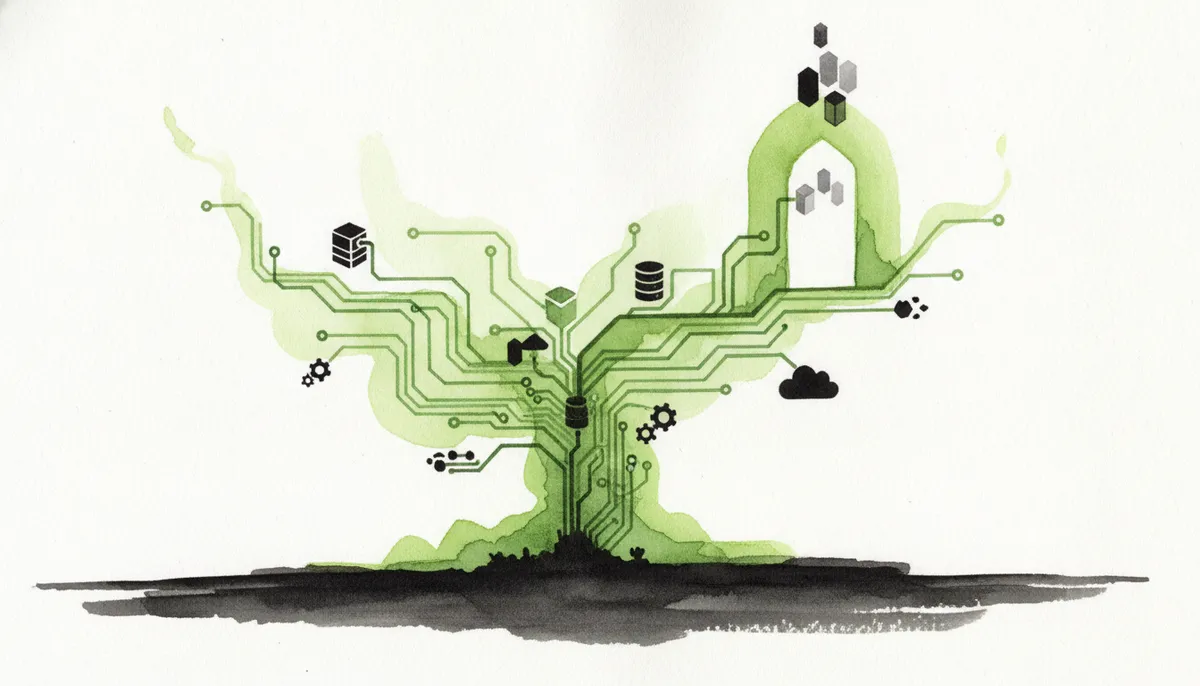
For B2B SaaS founders in 2026, standard web design and development services are no longer sufficient. The key to scalable growth lies in commissioning an AI-powered digital platform that acts as an intelligent growth engine, using predictive analytics for strategy, personalized UX for conversions, and a future-proof architecture to support the entire customer journey.
Key Takeaways for Busy Founders
- AI Integration is Non-Negotiable: Modern web services must incorporate AI for personalization, data analysis, and automation to stay competitive.
- Focus on the Full Funnel: Your platform must support the entire customer journey, from AI-driven SEO and outreach to personalized in-app onboarding.
- Scalability is Paramount: Development choices must support rapid user growth and the integration of complex AI features without performance degradation.
- The Right Partner is a Growth Partner: Choose an agency that understands SaaS metrics and offers strategic AI consultancy, not just coding and design.
- Data is Your Greatest Asset: A well-designed platform captures and utilizes user data to continuously refine marketing, sales, and the product experience.
- Future-Proofing is Key: Your technology stack must be agile enough to adopt emerging standards like Model Context Protocol (MCP) for advanced AI integrations.
- Introduction: Why Your SaaS Needs More Than Just a Website in 2026
- Pillar 1: AI-Infused Strategic Planning for Your SaaS Platform
- Pillar 2: Intelligent Web Design and UX for Maximum Conversion
- Pillar 3: Future-Proof Web Design and Development for Scalable SaaS
- Choosing Your Partner: Selecting the Right Web Design and Development Services Provider
- Beyond the Launch: Turning Your Platform into a Growth Asset
- Frequently Asked Questions
- What is the difference between web design and web development?
- How much do web design and development services cost in 2026?
- What is a ‘full-stack’ development service?
- How long does it take to build a custom web application?
- Why is AI important for my SaaS website?
- What is Model Context Protocol (MCP) and why should I care?
- Sources
Introduction: Why Your SaaS Needs More Than Just a Website in 2026
As a B2B SaaS founder, your primary goal is scalable, predictable growth. For years, a website was a digital brochure—a necessary but passive asset. In 2026, that model is a liability. The market now demands an intelligent, integrated platform that actively drives user acquisition, conversion, and retention. This requires a fundamental shift in how you approach web design and development services, moving from a simple project to the creation of a core business asset.
The Shift from Digital Brochure to AI-Powered Growth Engine
The difference between a leading SaaS platform and a struggling one often comes down to its digital presence. A standard website passively displays information. An AI-powered platform, however, actively learns from every user interaction. It anticipates needs, personalizes experiences, and automates outreach, transforming your web presence into your most effective sales and marketing engine. This is the competitive advantage you need.
Our philosophy is that your digital foundation should be intelligent from the ground up, built not just to look good, but to think, adapt, and drive measurable growth for your business.
Pillar 1: AI-Infused Strategic Planning for Your SaaS Platform
Every successful digital platform begins with a strategy that is both data-driven and forward-looking. In 2026, this means leveraging AI to gain insights that are impossible to uncover through manual analysis alone. This strategic foundation ensures that every design choice and line of code is directly tied to achieving your core business objectives.
Competitive Analysis with Predictive AI
Traditional SWOT analysis is reactive. Modern web strategy services use predictive AI to gain a proactive edge. This involves deploying sophisticated algorithms to analyze competitors’ traffic sources, feature adoption rates, pricing strategies, and customer sentiment scraped from reviews, social media, and forums across the web. This isn’t just about seeing what your competitors are doing now; it’s about predicting their next move and identifying market gaps they’ve missed.
This data-first approach, a cornerstone of a robust AI consultancy, is the essential first step before any design or development work begins.
Defining User Journeys and Personas with Data
Static, imagined user personas are a thing of the past. Today’s leading web design and development services use machine learning to analyze your existing analytics and market data to identify actual high-value user segments. This process reveals non-obvious behavior patterns, such as:
- Identifying the specific sequence of feature engagement that correlates with the highest customer lifetime value (CLV).
- Pinpointing the exact content and messaging that resonates with enterprise buyers versus startup founders.
- Mapping the friction points in your current user journey that lead to trial abandonment.
This data-driven approach ensures that the platform is engineered for the users who will drive your growth, informing everything from the UI layout to the logic behind your automated email campaigns.
Pillar 2: Intelligent Web Design and UX for Maximum Conversion
For a SaaS platform, design is not just about aesthetics; it’s about guiding users to action. Intelligent web design leverages AI and data to create user experiences (UX) that are not only intuitive but also dynamically optimized for conversion at every step of the funnel.
UI/UX That Adapts: The Rise of Personalized Interfaces
The most powerful user experience is a personal one. A personalized interface is a dynamic user interface (UI) that adapts its content, layout, and calls-to-action based on user data such as role, industry, or past behavior within your app.
Imagine a pricing page that automatically highlights enterprise-grade security features for a visitor from a Fortune 500 company, while showcasing affordable startup plans for a user from a new domain. Or consider a user dashboard that intelligently reorders modules based on which features an individual uses most frequently. According to research from McKinsey & Company, personalization can lift revenues by 5-15% and increase marketing spend efficiency by 10-30%. By 2026, as AI models become more sophisticated, these figures are expected to grow substantially, making personalized UX a baseline requirement for competitive SaaS platforms.
Conversion Rate Optimization (CRO) through Automated A/B Testing
Conversion Rate Optimization (CRO) is the practice of systematically improving your website to increase the percentage of visitors who take a desired action, such as signing up for a trial or booking a demo.
Traditionally, A/B testing was a slow, manual process. AI-powered platforms can now run continuous multivariate tests on headlines, button colors, user flows, and value propositions without human intervention. These systems use reinforcement learning to automatically allocate more traffic to winning variations in real-time, dramatically accelerating the process of finding the optimal design for maximizing conversions.
Struggling with low conversion rates? If your current website isn’t effectively turning visitors into qualified leads, it might be time for a strategic overhaul. See how our services overview can transform your platform into a conversion-focused growth engine.
Designing for Accessibility and Performance
In 2026, a premium user experience is both accessible and fast. Adherence to Web Content Accessibility Guidelines (WCAG) is no longer an afterthought but a legal and ethical baseline, ensuring your platform is usable by people with disabilities.
Simultaneously, performance is critical. Google has confirmed that Core Web Vitals—a set of metrics related to speed, responsiveness, and visual stability—are a key ranking factor. For complex SaaS applications, this is paramount. As Google reports, a mere 1-second delay in mobile page load times can impact conversion rates by up to 20%. A professional development service prioritizes clean code, optimized assets, and a robust infrastructure to ensure your platform is lightning-fast, directly impacting both SEO and user satisfaction.
Pillar 3: Future-Proof Web Design and Development for Scalable SaaS
The backend architecture of your SaaS platform is its central nervous system. A future-proof development strategy focuses on building a scalable, flexible, and intelligent foundation that can support rapid growth and the seamless integration of next-generation AI technologies.
Building a Scalable Architecture for AI and Data
Your choice of technology stack is a critical decision that impacts your ability to scale. Modern SaaS platforms are often built using:
- Microservices Architecture: Breaking down the application into smaller, independent services that can be developed, deployed, and scaled individually. This is ideal for complex platforms with diverse functionalities.
- Serverless Computing: Using cloud providers to manage server infrastructure automatically, allowing your application to scale resources on demand without manual intervention. This is cost-effective and highly scalable.
- Clean APIs: A well-documented Application Programming Interface (API) is essential for integrating your platform with other tools (like CRMs and marketing automation software) and for connecting to powerful third-party AI models.
This robust backend is designed to support core business functions, including the advanced analytics and outreach automation that fuel modern AI marketing.
Integrating Third-Party AI Models and Custom Solutions
The AI landscape is evolving at an incredible pace. A future-proof platform must be able to integrate with leading AI models from providers like OpenAI, Anthropic, and Google. This requires an architecture built for interoperability.
A key development in this area is the Model Context Protocol (MCP), an open standard designed to help AI models understand context more effectively and interact with other systems safely.
Model Context Protocol (MCP) is an open-source technical standard that provides a structured way for developers to pass contextual information to AI models. For a SaaS founder, this means your platform can be built to more reliably and seamlessly integrate with powerful, next-generation AI, ensuring your technology stack doesn’t become obsolete.
Choosing Your Partner: Selecting the Right Web Design and Development Services Provider
As a SaaS founder, your time is your most valuable resource. The decision of whether to build in-house, hire freelancers, or partner with a specialized agency can significantly impact your speed to market, scalability, and long-term success.
Comparison of Web Design and Development Service Providers
To make an informed decision, it’s helpful to compare the options across key criteria essential for a growth-focused SaaS company.
| Feature | In-House Team | Freelancer Marketplace | AI-Specialist Agency |
|---|---|---|---|
| Strategic AI Insight | Low (unless you hire a specialist) | Varies wildly; rarely strategic | High (Core competency) |
| Speed to Market | Slow (hiring and onboarding takes months) | Fast for small, isolated tasks | Fast for complex projects (Integrated team ready to go) |
| Scalability of Team | Fixed and difficult to change | Difficult to scale cohesively | High (Can scale resources up or down as needed) |
| Breadth of Expertise (SEO, AI, Dev) | Limited to hires | Highly specialized; requires multiple hires | Integrated (One team covers the full growth stack) |
| Long-term Cost | High (salaries, benefits, overhead) | Varies; can be costly to manage multiple freelancers | Moderate (Predictable project or retainer fees) |
| Accountability | Internal | Individual | Contractual (Accountable to SLAs and business outcomes) |
Why an AI-Specialist Agency is the SaaS Founder’s Best Bet
As the table illustrates, while in-house teams offer control and freelancers offer flexibility for small tasks, an AI-specialist agency provides the optimal blend of strategic insight, speed, and integrated expertise that growth-focused SaaS companies need.
An agency partner understands that your website isn’t just a technical project; it’s a business asset. They bring a team of experts in design, development, SEO, and AI marketing who work in concert to achieve your specific business goals, like reducing churn or increasing trial-to-paid conversion rates. This integrated approach ensures that every component of your digital platform works together, creating a powerful engine for sustainable growth.
Beyond the Launch: Turning Your Platform into a Growth Asset
Launching your new SaaS platform is not the end of the project; it’s the beginning of your growth phase. A well-architected platform built with AI at its core becomes a dynamic asset that continuously fuels your marketing and sales efforts.
Activating Your AI Marketing Flywheel
The launch is when you start collecting the high-quality user data needed to power your AI marketing flywheel. This data enables advanced strategies that were previously impossible:
- Hyper-Targeted Content: The platform can track which features and content different user segments engage with, allowing your AI marketing tools to automatically generate and distribute highly relevant blog posts, case studies, and email campaigns.
- Automated Outreach: User behavior on the site (e.g., visiting the pricing page three times) can trigger automated, personalized outreach sequences, engaging prospects at the perfect moment.
- Predictive Lead Scoring: AI models can analyze user data to predict which trial users are most likely to convert, allowing your sales team to focus their efforts where they’ll have the most impact.
These strategies are a core part of the comprehensive web design and development services offered by a growth-focused partner.
Ready to build your growth engine?
Continuous Improvement with an Evolving SEO Strategy
An AI-native platform provides the foundation for a more sophisticated and proactive SEO strategy. Instead of just reacting to algorithm updates, you can use AI to get ahead of the curve. This includes:
- Predicting Search Trends: Using AI to analyze market data and predict emerging keywords and topics before they become competitive.
- Identifying Content Gaps: Automatically analyzing the top-ranking content in your niche to find gaps and opportunities where you can provide superior value.
- Automated Technical SEO Audits: Continuously scanning your platform for technical issues like broken links, slow pages, or schema errors and flagging them for immediate resolution.
For more insights, explore some of the best SEO tools for small business that can be integrated into this workflow.
Frequently Asked Questions
What is the difference between web design and web development?
Web design focuses on the visual aesthetics and user experience (UI/UX) of a website—what users see and how they interact with it. Web development is the technical process of building and maintaining the site’s functionality using code (front-end and back-end). In 2026, for SaaS, these two disciplines must be deeply integrated and guided by an overarching AI strategy to be effective.
How much do web design and development services cost in 2026?
Costs vary significantly based on complexity, scope, and the level of AI integration. A simple marketing website might range from $15,000 to $30,000, whereas a complex, custom SaaS platform with bespoke AI features could cost $100,000 or more. It’s crucial to focus on the potential return on investment (ROI) rather than just the initial cost.
What is a ‘full-stack’ development service?
Full-stack development covers both the front-end (the client-side, what users see in their browser) and the back-end (the server-side, including databases and application logic).
How long does it take to build a custom web application?
A realistic timeline for a Minimum Viable Product (MVP) of a SaaS application is typically 3-6 months. A full-featured platform with extensive integrations and custom features can take 9-12 months or longer. Working with an experienced AI agency that uses an agile development methodology can help accelerate this process significantly.
Why is AI important for my SaaS website?
AI is crucial because it provides a significant competitive advantage. It enables hyper-personalization for users, delivers predictive analytics for business strategy, automates critical marketing and sales tasks, and ultimately leads to higher conversion rates, increased customer retention, and more scalable growth.
What is Model Context Protocol (MCP) and why should I care?
Model Context Protocol (MCP) is an open standard designed to help AI models better understand the context of a request and interact with other systems more safely and reliably. As a SaaS founder, you should care because building your platform to be compatible with standards like MCP ensures it is future-proof and can seamlessly integrate with the most powerful next-generation AI models, preventing vendor lock-in and technological obsolescence.
Sources
- McKinsey & Company — The data-driven enterprise of 2025 – Insights on how data and AI are reshaping business strategy and growth.
- Google Web.dev — Why performance matters – Official data and case studies from Google on the impact of page speed on business metrics.
- Nielsen Norman Group — User Experience Research – A leading authority on user interface design and usability best practices.
- Anthropic — Model Context Protocol Whitepaper – The official documentation and research behind the MCP standard for AI interoperability.
- W3C — Web Content Accessibility Guidelines (WCAG) Overview – The official standards for web accessibility.
Have a similar challenge? Explore our services.
Related in this topic
- Cloud-Based Web Development Services: The Ultimate Guide for SaaS Founders (2026)
- AI-Powered Web Development Services: The 2026 Guide for SaaS Founders
- Custom Web Development Services: The 2026 Guide for B2B SaaS Founders
- The Ultimate Guide to WordPress Web Development Services for SaaS Founders (2026)
- Services in Web Design and Development: The Ultimate Guide for SaaS Growth in 2026
- Progressive Web Application Development Services: The 2026 Guide for SaaS Founders