
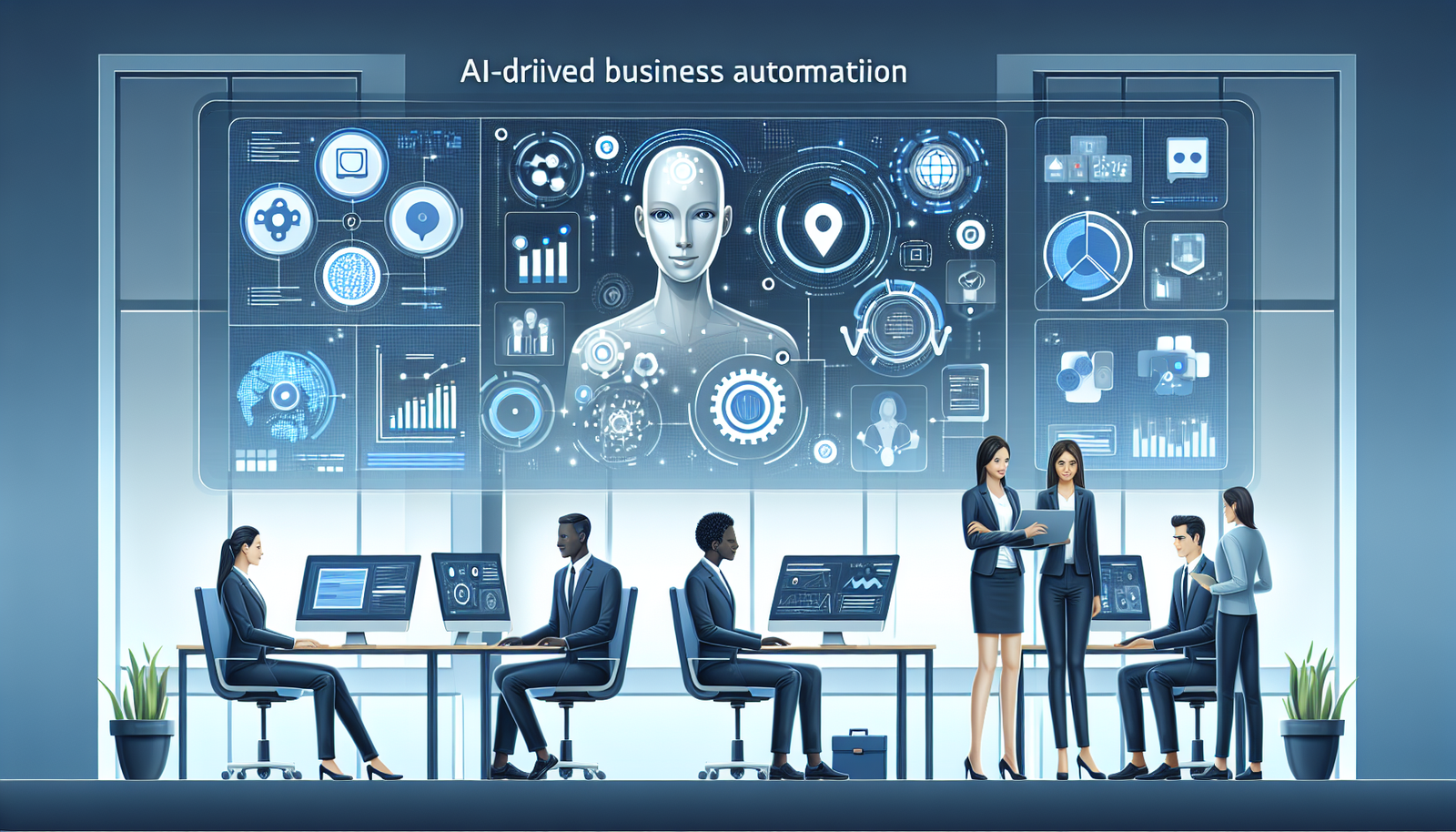
The business landscape of 2026 is defined by speed, efficiency, and intelligence. For startups, where resources are lean and the pressure to scale is immense, AI-driven business automation has shifted from a competitive advantage to a fundamental necessity. It offers a powerful toolkit to streamline workflows, slash operational costs, and unlock growth opportunities that were once the exclusive domain of large enterprises.
AI-powered automation goes far beyond simple task scheduling. It leverages machine learning (ML), natural language processing (NLP), and generative AI to handle complex, dynamic processes—from personalizing customer interactions at scale to predicting market trends with startling accuracy. For a startup, this means freeing up your most valuable asset—your team’s time—to focus on innovation, strategy, and building meaningful customer relationships.
This comprehensive guide will walk you through the essentials of AI-driven business automation for startups in 2026. We’ll explore core concepts, tangible benefits, real-world applications across departments, and a step-by-step framework for successful implementation. Whether you’re aiming to optimize operations or revolutionize your customer experience, the insights here will provide a clear roadmap to harnessing the power of AI.
- What is AI-Driven Business Automation?
- The Critical Benefits of AI Automation for Startups in 2026
- Step-by-Step Guide to Implementing AI Automation
- Overcoming Common Challenges in AI Implementation
- The Future of AI in Business: What’s Next for 2026 and Beyond?
- How Techno Believe Can Help
- Conclusion: Your Next Move in a Smarter Business World
- FAQ
- What is AI-driven business automation?
- How much does AI business automation cost for a startup?
- What are the first steps to implementing AI automation?
- Can AI automation replace jobs at my startup?
- What are the biggest risks of using AI automation?
- Which business departments benefit most from AI automation?
- Sources
What is AI-Driven Business Automation?
AI-driven business automation is the use of artificial intelligence technologies to orchestrate, manage, and execute business processes that traditionally require human intelligence and intervention. Unlike traditional automation, such as Robotic Process Automation (RPA) which follows predefined rules to perform repetitive tasks, AI introduces a layer of cognitive ability. These systems can learn from data, understand context, make predictions, and adapt to new information.
Key technologies powering this revolution include:
- Machine Learning (ML): Algorithms that analyze vast datasets to identify patterns, make predictions, and improve their performance over time without being explicitly programmed. For example, an ML model can predict customer churn based on behavior patterns.
- Natural Language Processing (NLP): The ability for computers to understand, interpret, and generate human language. This is the technology behind AI chatbots, sentiment analysis tools, and automated email categorization.
- Generative AI: Advanced models, like those behind ChatGPT, that can create new content, from text and images to code and complex data summaries. Startups use this for content creation, customer service responses, and software development.
- Computer Vision: AI that enables systems to interpret and understand visual information from the world, used in quality control, inventory management, and security.
For a startup, this means automating not just the what but also the why and how. An AI system can analyze incoming support tickets (NLP), predict which are most urgent (ML), and draft a personalized response (Generative AI), all before a human agent even sees the ticket.
The Critical Benefits of AI Automation for Startups in 2026
In an economic climate where efficiency is paramount, startups must do more with less. AI-driven business automation provides a direct path to achieving this, delivering tangible benefits that fuel growth and resilience.
- Drastic Cost Reduction: Manual labor is one of the biggest expenses for any startup. By automating routine tasks like data entry, invoicing, and customer support triage, AI reduces the need for extensive hiring.
- Enhanced Productivity and Focus: When repetitive tasks are offloaded to AI, your team can concentrate on high-value activities like product development, strategic planning, and building client relationships. This shift doesn’t just save time; it boosts morale and innovation.
- Unprecedented Scalability: A key challenge for startups is scaling operations without a proportional increase in overhead. AI systems can handle a massive volume of tasks—from processing thousands of orders to answering tens of thousands of customer queries—24/7, without performance degradation. This allows your business to grow without the typical growing pains.
- Data-Driven Decision-Making: Gut feeling is no longer enough. AI tools can analyze complex datasets in real-time to uncover insights that would be impossible for a human to spot. This enables startups to make informed decisions on everything from marketing spend and inventory levels to product feature prioritization. Exploring growth marketing strategies becomes far more effective with AI-powered data analysis.
- Superior Customer Experience: Modern customers expect instant, personalized service. AI chatbots provide 24/7 support, while AI-powered recommendation engines deliver tailored product suggestions. This level of personalization builds loyalty and increases customer lifetime value, giving startups a competitive edge.
Step-by-Step Guide to Implementing AI Automation
Adopting AI can seem daunting, but a structured approach breaks it down into manageable steps. Follow this framework to integrate AI-driven business automation into your startup successfully.
Step 1: Identify and Prioritize Automation Opportunities
Start by analyzing your current workflows to find the best candidates for automation. Look for tasks that are:
- Repetitive and Time-Consuming: Data entry, report generation, social media posting.
- Rule-Based: Invoice processing, employee onboarding paperwork.
- High-Volume: Customer support inquiries, lead qualification.
- Prone to Human Error: Data migration, financial calculations.
Create a prioritized list based on potential impact (time/cost savings) and ease of implementation. A great starting point is often automating a single, painful process in one department to demonstrate value quickly.
Step 2: Choose the Right AI Tools for Your Needs
The market for AI tools is vast, but many are designed with startups in mind. Your choice will depend on your specific needs, budget, and technical expertise.
| Tool | Best For | Typical Startup Pricing (2026) | Key Features |
|---|---|---|---|
| Zapier | Workflow & App Integration | Starts at ~$30/month | Connects thousands of apps without code, automates multi-step workflows. |
| Make (formerly Integromat) | Complex Workflow Automation | Starts at ~$10/month | Visual workflow builder, more powerful logic and flexibility than Zapier. |
| ChatGPT / Custom GPTs | Customer Support & Content | ~$25/month per user | Advanced NLP for chatbots, email drafting, content creation, data analysis. |
| UiPath | Robotic Process Automation (RPA) | Custom/Enterprise pricing | Automates complex, system-level tasks across legacy and modern applications. |
| HubSpot AI | Marketing & Sales Automation | Included in plans ~$50/month+ | AI-powered content creation, predictive lead scoring, chatbot builders, CRM integration. |
When evaluating tools, take advantage of free trials to test their functionality and ease of use within your existing tech stack. Understanding AI’s impact on marketing can help you select the right marketing-focused tools.
Ready to integrate?: Choosing the right tools and ensuring they work with your existing systems is a major hurdle. A strategic audit can identify the perfect-fit solutions for your specific workflows. — Book a free automation audit.
Step 3: Integrate AI with Existing Systems
For automation to be effective, your AI tools must communicate seamlessly with your current software (CRM, ERP, project management tools, etc.). Most modern AI platforms offer robust APIs and pre-built integrations to make this process smoother. Start with a pilot project—a small-scale implementation to test the integration and workflow before a full rollout. Document everything and ensure data privacy and security protocols are strictly followed.
Step 4: Train Your Team and Foster Adoption
AI tools are meant to empower your team, not replace them. Effective change management is crucial. Provide comprehensive training on how to use the new tools and, more importantly, how their roles will evolve. Frame AI as a collaborator that handles the tedious work, allowing them to focus on more strategic and creative tasks. A transparent approach will reduce fear and encourage adoption.
Step 5: Monitor, Measure, and Optimize
Automation is not a “set it and forget it” solution. Continuously monitor the performance of your AI systems against key performance indicators (KPIs). Track metrics like:
- Time Saved: Hours of manual work eliminated per week/month.
- Cost Reduction: Savings in operational expenses or reduced need for new hires.
- Error Rate Reduction: Decrease in errors for automated tasks vs. manual execution.
- Increased Output: Higher volume of leads processed, tickets resolved, or content produced.
Use this data to refine your workflows, optimize your AI models, and identify new opportunities for automation as your startup grows.
Overcoming Common Challenges in AI Implementation
While the benefits are immense, startups can face hurdles. Anticipating these challenges is the first step to overcoming them.
- Budget Constraints: High-end AI platforms can be expensive. Solution: Start with affordable, scalable SaaS tools like Zapier or Make. Leverage open-source frameworks if you have technical talent. Focus on automating tasks with the highest and fastest ROI to self-fund further investment.
- Lack of In-House Expertise: Not every startup has a data scientist on staff. Solution: Choose no-code/low-code AI platforms designed for business users. Many platforms offer extensive documentation, tutorials, and support. For more complex projects, consider partnering with a specialist agency.
- Data Quality and Security: AI is only as good as the data it’s trained on. Poor-quality data leads to poor outcomes. Solution: Implement data hygiene practices before you begin. Ensure all data handling complies with regulations like GDPR. Choose AI vendors with strong security credentials and transparent data policies.
- Resistance to Change: Employees may fear that automation will make their jobs obsolete. Solution: Communicate a clear vision for how AI will augment, not replace, your team. Invest in upskilling programs to help employees transition to higher-value roles that require critical thinking and creativity.
Strategic Guidance Needed?: Navigating the complexities of AI implementation, from tool selection to team training, requires a clear strategy. Our experts define scalable automation roadmaps for growing businesses. — Explore our automation services.
The Future of AI in Business: What’s Next for 2026 and Beyond?
The evolution of AI is accelerating. For startups, staying ahead of the curve means understanding the trends that will shape the future of business automation.
- Hyperautomation: This trend involves combining multiple technologies—AI, ML, RPA, and process mining—to automate as many business processes as possible in an end-to-end fashion. It’s about creating a deeply integrated and intelligent automation fabric across the entire organization.
- Autonomous Agents: The rise of sophisticated AI agents for business will be transformative. These agents will be able to independently manage complex workflows, such as running an entire marketing campaign from research and content creation to ad buying and performance analysis, with minimal human oversight.
- AI-Driven Decision Intelligence: AI will move beyond providing insights to actively recommending and even executing optimal business decisions. This means systems that can dynamically adjust pricing, reallocate marketing budgets, and optimize supply chains in real-time based on market signals.
Startups that begin building their AI capabilities now will be best positioned to leverage these future advancements for a sustained competitive advantage.
How Techno Believe Can Help
If you’re a startup leader, you understand the immense potential of AI automation, but navigating the path from concept to execution can be overwhelming. The sheer number of tools, the complexity of integration, and the challenge of identifying the highest-impact opportunities can lead to analysis paralysis or costly implementation mistakes. You need a clear, strategic roadmap that aligns technology with your specific business goals, ensuring every dollar invested in automation delivers a measurable return.
At Techno Believe, we specialize in demystifying AI for growing businesses. Our process begins with a deep dive into your current operations to pinpoint the bottlenecks and repetitive tasks that are holding you back. We then design and implement bespoke AI automation solutions tailored to your unique workflows. Our services include process discovery, tool selection and integration, custom workflow development, and team training to ensure seamless adoption.
We bridge the gap between your business needs and the right technology, creating a scalable automation foundation that grows with you. To see how we can streamline your operations and unlock new levels of efficiency, book an audit with our automation experts today.
Conclusion: Your Next Move in a Smarter Business World
For startups in 2026, AI-driven business automation is no longer an optional upgrade; it’s the core engine for sustainable growth, operational excellence, and competitive agility. By automating the mundane, you empower your team to focus on the meaningful. By leveraging data-driven insights, you make smarter decisions faster. From enhancing customer service to optimizing your entire operational backbone, the applications are as vast as your ambition.
The journey begins with a single step: identifying one key process that, if automated, would free up significant time and resources. Use the frameworks and tools discussed in this guide to start small, prove the value, and build momentum. The future belongs to the businesses that work smarter, not just harder. By embracing AI-driven business automation, your startup can secure its place at the forefront of innovation.
FAQ
What is AI-driven business automation?
AI-driven business automation uses artificial intelligence technologies like machine learning and natural language processing to automate complex tasks that traditionally require human judgment. Unlike basic automation that follows simple rules, AI systems can learn from data, understand context, and make intelligent decisions to manage workflows more effectively.
How much does AI business automation cost for a startup?
The cost varies widely. Simple workflow automation tools like Zapier or Make can start as low as $10-$30 per month. More advanced platforms for marketing or customer service often have plans starting around $50-$100 per month, while enterprise-grade RPA or custom AI solutions can cost thousands. Startups can begin with affordable tools and scale their investment as they grow.
What are the first steps to implementing AI automation?
First, identify repetitive, time-consuming, or error-prone tasks within your business operations. Next, research and select a user-friendly, no-code or low-code AI tool that fits your needs and budget. Start with a small pilot project to test the automation and demonstrate its value before expanding to other processes.
Can AI automation replace jobs at my startup?
More often, AI automation augments human roles rather than replacing them. It handles the tedious, repetitive parts of a job, freeing up employees to focus on more strategic, creative, and customer-facing work. This leads to increased productivity and can create new roles focused on managing and optimizing the AI systems themselves.
What are the biggest risks of using AI automation?
The primary risks include poor data quality leading to flawed AI decisions, data privacy and security vulnerabilities, and the initial cost and complexity of implementation. These can be mitigated by ensuring you have clean data, choosing reputable vendors with strong security protocols, and starting with small, manageable automation projects.
Which business departments benefit most from AI automation?
Virtually all departments can benefit. Customer service sees massive gains from AI chatbots and ticket routing. Marketing uses it for personalization and campaign management, sales for lead scoring, finance for invoice processing, and HR for onboarding and recruitment tasks.
Sources
- Gartner, Inc. — Insights on hyperautomation and strategic technology trends.
- Forrester Research — Analysis and predictions on the business impact of AI.
- Zapier Official Documentation — Resources for no-code workflow automation and app integration.
- UiPath Official Website — Information on Robotic Process Automation (RPA) and enterprise automation.
- HubSpot AI Resources — Details on AI tools for marketing, sales, and customer service.
- Make (formerly Integromat) Help Center — Guides on creating complex, visual workflows.
- OpenAI — Research and product information on foundational models like GPT that power generative AI tools.
Have a similar challenge? Explore our services.