
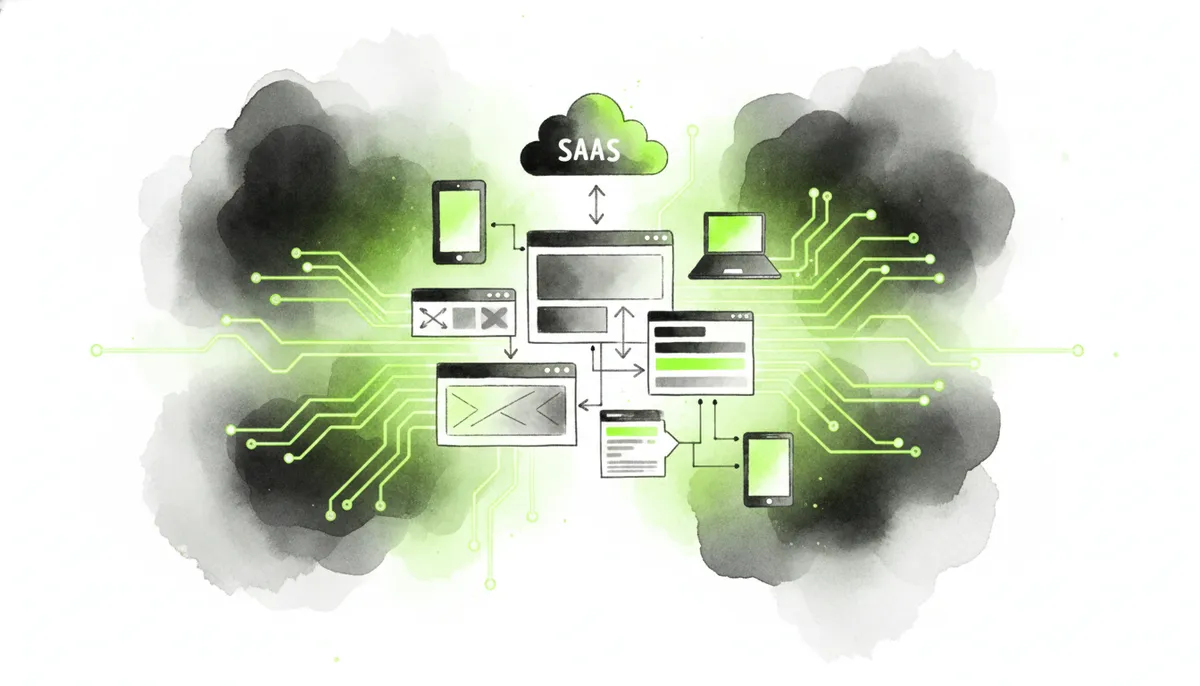
- Front End Web Development Services for B2B SaaS Success in 2026: A Comprehensive Guide
- Key Takeaways for B2B SaaS Founders in 2026
- 1. Understanding Front End Web Development Services in 2026
- 2. Why B2B SaaS Founders Need Strategic Front End Development
- 3. Key Technologies and Trends Shaping Front End in 2026
- 4. Choosing the Right Front End Development Partner for Your SaaS
- 5. The Impact of Front End on AI-Powered SaaS Platforms
- Frequently Asked Questions
- What is the typical cost of front end web development services for a B2B SaaS platform in 2026?
- How long does it take to develop a robust front end for a B2B SaaS application?
- Which front end technologies are most recommended for B2B SaaS in 2026?
- How does front end development impact SEO for a B2B SaaS website?
- Can front end development integrate with existing AI backend services?
- What role does UX design play in B2B SaaS front end development?
- Sources
Front End Web Development Services for B2B SaaS Success in 2026: A Comprehensive Guide
TL;DR: Strategic front end web development services are crucial for B2B SaaS success in 2026, focusing on intuitive UI/UX, robust performance, and seamless AI integration.
Key Takeaways for B2B SaaS Founders in 2026
- Strategic front end development is foundational for B2B SaaS user adoption, retention, and conversion rates.
- The 2026 landscape demands expertise in modern frameworks, performance, accessibility, and robust security.
- Integrating AI into the front end is crucial for personalized experiences and efficient data interaction in AI-powered SaaS.
- Continuously measure front-end performance with key KPIs and iterate based on user feedback to ensure sustained success.
1. Understanding Front End Web Development Services in 2026
In the rapidly evolving digital landscape of 2026, the significance of expertly crafted front-end web development services for B2B SaaS platforms cannot be overstated. This domain encompasses everything a user sees and interacts with, directly influencing their perception, engagement, and ultimately, their decision to adopt and retain your solution. As complexity in web applications grows, so does the demand for specialized expertise that goes beyond basic coding, requiring a deep understanding of user psychology, cutting-edge technologies, and seamless integration capabilities.
Defining the Core of User Experience (UX) and User Interface (UI)
At its heart, front-end development is the art and science of building the client-side of web applications – the part that users directly engage with. This includes everything from the visual layout and interactive elements to the overall flow and responsiveness of the application across various devices.
- What front end development encompasses: This involves translating design mockups and user experience wireframes into functional, interactive, and visually appealing web pages and applications. It’s about bringing the digital product to life for the end-user.
- Distinction between UI (visuals, interactivity) and UX (overall user journey, satisfaction): User Interface (UI) refers to the visual design and interactive elements of a digital product – the buttons, icons, typography, and color schemes. User Experience (UX), on the other hand, is the holistic journey a user has with the product, focusing on their overall satisfaction, ease of use, and efficiency in achieving their goals.
- The critical role of intuitive design in driving user adoption and retention for SaaS products: For B2B SaaS, an intuitive front end is paramount. It reduces the learning curve, minimizes onboarding friction, and ensures users can quickly leverage the platform’s value. This directly translates to higher adoption rates and sustained engagement, which are key metrics for SaaS success.
The Evolving Scope of Modern Front End Development
The tools and methodologies in front-end development have advanced significantly, enabling the creation of highly sophisticated and performant applications. By 2026, proficiency in a modern tech stack is non-negotiable for delivering competitive SaaS products.
- Key technologies and languages: Core technologies remain HTML5 for structure, CSS3 for styling and layout, and JavaScript (increasingly leveraging features from ES2026+ standards) for interactivity and dynamic content.
- Popular frameworks and libraries: The landscape is dominated by powerful JavaScript frameworks and libraries such as React, Angular, Vue.js, Svelte, and meta-frameworks like Next.js and Nuxt.js. These provide structure, reusable components, and efficient rendering capabilities crucial for complex applications.
- Focus on responsive design, cross-browser compatibility, and performance optimization: A truly effective front end must adapt seamlessly to any screen size (desktops, tablets, mobiles), function flawlessly across all major browsers, and load quickly to keep users engaged.
- The shift towards component-based architecture and design systems for scalability: Modern development emphasizes breaking down interfaces into reusable components. This approach, often guided by comprehensive design systems, significantly improves maintainability, consistency, and the scalability of front-end codebases.
Why 2026 Demands Specialized Expertise Beyond Basic Coding
The demands placed on front-end development in 2026 are far more intricate than simply writing clean code. B2B SaaS platforms often function as mission-critical tools, requiring a level of sophistication, reliability, and integration that necessitates specialized skills.
- The increasing complexity of web applications, especially for B2B SaaS: Modern B2B SaaS products are not just websites; they are dynamic platforms that handle complex data, integrate with numerous third-party services, and often incorporate advanced functionalities like real-time collaboration, AI-driven insights, and sophisticated analytics.
- The need for seamless integration with backend APIs, AI models, and third-party services: The front end acts as the primary interface for users to interact with the powerful backend logic, AI models, and external tools. This requires robust API integration skills, understanding of data flow, and the ability to present complex information in an accessible manner.
- Emphasis on security, accessibility (WCAG 2.2+), and maintainability as core requirements: In 2026, security is non-negotiable, with developers needing to implement robust measures against common vulnerabilities. Web Content Accessibility Guidelines (WCAG) 2.2 and beyond are also essential for ensuring inclusivity, reaching a broader audience. Furthermore, maintainable codebases reduce long-term development costs and accelerate future updates.
2. Why B2B SaaS Founders Need Strategic Front End Development
For B2B SaaS founders, a well-executed front end is not just a nice-to-have; it’s a strategic imperative that directly impacts user acquisition, retention, and revenue. The initial impression and ongoing user experience are critical differentiators in a competitive market.
Elevating User Adoption and Retention for SaaS Platforms
The front-end experience is often the first and most consistent interaction a user has with your SaaS product. A polished, intuitive interface dramatically influences their willingness to adopt and continue using your solution.
- First impressions matter: A visually appealing, easy-to-navigate front end immediately signals professionalism and reliability, reducing initial user hesitation and onboarding friction.
- Improved usability directly correlates with higher feature engagement and sustained usage: When users can effortlessly find and utilize the features they need, they are more likely to integrate your SaaS into their daily workflows, leading to deeper engagement.
- Reducing churn through a delightful and efficient user experience: A frustrating or confusing front end is a primary driver of customer churn. Conversely, a delightful and efficient experience fosters loyalty and reduces the likelihood of users seeking alternatives.
- Statistic: Studies in 2026 indicate that SaaS platforms with superior UX see an average of 15-20% higher user retention rates year-over-year compared to competitors with poor UX.
The Direct Link Between UI/UX and Conversion Rates
The journey from prospect to paying customer is heavily influenced by the front-end experience. Optimizing UI/UX can significantly boost conversion rates at every stage of the sales funnel.
- Optimized user flows guide prospects through trials, demos, and subscriptions: A well-designed front end simplifies complex processes, guiding potential customers seamlessly from initial interest through trial periods, demo requests, and ultimately, to subscription.
- Clear calls-to-action (CTAs) and persuasive design elements drive desired user actions: Strategic placement of CTAs, compelling visual hierarchies, and clear information architecture encourage users to take the next step, whether it’s signing up for a webinar or completing a purchase.
- A seamless front end builds trust and credibility, crucial for high-value B2B sales: For B2B solutions, where investment is often significant, users need to feel confident in the vendor’s capabilities. A professional and seamless front end is a primary indicator of this credibility.
Building Scalable and Maintainable Front Ends for Future Growth
As your B2B SaaS product evolves, so too must its front end. Strategic development ensures that the foundation is solid enough to support future expansion and adaptation without becoming a technical bottleneck.
- Architecting for growth: A scalable front-end architecture anticipates future needs, allowing for the easy addition of new features, user types, integrations, and increased user loads without requiring a complete overhaul.
- Clean code, proper documentation, and modular components reduce technical debt: Adhering to best practices in coding, documentation, and utilizing component-based structures makes the codebase easier to understand, modify, and extend, thus minimizing technical debt and future development costs.
- Enabling faster iteration and deployment cycles, critical for agile SaaS development: A well-structured front end allows development teams to implement changes, test new features, and deploy updates rapidly, which is essential for staying competitive and responsive to market demands in an agile environment.
3. Key Technologies and Trends Shaping Front End in 2026
The front-end development landscape in 2026 is characterized by powerful frameworks, the increasing integration of AI, and a heightened focus on performance, accessibility, and security. Staying ahead of these trends is crucial for building B2B SaaS platforms that are both competitive and future-proof.
Modern Frameworks, Libraries, and Meta-Frameworks
The choice of front-end framework significantly impacts development speed, application performance, and scalability. By 2026, certain ecosystems have solidified their dominance in the B2B SaaS space.
- Deep dive into the dominant choices: React (often paired with Next.js for server-side rendering and enhanced performance), Angular (a comprehensive framework ideal for large-scale enterprise applications), and Vue.js (known for its progressive nature and ease of integration, frequently used with Nuxt.js) are leading the pack. Svelte (and its meta-framework SvelteKit) is also gaining traction for its unique compile-time approach that results in highly performant, smaller bundles.
- The benefits of each for specific SaaS use cases:
- React/Next.js: Excellent for highly interactive UIs, complex dashboards, and applications requiring fast initial loads.
- Angular: Ideal for large, feature-rich enterprise applications that demand strong structure and maintainability.
- Vue.js/Nuxt.js: Great for projects that need rapid development, easy integration into existing systems, and progressive enhancement.
- Svelte/SvelteKit: Offers superior performance and smaller bundle sizes, making it suitable for performance-critical applications or those targeting lower-powered devices.
- The role of WebAssembly (Wasm) for performance-intensive client-side operations: WebAssembly allows developers to run code written in languages like C++ or Rust directly in the browser at near-native speeds. This is becoming increasingly important for computationally intensive tasks within SaaS applications, such as data processing, complex simulations, or advanced media manipulation, without relying on slower JavaScript execution.
Integrating AI/ML into the User Interface for Enhanced Experiences
Artificial Intelligence and Machine Learning are no longer confined to the backend; they are increasingly being woven into the front-end to create more intelligent, personalized, and predictive user experiences.
- Personalized user journeys driven by AI algorithms and user behavior analysis: AI can analyze user interactions to tailor content, features, and even the layout of the application in real-time, offering a bespoke experience for each user.
- Intelligent search and recommendation engines powered by machine learning: Users expect to find what they need quickly. ML-powered search and recommendation features can surface relevant information, products, or features based on user history, context, and similarity to other users.
- Interactive chat interfaces leveraging large language models (LLMs) for support and guidance: LLMs are enabling more sophisticated and natural language interactions through chatbots, providing instant support, guiding users through complex tasks, and even assisting with data entry or analysis.
- Designing UIs that effectively display and allow interaction with Model Context Protocol (MCP) data from AI models: As AI models become more sophisticated, the front end needs to be designed to clearly present the context and outputs of these models. This includes visualizing data, explaining predictions, and allowing users to interact with and refine the inputs and outputs of AI processes, adhering to standards like Model Context Protocol (MCP) for interoperability.
Performance Optimization, Accessibility, and Security Best Practices
In 2026, user expectations for web performance, inclusivity, and security are at an all-time high. These aspects are no longer afterthoughts but fundamental requirements for any successful B2B SaaS front end.
- Core Web Vitals (LCP, FID, CLS) as paramount for SEO and user satisfaction: Largest Contentful Paint (LCP), First Input Delay (FID), and Cumulative Layout Shift (CLS) are critical metrics that Google uses to assess user experience. Optimizing for these Core Web Vitals directly impacts search rankings and user retention.
- Implementing robust accessibility standards (WCAG 2.2 and beyond) for inclusive design: Ensuring your SaaS platform is usable by individuals with disabilities is not only ethical but also expands your potential market. Adhering to WCAG 2.2 and beyond standards is essential for compliance and user inclusivity.
- Front-end security considerations: Protecting user data and preventing malicious attacks are paramount. This involves implementing measures against Cross-Site Scripting (XSS), Cross-Site Request Forgery (CSRF), secure handling of API keys, and ensuring data transmitted is encrypted.
- Statistic: Google’s 2026 data confirms that websites meeting Core Web Vitals benchmarks experience 25% lower bounce rates and higher engagement.
4. Choosing the Right Front End Development Partner for Your SaaS
Selecting the right partner for your front-end development needs is a critical decision that can significantly impact your B2B SaaS product’s success. It requires looking beyond just technical skills to find a team that understands your business objectives and can translate them into an exceptional user experience.
Evaluating Expertise: Beyond Code to Business Understanding
When evaluating potential partners, it’s essential to assess their capabilities holistically, recognizing that technical proficiency must be paired with strategic insight.
- Look for partners who understand the B2B SaaS ecosystem, not just general web development: A partner with experience in B2B SaaS will understand the unique challenges, user journeys, and conversion funnels specific to this market, leading to more effective solutions.
- Assess their portfolio for relevant industry experience and complex application development: Reviewing past projects will reveal their ability to handle the complexity and scale required for your SaaS product, as well as their aesthetic and functional design capabilities.
- Importance of communication, project management, and a collaborative approach: Effective collaboration is key to a successful project. A good partner will have transparent communication channels, robust project management methodologies, and a willingness to work with your team, not just for you.
Need to scale rapidly? If your team is stretched thin and you require specialized front-end expertise to accelerate development without compromising quality, consider a dedicated agency. Learn more about our services.
Comparison Table: In-House vs. Freelancer vs. Specialized Agency
Choosing the right development model is crucial for managing resources, expertise, and project timelines effectively.
| Feature | In-House Team | Freelancer(s) | Specialized Agency |
|---|---|---|---|
| Cost | High (salaries, benefits, overhead) | Variable (can be cost-effective for small tasks) | Moderate to High (value-based, comprehensive service) |
| Scalability | Limited (hiring/firing takes time) | Highly Variable (dependent on individual availability) | High (can scale teams up/down as needed) |
| Expertise | Can be broad or narrow; requires continuous training | Varies wildly per individual; may lack holistic view | Deep, specialized expertise across multiple disciplines; proven track record |
| Project Mgmt. | Internal responsibility; can be time-consuming | Individual responsibility; requires strong client oversight | Dedicated project managers; structured methodologies; transparent reporting |
| Risk | Moderate (talent retention, skill gaps) | High (reliability, quality consistency, IP protection) | Low (established processes, contracts, quality assurance) |
| Strategic Fit | Aligns with company culture; can be slow to adapt | Can be difficult to align with long-term strategy | Strategic partner; understands business goals; proactive advice |
5. The Impact of Front End on AI-Powered SaaS Platforms
The front end of an AI-powered SaaS platform is the crucial bridge between complex algorithms and the end-user. Its design and functionality determine how effectively users can leverage AI insights, interact with AI models, and ultimately, achieve their business objectives.
Designing Intuitive Interfaces for Complex AI Solutions
Translating sophisticated AI logic into a user-friendly interface is a significant challenge that requires a deep understanding of both AI capabilities and user psychology.
- Translating sophisticated AI logic into accessible and actionable user experiences: The front end must simplify complex AI outputs, presenting them in a way that business users can easily understand and act upon, without needing to be AI experts themselves.
- Creating dashboards and visualizers that make AI insights understandable for business users: Effective data visualization is key. Interactive dashboards, clear charts, and intuitive graphs can transform raw AI predictions and analyses into actionable business intelligence.
- Simplifying user input for AI models, ensuring data quality and model effectiveness: The front end also dictates how users interact with AI models. Clear, guided input forms and validation mechanisms ensure that users provide accurate data, which is critical for the AI’s performance and reliability.
Enhancing Data Visualization and Interaction for AI Insights
The way AI-generated data and predictions are presented can make or break user adoption. Strategic front-end design ensures these insights are not just visible but also comprehensible and usable.
- Best practices for visualizing large datasets and AI-generated predictions: This involves choosing appropriate chart types, using clear labeling, providing context, and enabling users to drill down into details. Tools and techniques for handling big data visualization are essential.
- Interactive charts, graphs, and custom components that allow users to explore data: Static visualizations are less effective than interactive ones. Users should be able to filter, sort, zoom, and customize views to explore AI insights relevant to their specific needs.
- The front end as the bridge between raw AI output and human decision-making: Ultimately, the front end’s role is to empower users to make better decisions by making AI insights accessible and actionable. This transforms AI from a black box into a powerful decision-support tool.
Front End’s Role in AI Marketing and Outreach Automation
- Developing user-friendly interfaces for configuring AI-driven marketing campaigns: Setting up complex AI marketing strategies should be straightforward. The front end must provide intuitive controls for campaign targeting, budget allocation, content personalization, and automation rules.
- Creating dashboards to monitor AI marketing performance and automation workflows: Users need to see the impact of their AI efforts. Comprehensive dashboards that track key metrics, campaign performance, and the status of automation workflows are essential for demonstrating value and identifying areas for optimization.
- Ensuring seamless integration of AI-powered outreach tools (e.g., email deliverability feedback, SEO strategy tools) within the SaaS front end: When your SaaS platform integrates tools for email deliverability best practices or SEO strategy tools, the front end must present this information clearly and allow users to act on it easily. This integration enhances the overall utility of your platform.
Frequently Asked Questions
What is the typical cost of front end web development services for a B2B SaaS platform in 2026?
Costs for front-end development in 2026 vary significantly based on project scope, feature complexity, the chosen technology stack, and the expertise of the development team. A basic Minimum Viable Product (MVP) might range from tens of thousands to over a hundred thousand dollars, while a full-scale, feature-rich B2B SaaS platform could involve investments of several hundred thousand dollars or more over its development lifecycle. It’s crucial to focus on the value and ROI delivered rather than solely on the lowest price.
How long does it take to develop a robust front end for a B2B SaaS application?
The timeline for developing a robust front end for a B2B SaaS application depends heavily on its complexity and the development methodology employed. A foundational MVP might be achievable in 3-6 months, whereas a comprehensive, enterprise-grade platform with intricate features and integrations could take 9-18 months or longer. Agile development methodologies can help accelerate delivery by breaking down the project into iterative sprints, allowing for faster deployment of core functionalities.
Which front end technologies are most recommended for B2B SaaS in 2026?
For B2B SaaS in 2026, the most recommended technologies typically include React (often with Next.js), Angular, and Vue.js (with Nuxt.js). These frameworks offer robust ecosystems, component-based architectures for scalability and maintainability, and strong community support. React and Next.js are excellent for dynamic UIs and fast initial loads, Angular is well-suited for large enterprise applications, and Vue.js offers a balance of flexibility and ease of use.
How does front end development impact SEO for a B2B SaaS website?
Front-end development significantly impacts SEO by influencing website performance, mobile-friendliness, and user experience. Optimizing for Core Web Vitals (LCP, FID, CLS) directly affects search engine rankings, as Google prioritizes fast-loading, stable, and interactive pages. Semantic HTML, proper accessibility implementation, and responsive design also contribute positively to SEO by making content more accessible to both search engines and users.
Can front end development integrate with existing AI backend services?
Absolutely. Front-end development is designed to integrate seamlessly with AI backend services through APIs (such as REST or GraphQL). The front end serves as the interface for users to interact with AI functionalities, display AI model outputs, and send data for processing. This allows for the creation of intelligent applications where user actions trigger AI processes, and AI insights are presented back to the user in an understandable format, often leveraging standards like Model Context Protocol (MCP) for data exchange.
What role does UX design play in B2B SaaS front end development?
UX design is paramount in B2B SaaS front-end development as it defines the entire user journey, information architecture, and interaction patterns. A strong UX ensures the front end is not only visually appealing but also intuitive, efficient, and enjoyable to use. This directly impacts user adoption, feature engagement, task completion rates, and ultimately, customer satisfaction and retention, making it a critical driver of SaaS success.
Sources
- The Nielsen Norman Group (NN/g) – UX Research Articles — A leading authority on user experience research, providing insights into usability and design best practices.
- Google Developers – Web Vitals & Performance Guides — Essential resources for understanding and optimizing website performance metrics like Core Web Vitals.
- Statista – SaaS Market Statistics — Provides comprehensive data and market trends for the Software as a Service industry.
- Smashing Magazine – Front End Development Best Practices — Offers in-depth articles and tutorials on modern front-end development techniques and best practices.
- Forrester Research – B2B Technology Insights — A reputable source for research and analysis on B2B technology trends and marketing strategies.
Have a similar challenge? Explore our services.
Related in this topic
- Top Web Development Company Services for B2B SaaS Success in 2026
- Web Designing & Development Services: The Ultimate Guide for SaaS Founders (2026)
- Top 10 Shopify Web Development Services for SaaS Brands in 2026
- Custom Cloud Automation Services: 2026 Guide
- The Ultimate Guide to Web Development and Designing Services for SaaS in 2026
- Top Web App Development Services in 2026: A Comprehensive Guide for SaaS Founders