
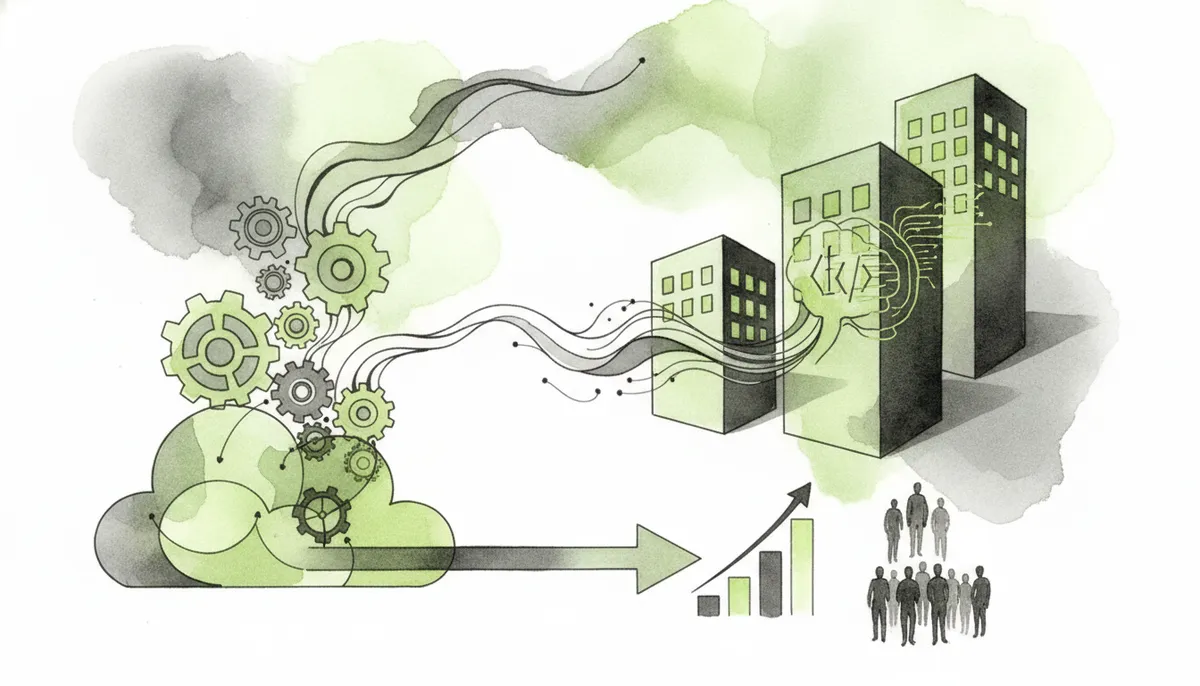
TL;DR: AI business automation software represents the next evolution of operational efficiency in 2026, allowing SaaS founders to integrate LLMs with internal data for autonomous workflows. By leveraging platforms like Make.com, n8n, and custom agents, businesses can reduce manual overhead, scale lead qualification, and maintain a competitive edge in a fast-moving market.
Key Takeaways
- AI business automation software is no longer optional; it is a core requirement for competitive SaaS growth in 2026.
- Focus on tools that support the Model Context Protocol (MCP) for better integration between LLMs and your internal data.
- Automation should prioritize high-volume, low-complexity tasks like document processing and lead routing.
- Custom AI systems often outperform off-the-shelf tools for specific, niche business logic.
- Balance automation with human oversight to maintain brand voice and customer trust.
- Integration capability is the #1 factor in choosing software; silos are the enemy of AI efficiency.
Introduction
As we navigate 2026, the landscape for B2B SaaS growth has shifted toward intelligent, autonomous infrastructure. Implementing AI business automation software is no longer just a technical upgrade; it is a survival strategy for founders looking to scale operations without ballooning their headcount. By automating repetitive tasks, companies can redirect human energy toward high-level strategy and creative innovation, ensuring that every internal workflow is optimized for speed and accuracy.
What is AI Business Automation Software?
Defining Modern AI Workflow Systems
AI business automation software refers to integrated platforms that leverage machine learning and Large Language Models (LLMs) to execute complex, repetitive business processes without constant manual intervention. Unlike traditional “if-this-then-that” rules, modern systems use dynamic decision-making logic to ingest data, interpret context, and trigger multi-step actions across your entire tech stack.
Why Every Startup Needs AI Automation in 2026
For the modern startup, the “human-in-the-loop” model for data entry or basic customer support is a bottleneck to growth. By deploying automation, firms can handle a 10x increase in lead volume while maintaining consistent quality. Businesses that have successfully integrated these systems report a significant reduction in operational overhead, often seeing substantial improvements in lead-to-opportunity conversion rates compared to manual entry methods.
Comparison: Top AI Automation Platforms for 2026
Feature Matrix: Which Tool Fits Your Stack?
Choosing the right platform depends on your team’s technical expertise and your specific integration requirements. The following table provides a high-level comparison of the industry leaders in 2026.
| Tool Name | Primary Use Case | Integration Depth | Best For |
|---|---|---|---|
| Make.com | Complex Visual Workflows | High | Scaling multi-step processes |
| Zapier | Rapid Connectivity | Medium | Quick, low-code app linking |
| n8n | Self-hosted Automation | Very High | Privacy-conscious, custom builds |
Need a custom stack? If you are struggling to connect your internal databases with LLMs for seamless automation, book an audit and we will map out an architecture that fits your specific business logic.
Top 10 AI Business Automation Software Tools for 2026
Workflow Orchestrators and Integration Engines
- Make.com: The gold standard for complex, multi-step visual workflow automation, allowing for granular control over data paths.
- Zapier: The go-to for rapid, low-code connectivity between thousands of SaaS apps, perfect for small teams starting their journey.
- n8n: A powerful, self-hosted option that offers privacy-focused control, ideal for companies handling sensitive proprietary data.
AI-Powered Sales and Outreach Tools
- AI Sales Agents: Specialized platforms designed to autonomously handle initial discovery calls and lead qualification, ensuring your sales team only speaks to high-intent prospects.
- Custom LLM Agents: Purpose-built models that interact with your internal knowledge base to provide instant, accurate answers to customer queries.
- Document Processing AI: Tools that leverage OCR and LLM analysis to automate invoice processing and contract reviews, reducing turnaround time by up to 70%.
- CRM-Integrated Automation: Platforms that update your CRM in real-time based on email sentiment and interaction history.
- Automated Lead Scoring: Systems that use historical conversion data to prioritize leads, ensuring your team focuses on the highest-value opportunities.
- Predictive Analytics Engines: Software that interprets market trends to suggest content and campaign adjustments automatically.
How Techno Believe Can Help
If you are trying to scale your B2B SaaS operations by implementing AI business automation software, you likely realize that off-the-shelf tools often fall short when faced with proprietary business logic. At Techno Believe, we specialize in bridging that gap through end-to-end AI and software product development. We help founders build the infrastructure that allows their business to run autonomously.
Whether you need to optimize your sales funnel or build a bespoke automation platform, we focus on delivering scalable, secure, and efficient solutions tailored to your unique growth requirements.
Ready to transform your operations with intelligent, custom-built systems? Explore our services to see how we can help you integrate AI into your core business processes.
Implementing AI Document and Sales Automation
AI Document Automation Strategies
Automating document-heavy tasks is one of the fastest ways to improve operational efficiency. By using advanced OCR integrated with LLMs, businesses can automate the review of complex contracts and invoices. This not only removes the potential for human error but also drastically reduces the time spent on administrative back-office work.
Optimizing Sales Funnels with AI
Sales optimization in 2026 relies on the intelligent use of Natural Language Processing (NLP). By automatically categorizing incoming sales emails and scoring leads based on real-time engagement, your team can ensure that no opportunity slips through the cracks. As noted in recent industry reports, over 70% of high-growth SaaS startups have already integrated at least one AI-native automation tool into their core sales stack.
Evaluating your sales stack? If you need help automating your lead qualification to boost conversion rates, explore our services to see how we build custom AI agents for growth.
Frequently Asked Questions
What is the Model Context Protocol (MCP) and why does it matter?
The Model Context Protocol (MCP) is an open standard developed by Anthropic that allows AI models to securely access and interact with your local data sources and internal tools. It is essential because it bridges the gap between static LLMs and your proprietary business data, enabling more accurate, context-aware automation.
Can AI automation replace my entire marketing team?
No, AI is a force multiplier, not a total replacement for human talent. It excels at handling high-volume, repetitive tasks, which allows your marketing team to focus entirely on high-level strategy, brand voice, and creative nuance.
Is custom AI development expensive?
While custom systems require an upfront investment, the long-term ROI from efficiency gains and the competitive advantage of using proprietary data makes it highly cost-effective for growing businesses. It eliminates the recurring costs of scaling manual labor and generic third-party subscriptions.
How do I ensure my AI automation tools are secure?
Security is managed by prioritizing data privacy, utilizing SOC2 compliant providers, and maintaining sensitive proprietary data within your own secure infrastructure. By using custom-built agents, you ensure that your data is not being used to train public models without your consent.
What is the first step in starting AI automation?
The first step is to conduct a thorough audit of your daily workflows to identify repetitive, rules-based tasks that consume the most time. Once these “automation gaps” are identified, you can prioritize which processes to automate first to generate the highest immediate impact on your operations.
Sources
- Anthropic Model Context Protocol Documentation — Official documentation on the open standard for connecting AI to internal data.
- Techno Believe Solutions – AI Consulting Services — Expert consultancy for end-to-end AI and software product development.
- 15 Top Digital Marketing Tips for 2026 — Insights on aligning marketing strategies with current AI-powered tools.
- AI Agents: Save 100+ Hours in 2026 — A guide on how autonomous agents streamline operational workflows.
Have a similar challenge? Explore our services.
Related in this topic
- AI Automation Use Cases: 15 High-ROI Examples for SaaS in 2026
- Best AI Tools for SEO in 2026: The SaaS Founder’s Guide to Ranking Faster
- AI International Consultancy Mumbai: 2026 Guide
- How to Implement AI Deployment: A 9-Step Checklist for 2026
- 7 Top AI Business Consulting Services for B2B SaaS Growth in 2026
- Customised AI for Business: The Complete 2026 Strategy Guide for B2B Founders