
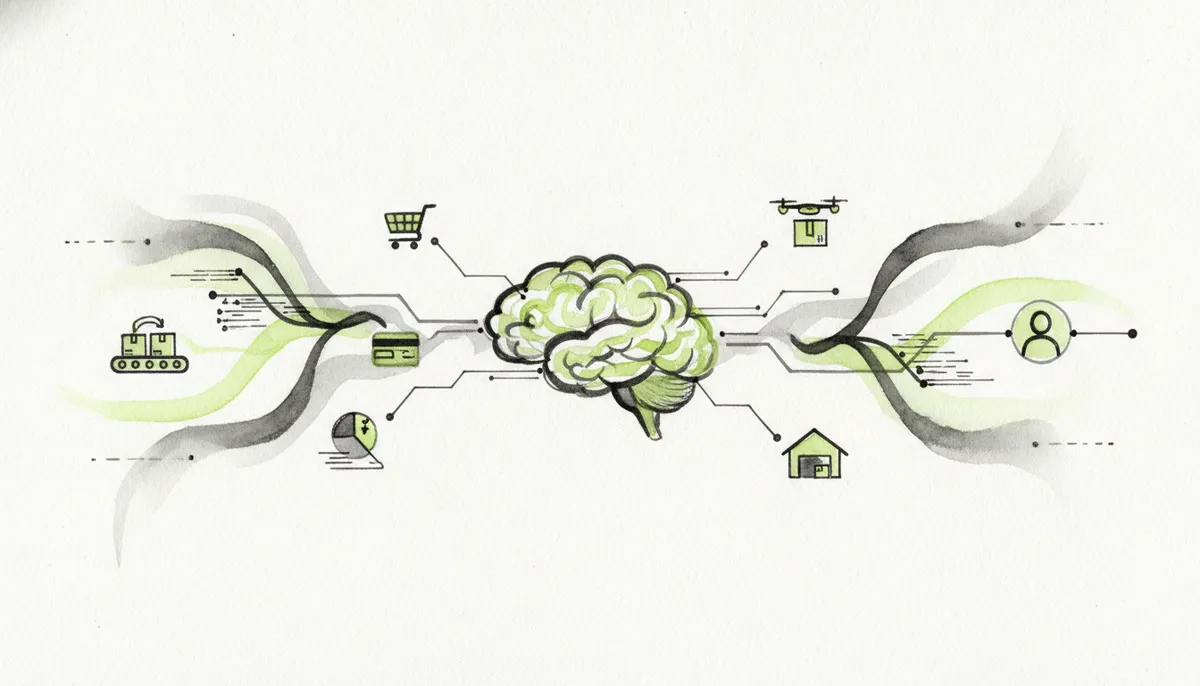
If you are asking yourself, is it what are the most promising ai driven ecommerce automation strategies for 2026? the direct answer is clear: the most impactful strategies center on autonomous agentic customer support via Model Context Protocol, dynamic real-time pricing engines, predictive multi-echelon inventory replenishment, and hyper-personalized generative storefront experiences. These interconnected systems replace fragmented rules with self-correcting machine learning workflows that systematically protect gross margins, optimize supply chains, and lift conversion rates across modern enterprise retail.
- The AI-Driven E-Commerce Landscape in 2026: Architectural Paradigm Shift
- Hyper-Personalized Customer Journeys at Scale
- Intelligent Inventory, Supply Chain, and Logistics Automation
- Next-Gen Autonomous AI Agents for Customer Support & Post-Purchase Experience
- Dynamic Pricing, Promotion Optimization, and Algorithmic Margin Protection
- AI-Powered Marketing, Customer Acquisition, and Autonomous Ad Orchestration
- Comparing AI Automation Solutions: Build vs. Buy vs. Partner in 2026
- Implementing AI Automation: Challenges, Data Governance, and Best Practices
- How Techno Believe Can Help
- FAQ
- What are the most promising ai driven ecommerce automation strategies for 2026?
- What is the primary difference between legacy e-commerce automation and 2026 AI strategies?
- How does Model Context Protocol (MCP) transform digital retail operations?
- How do AI-driven pricing engines protect gross margins during market volatility?
- Can mid-market e-commerce brands afford enterprise-grade AI automation in 2026?
- What is the best initial project for an e-commerce brand adopting AI automation?
- Frequently Asked Questions
- What is is it what are the most promising ai driven ecommerce automation strategies for 2026??
- How do I get started with is it what are the most promising ai driven ecommerce automation strategies for 2026??
- How does the ai-driven e-commerce landscape in 2026: architectural paradigm shift actually work?
- How does hyper-personalized customer journeys at scale actually work?
- How does intelligent inventory, supply chain, and logistics automation actually work?
- Sources
Key Takeaways
- Agentic Orchestration Over Scripting: Static “if-this-then-that” triggers have been replaced by multi-agent systems that autonomously reason, invoke enterprise APIs, and resolve complex edge cases across marketing, sales, and logistics.
- Sub-Second Front-End Personalization: Vector search engines and generative UI frameworks dynamically rewrite product detail pages, render custom lifestyle assets, and individualize bundles based on micro-intent signals.
- Autonomous Supply Chain Resilience: Multi-modal machine learning models synthesize social sentiment, weather telemetry, and carrier port logistics to execute automated supplier replenishment 72 hours before disruptions materialize.
- Algorithmic Margin Protection: Real-time pricing engines leverage reinforcement learning to balance price elasticity against dynamic shipping costs, inventory aging, and competitor actions rather than relying on blunt discounts.
- Integration via Standardized Context: The broad adoption of the Model Context Protocol (MCP) enables plug-and-play interoperability between legacy ERPs, modern e-commerce headless APIs, and foundational language models.
The AI-Driven E-Commerce Landscape in 2026: Architectural Paradigm Shift
The digital retail ecosystem in 2026 has crossed an unprecedented threshold. For nearly two decades, commerce automation was fundamentally deterministic. Workflows functioned via brittle “if-this-then-that” scripts: an abandoned cart fired a webhook after twenty-four hours; an inventory drop below a static reorder threshold triggered a batch purchase order; a customer support query triggered a rigid decision tree that inevitably failed when faced with nuanced human intent.
These legacy patterns generated immense technical debt, produced disconnected data silos, and left digital merchants vulnerable to sudden demand shifts, margin compression, and customer fatigue. In 2026, artificial intelligence is no longer an auxiliary layer layered on top of legacy software. It represents the foundational computational substrate of modern commerce architecture.
Instead of rigid rules, contemporary e-commerce relies on autonomous, goal-directed agentic systems. These systems consume continuous multi-modal telemetry—ranging from live clickstream dwell velocity and real-time competitor catalog pricing to port logistics delays and regional microclimate forecasts—to execute multi-step business transactions without requiring human intermediation.
 Legacy Architecture (Rule-Based)                  2026 Agentic Architecture (Autonomous)
┌──────────────────────────────────┐             ┌──────────────────────────────────────────┐
│ Webhook Trigger (Cart Abandon)   │             │ Real-Time Stream (Micro-Behaviors, Context)│
└────────────────┬─────────────────┘             └────────────────────┬─────────────────────┘
                 ▼                                                    ▼
┌──────────────────────────────────┐             ┌──────────────────────────────────────────┐
│ Static Rule Engine (If / Else)   │             │ Agentic Orchestration Layer (LLM + MCP)  │
└────────────────┬─────────────────┘             └───────────┬───────────────────┬──────────┘
                 ▼                                           ▼                   ▼
┌──────────────────────────────────┐             ┌────────────────┐ ┌──────────────────────┐
│ Hardcoded Email / Fixed Discount │             │ Dynamic Action │ │ Autonomous API Calls │
└──────────────────────────────────┘             │ (Generative UI)│ │ (ERP, CRM, Logistics)│
                                                 └────────────────┘ └──────────────────────┘
Deconstructing Modern Intelligent Automation
To understand why modern commerce automation behaves differently from prior iterations, digital retail leaders must evaluate the core infrastructural layers powering enterprise architectures in 2026:
- Specialized Small Language Models (SLMs) at the Edge: While massive foundational models handle complex multi-step reasoning and strategic planning, ultra-lightweight, quantized SLMs deployed on edge networks process sub-20ms transactional tasks. These include semantic query rewrites, real-time intent tokenization, sentiment extraction, and catalog categorization.
- Vector Stores and Hybrid Lexical-Semantic Indexes: Modern data catalogs utilize platforms like Pinecone and Qdrant to maintain dense vector embeddings of product attributes, lifestyle visual aesthetics, customer review transcripts, and cross-session customer behaviors. Hybrid search pipelines merge sparse BM25 lexical algorithms with dense neural retrieval to eliminate hallucinated product attributes and return zero-error catalog matches.
- Event-Driven Streaming Fabrics: Modern e-commerce backends have migrated away from nightly batch cron jobs. Distributed streaming platforms, driven by Apache Kafka, publish hundreds of thousands of concurrent behavioral events per second directly into event-driven stream processors, making telemetry instantly accessible to autonomous decision loops.
- The Model Context Protocol (MCP) Standard: Established as the universal open integration standard, MCP abstracts proprietary REST and GraphQL endpoints into standardized resource contexts, tools, and prompts. Rather than writing brittle custom middleware between enterprise ERPs, storefronts, and foundational models, agents discover and call tools securely via declarative MCP servers.
# Conceptual Event Dispatcher for Real-Time Intent Processing in 2026 Commerce Architecture
from dataclasses import dataclass
from typing import Dict, Any, List, Optional
import time
import asyncio

@dataclass
class UserTelemetryEvent:
    session_id: str
    user_id: Optional[str]
    event_type: str
    dwell_velocity: float
    viewport_focus_sku: str
    referrer_channel: str
    in_session_margin_target: float
    timestamp: float = time.time()

class CommerceEdgeOrchestrator:
    def __init__(self, vector_engine, mcp_client, model_gateway):
        self.vector_engine = vector_engine
        self.mcp_client = mcp_client
        self.model_gateway = model_gateway

    async def process_telemetry_stream(self, event: UserTelemetryEvent) -> Dict[str, Any]:
        """
        Evaluates micro-intent in real time and triggers sub-second dynamic adaptation.
        """
        # Generate low-latency semantic representation of in-session behavior
        behavioral_embedding = await self.vector_engine.embed_session_state({
            "focus_sku": event.viewport_focus_sku,
            "velocity": event.dwell_velocity,
            "channel": event.referrer_channel
        })

        # Execute hybrid vector retrieval with active margin & stock constraints
        candidate_recommendations = await self.vector_engine.hybrid_query(
            vector=behavioral_embedding,
            top_k=4,
            filter_criteria={
                "in_stock": True,
                "contribution_margin_pct": {"$gte": event.in_session_margin_target}
            }
        )

        # If cognitive friction or abandon signal is detected, trigger autonomous agent
        if event.dwell_velocity > 0.85 and event.event_type == "cart_hesitation":
            intervention_payload = await self.mcp_client.invoke_tool(
                server_name="commerce_promotions_mcp",
                tool_name="compute_zero_waste_incentive",
                arguments={
                    "user_id": event.user_id,
                    "session_id": event.session_id,
                    "candidate_skus": [sku["id"] for sku in candidate_recommendations]
                }
            )
            return {
                "action": "render_contextual_flyout",
                "payload": intervention_payload
            }

        return {
            "action": "dynamically_reorder_shelf",
            "payload": candidate_recommendations
        }
The Unit Economics of AI Infrastructure in 2026
Deploying enterprise-grade AI automation was historically constrained by compute expenses. In 2023 and 2024, running continuous multi-agent cognitive loops on thousands of concurrent visitor sessions resulted in unsustainable cloud and inference bills. Between 2024 and 2026, inference expenditures declined by approximately 74% per token due to architectural innovations such as speculative decoding, structured output caching, mixture-of-experts (MoE) routing, and hardware-level FP4 quantization.
Simultaneously, customer acquisition costs (CAC) across major digital marketing channels escalated by 38% over the same two-year window. Ad signal degradation, privacy-preserving sandbox environments, and platform auction saturation mean digital retailers can no longer spend their way to profitable growth through top-of-funnel ad spend alone.
Profitable commerce in 2026 is captured through post-click efficiency: dynamic margin defense, autonomous inventory balancing, and sub-second behavioral conversion optimization. Implementing intelligent systems across these operational vectors reduces retail operating expenditures by 20% to 35% while expanding net operating margins by 400 to 650 basis points. For technology leaders evaluating overarching organizational transformation, implementing AI for business automation establishes the foundation required to execute these capabilities at scale.
Enterprise System Review: If legacy scripts are causing checkout friction and draining developer resources — explore our services to design an enterprise-grade agentic architecture.
Hyper-Personalized Customer Journeys at Scale
Personalization in digital retail was long confined to superficial cosmetics: tokenizing a customer’s first name in an email subject line, displaying recently viewed items in a carousel, or segmenting audiences into coarse demographic buckets. In 2026, personalization is fully generative, instantaneous, and computed at runtime.
When exploring what are the most promising ai driven ecommerce automation strategies for 2026?, personalized discovery and generative storefront dynamic rendering represent the primary front-end drivers of incremental revenue lift.
Traditional Storefront Architecture            2026 Generative Dynamic Storefront
┌─────────────────────────────────────────┐    ┌─────────────────────────────────────────┐
│ Static CDN Page (Identical for All)     │    │ Dynamic Edge Hydration (Zero-Latency)   │
│ - Static Hero Banner                    │    │ - Intent-Parsed Value Proposition       │
│ - Global Top 10 Carousels               │    │ - Context-Adaptive Lifestyle Imagery    │
│ - Universal Typography & Tone           │    │ - Algorithmic Bundling & Live Reviews   │
└─────────────────────────────────────────┘    └─────────────────────────────────────────┘
Semantic Search, Multimodal Discovery, and Vector Embeddings
Traditional search solutions relied heavily on exact keyword matching, manual synonym overrides, and rigid catalog metadata tagging. When a shopper entered a conversational, multi-constraint search query—such as “lightweight, waterproof trail jacket for wet Pacific Northwest autumn hikes that won’t overheat during steep climbs”—legacy keyword engines produced irrelevant items or returned zero results.
Modern commerce search engines leverage multi-modal vector embeddings that combine visual features, raw unstructured customer feedback, technical specification sheets, and contextual conditions into high-dimensional semantic spaces. Discovery pipelines parse natural language to uncover nuanced consumer constraints:
- Climatic Context Extraction: Recognizing that “Pacific Northwest autumn” implies sustained drizzle, moderate temperatures (8–14°C), and low ambient sunlight.
- Performance Need Mapping: Associating “won’t overheat during steep climbs” with mechanical ventilation (pit zips), breathability ratings (>20,000 g/m²/24h), and active wicking membranes.
- Aesthetic and Material Affinity: Filtering candidate SKUs through visual aesthetics aligned with the customer’s historical engagement profile.
User Query: "Waterproof trail jacket for wet PNW autumn that won't overheat on steep climbs"
  │
  ├─► Multi-Modal Neural Parsing Layer (CLIP / Custom Text-Image Embedder)
  │   ├─ Micro-Climate Constraints: 8-14°C, high precipitation, overcast
  │   ├─ Technical Specs: >20k Breathability, DWR membrane, pit zips
  │   └─ Visual Aesthetic: Earth tones, technical outdoor profile
  │
  └─► Hybrid Vector Search Execution (Sparse BM25 + Dense Cosine)
      │
      ▼
Dynamic Storefront Output: Real-time generated comparison grid with highlighted technical specs
Moreover, multimodal visual discovery has become a primary entry point. Consumers frequently upload a social media video clip, an unedited photograph of furniture in a friend’s apartment, or a snapshot of an outfit from an urban street. Advanced computer vision models perform automated feature decomposition—identifying silhouettes, fabric weaves, stitch styles, and Pantone color codes—and query the enterprise catalog using cross-modal vector indexing. The system verifies real-time node inventory, calculates delivery estimates to the user’s zip code, and hydrates an individualized landing page in under 250 milliseconds.
Generative Storefronts and Dynamic Merchandising
Static storefront layouts are rapidly becoming relics of legacy commerce. Modern web applications utilize modular, component-driven generative design systems built on headless commerce frameworks. When a user lands on a site, an edge AI agent assesses cross-session history, referring campaign source, device viewport, local weather telemetry, and in-session dwell velocity to render page components dynamically.
Consider how an enterprise outdoor apparel brand dynamically assembles the same product detail page (PDP) for two completely different shoppers looking at the same technical shell jacket:
- Shopper A (Technical Backcountry Alpinist): The edge system renders an above-the-fold interface prioritizing technical membrane specifications, hydrostatic head ratings, weight-to-warmth ratios, and verified user reviews from certified mountain guides. Lifestyle assets highlight alpine terrain during harsh winter storms.
- Shopper B (Urban Commuter & Casual Walker): The layout dynamically shifts to highlight waterproof styling, packability into commuter bags, transit-friendly aesthetic details, and styling recommendations paired with casual denim and footwear.
This automatic reconfiguration is not manually built by merchandising teams. Generative models dynamically pull approved imagery from headless digital asset managers (DAM), assemble layout components via modern frameworks, and craft unique, contextually relevant benefit headlines. Retail brands deploying generative component rendering consistently realize conversion rate improvements between 18% and 27% over static baseline layouts.
// Example: Dynamic Storefront Edge Component Orchestrator
interface VisitorTelemetryContext {
  visitorProfile: 'technical_performer' | 'urban_lifestyle' | 'price_sensitive_general';
  geoEnvironment: { tempCelsius: number; precipitationExpected: boolean; regionCode: string };
  sessionSource: string;
  inSessionFrictionScore: number;
}

interface HydratedLayoutPayload {
  heroComponent: string;
  specificationGridVisible: boolean;
  curatedSocialProofNode: string;
  personalizedCrossSellSkus: string[];
}

export async function orchestrateDynamicStorefront(
  context: VisitorTelemetryContext,
  skuBaseId: string
): Promise<HydratedLayoutPayload> {
  // Determine component architecture dynamically based on real-time telemetry
  if (context.visitorProfile === 'technical_performer' || context.geoEnvironment.precipitationExpected) {
    return {
      heroComponent: 'TechnicalDurabilityHeroModule',
      specificationGridVisible: true,
      curatedSocialProofNode: 'AlpinistGuideFieldTestingReviews',
      personalizedCrossSellSkus: ['SKU-SEALED-DRYBAG-01', 'SKU-THERMAL-BASELAYER-09']
    };
  }

  return {
    heroComponent: 'UrbanLifestyleAestheticHeroModule',
    specificationGridVisible: false,
    curatedSocialProofNode: 'CityCommuterAestheticReviews',
    personalizedCrossSellSkus: ['SKU-DAILY-SLINGBAG-03', 'SKU-MERINO-EVERYDAY-SOCKS-02']
  };
}
Predictive Customer Lifetime Value (pCLV) and Retention Automation
Customer retention automation has evolved from reactive churn detection into continuous, predictive value optimization. Rather than waiting for a customer to cease purchasing for ninety days, machine learning architectures evaluate micro-signals—such as subtle shifts in visit intervals, engagement with unboxing guides, post-purchase customer support sentiment, and payment method updates—to continuously update predicted lifetime value.
Predictive Customer Lifetime Value (pCLV) Workflow Pipeline:

[ Behavioral & Transactional Inputs ]
  │─ Order recency, frequency, and monetary value (RFM)
  │─ In-session dwell volatility and category browse diversity
  │─ Support ticket sentiment history via MCP
  │─ Return rate velocity and condition notes
  ▼
[ Gradient-Boosted Multi-Variate CLV Predictor ]
  │
  ├─► Decile 10 (High Value, High Margin) ──────► VIP Concierge Agent Route / Early Access
  ├─► Decile 4-6 (Drifting, Churn Risk) ────────► Margin-Preserving Value Add (No Discounts)
  └─► Decile 1-3 (High Return Cost / Abuse) ────► Policy-Restricted Shipping / Paid Returns
This continuous scoring pipeline feeds directly into automated execution systems:
- Zero-Waste Value Allocations: High-value customers approaching churn inflection points receive high-perceived-value perks that do not deplete brand equity or cash margins, such as complimentary priority handling, invitations to exclusive product roundtables, or extended warranty upgrades.
- Margin-Shielded Reactivation: For mid-tier customers, automated retention campaigns do not dispatch generic 20% discount codes. Instead, generative marketing pipelines calculate the minimal commercial incentive necessary to secure a repeat transaction, frequently opting for a personalized bundled gift with high gross margin.
- Return-Abuse Mitigation Workflows: For customer accounts exhibiting chronic wardrobing or abusive return behaviors (e.g., purchasing five sizes of an item and returning four repeatedly), the AI engine automatically removes free return shipping perks, recalibrating policy enforcement at the checkout level.
Organizations developing custom retention models can discover strategic implementation blueprints by studying our guide on custom AI for business operations.
Intelligent Inventory, Supply Chain, and Logistics Automation
While front-end conversion captures top-line revenue, inventory accuracy and supply chain efficiency dictate operational survival. In 2026, global supply chains face ongoing volatility: regional freight bottlenecks, localized weather anomalies, and volatile material pricing. Progressive e-commerce organizations have eliminated manual forecasting spreadsheets in favor of multi-echelon autonomous supply chain engines.
  Global Macro Ingestion                Internal Enterprise Telemetry
(Freight Indexes, Weather, Social)    (Live ERP, POS, Returns Processing)
                 │                                      │
                 └──────────────────┬───────────────────┘
                                    ▼
                 ┌─────────────────────────────────────┐
                 │ Multi-Echelon AI Forecasting Engine │
                 └──────────────────┬──────────────────┘
                                    ▼
       ┌────────────────────────────┼────────────────────────────┐
       ▼                            ▼                            ▼
┌──────────────┐             ┌──────────────┐             ┌──────────────┐
│ Autonomous   │             │ Combinatorial│             │ Computer-    │
│ Vendor POs   │             │ Order Routing│             │ Vision Return│
│ via EDI/API  │             │ & Node Split │             │ Auto-Triage  │
└──────────────┘             └──────────────┘             └──────────────┘
Multi-Echelon Demand Forecasting and Autonomous Procurement
Traditional demand forecasting relied on backward-looking moving averages, single-point historical sales data, and static seasonal multipliers. When market dynamics changed suddenly, these static systems left merchants with catastrophic stockouts of high-demand items or massive overstocks of obsolete inventory requiring liquidation.
Modern Multi-Echelon Inventory Optimization (MEIO) models synthesize dozens of disparate external and internal data sources simultaneously:
- Topical Velocity and Social Sentiment Vectors: Natural language pipelines monitor social conversations, emerging lifestyle trends, creator video tags, and search engine query accelerations, identifying viral demand spikes days before they manifest in checkout volume.
- Upstream Supply Chain Telemetry: Continuous API integrations into shipping container logistics, port dwell databases, and regional rail freight nodes provide real-time updates on transit delays, allowing lead-time adjustments in automated ordering algorithms.
- Microclimatic Weather Forecasting: Predictive weather models project localized temperature and precipitation anomalies up to six weeks in advance, enabling inventory systems to proactively adjust regional distribution allocations.
When inventory replenishment thresholds are triggered, modern systems bypass manual buyer reviews. Autonomous procurement agents generate purchase orders, balance pricing tiers across qualified supplier networks, negotiate delivery terms within predefined tolerances, and submit signed transactions via secure EDI or modern APIs. When a Tier 1 supplier experiences a factory shutdown, the autonomous agent reroutes orders to secondary approved manufacturers, preventing stockout disruptions before they manifest.
| Operational Parameter | Legacy Rule-Based Supply Chain | 2026 Autonomous AI Supply Chain | Quantifiable Impact |
|---|---|---|---|
| Demand Forecasting Model | Static historical moving average (30/60/90-day) | Multi-variate deep learning (social, weather, macro logistics) | 38% to 52% reduction in stockouts during peak quarters |
| PO Generation & Approval | Manual buyer calculation & manual email PO processing | Autonomous agentic PO issuance via secure vendor APIs | Purchase cycle compressed from 10 days to under 6 hours |
| Inventory Distribution | Static hub-and-spoke allocation | Predictive dynamic multi-node balancing across regional micro-hubs | 26% reduction in average parcel transit distance |
| Split-Shipment Frequency | 18% to 28% of multi-item carts split across nodes | Under 4.5% split-shipment rate via combinatorial basket routing | Saves $3.80 to $6.20 in freight and packaging per order |
| Reverse Logistics Triage | Manual centralized warehouse inspection | Edge computer-vision assessment at regional drop-off hubs | 65% faster refund issuance; 28% increase in resale value |
Combinatorial Multi-Node Order Routing
Distributing inventory across diverse third-party logistics (3PL) fulfillment networks, physical retail locations, and regional distribution centers creates severe fulfillment coordination challenges. When an order contains multiple products, naive routing software frequently splits the shipment across disparate warehouses, doubling carrier packaging and freight charges while frustrating the customer with staggered delivery dates.
In 2026, AI fulfillment engines run real-time combinatorial optimization algorithms at checkout. When the checkout API receives a multi-item cart, the engine assesses:
- Real-time SKU stock across all warehouses, partner 3PLs, and localized brick-and-mortar storefronts.
- Regional carrier transit zones, fuel surcharges, packaging dimensional weights, and promised transit windows.
- The projected local demand for remaining items at each specific node over the following 72 hours.
If fulfilling an item from a local warehouse leaves that facility below its safety-stock threshold for expected high-margin local foot-traffic purchases over the weekend, the optimization engine routes fulfillment to an alternative facility. This real-time balancing preserves total enterprise margin without compromising customer delivery expectations.
# Combinatorial Order Routing Optimization Engine
from dataclasses import dataclass
from typing import List, Dict, Optional

@dataclass
class FulfillmentNode:
    node_id: str
    zip_code: str
    sku_stock: Dict[str, int]
    handling_fee: float
    carrier_rate_to_dest: float
    projected_local_surge_value: float

class IntelligentRoutingEngine:
    def __init__(self, stockout_margin_penalty: float = 35.0):
        self.penalty = stockout_margin_penalty

    def calculate_optimal_fulfillment_route(
        self,
        requested_items: Dict[str, int],
        destination_zip: str,
        available_nodes: List[FulfillmentNode]
    ) -> Dict[str, Any]:
        """
        Selects the fulfillment node that minimizes landed fulfillment cost
        while factoring in regional opportunity costs and stockout risks.
        """
        best_node: Optional[FulfillmentNode] = None
        lowest_computed_landed_cost = float('inf')

        for node in available_nodes:
            # Verify if node has complete inventory to avoid split shipments
            has_all_items = all(node.sku_stock.get(sku, 0) >= qty for sku, qty in requested_items.items())
            if not has_all_items:
                continue

            # Calculate potential stockout penalty if fulfilling depletes local buffer
            opportunity_cost = 0.0
            for sku, qty in requested_items.items():
                remaining_stock = node.sku_stock.get(sku, 0) - qty
                if remaining_stock < 3: # Buffer threshold
                    opportunity_cost += node.projected_local_surge_value

            total_landed_cost = node.handling_fee + node.carrier_rate_to_dest + opportunity_cost

            if total_landed_cost < lowest_computed_landed_cost:
                lowest_computed_landed_cost = total_landed_cost
                best_node = node

        if best_node:
            return {
                "status": "SUCCESS",
                "selected_node_id": best_node.node_id,
                "estimated_landed_cost": lowest_computed_landed_cost,
                "split_shipment_required": False
            }

        return {
            "status": "SPLIT_ROUTING_REQUIRED",
            "message": "No single node satisfies the complete cart; invoking multi-node solver."
        }
Computer-Vision Reverse Logistics and Automated Restocking
Product returns represent a massive margin leak in modern e-commerce, with average return rates in apparel and consumer electronics hovering between 20% and 30%. Traditional returns processing involves consolidating packages at centralized facilities where warehouse personnel manually inspect, re-bag, and catalog returned goods—a labor-intensive process that takes weeks and results in significant inventory depreciation.
In 2026, intelligent reverse logistics starts directly on the customer’s smartphone or at local drop-off micro-hubs. Using mobile computer-vision SDKs, customers capture high-resolution photos or video of the item they wish to return. Specialized vision models grade the product condition in real time, inspecting for fabric tears, pilling, scuffs, structural defects, and missing original packaging.
Based on automated condition grading, the returns agent chooses the optimal recovery path:
- Local Resale and Re-Commerce Routing: Items verified in pristine condition are routed directly to regional micro-fulfillment centers for instant restocking or assigned to certified secondary re-commerce channels.
- Localized Refurbishment Centers: Lightly worn goods are directed to localized repair or dry-cleaning facilities, circumventing costly cross-country freight.
- Immediate Value Refunds: For low-margin, high-freight items where shipping and restocking expenses exceed residual asset value, the AI automatically refunds the customer instantly while directing them to donate or recycle the product, protecting net contribution margin.
Engineering robust, low-latency web platforms capable of handling these complex distributed workloads requires modern development frameworks, as discussed in our deep dive on top web app development services in 2026.
Next-Gen Autonomous AI Agents for Customer Support & Post-Purchase Experience
Customer service in 2026 has progressed far beyond the frustrating scripted chatbots of the early 2020s. Consumers no longer accept rigid decision trees that fail to resolve basic edge cases or endlessly repeat generic canned responses.
Modern customer support is driven by autonomous, transactional AI agents developed using agentic orchestration frameworks like LangChain and LangGraph. These agents operate via standardized protocols like the Model Context Protocol, possessing safe transactional authority, deep catalog intelligence, and end-to-end operational visibility.
Customer Multi-Channel Inbound (Voice / Chat / SMS / Social DM)
                        │
                        ▼
┌─────────────────────────────────────────────────────────────┐
│ Unified Model Context Protocol (MCP) Middleware Layer       │
│ - Ingests cross-channel session context & loyalty tier      │
│ - Fetches live carrier telemetry & warehouse order states   │
│ - Enforces enterprise security guardrails & policy bounds   │
└──────────────────────────────┬──────────────────────────────┘
                               ▼
┌─────────────────────────────────────────────────────────────┐
│ Agentic Reasoning Core (LLM + Multi-Tool Execution)         │
└──────────────────────────────┬──────────────────────────────┘
                               ▼
     ┌─────────────────────────┼─────────────────────────┐
     ▼                         ▼                         ▼
┌─────────────────┐   ┌─────────────────┐   ┌─────────────────┐
│ Carrier API     │   │ Payment Engine  │   │ ERP Inventory   │
│ Reroutes parcel │   │ Issues partial  │   │ Reserves replacement│
│ at transit hub  │   │ store credit    │   │ item at local node  │
└─────────────────┘   └─────────────────┘   └─────────────────┘
Omnichannel Context Continuity with Model Context Protocol
A persistent pain point in legacy customer service was context fragmentation. A consumer who messaged an automated Instagram account received zero continuity when escalating via SMS, emailing support, or calling an interactive voice response (IVR) phone system.
Under the Model Context Protocol standard, AI agents maintain persistent state across every channel. When a customer initiates contact, the agent accesses an integrated context stream:
- Real-time parcel telemetry from carrier tracking APIs, identifying delayed packages before the customer mentions them.
- Detailed browsing behavior and size-chart engagement over the preceding 48 hours.
- Complete purchase histories, lifetime value tiers, return rates, and past support interaction sentiments.
This unified context allows the agent to process complex, multi-layered customer requests in a single conversational turn. For example, consider this real-world prompt:
“I ordered the waterproof trail boots in size 10, but they’re pinching my toes. I’m leaving for an expedition this Friday. Can I swap for a 10.5 in olive green, ensure they arrive before Thursday afternoon, and get a return label sent to my work email?”
Rather than escalating to a human agent, the autonomous support agent executes a coordinated sequence of API operations via MCP:
- Queries the ERP inventory server to verify availability of size 10.5 in olive green.
- Places an immediate reserve hold on the SKU at the nearest fulfillment facility.
- Cross-references carrier logistics models to guarantee delivery before Thursday at 2:00 PM.
- Triggers the digital return label generation tool, delivering the PDF directly to the specified alternative email.
- Updates the core CRM and confirms the entire transaction to the customer in seconds.
Proactive Sentiment Interception and Autonomous Escalation
Support automation in 2026 is proactive. Autonomous monitoring agents constantly analyze delivery tracking events, failed search sequences, and negative social mentions to address customer friction before it escalates into inbound tickets.
When a major carrier hub experiences severe weather delays, the proactive support agent identifies all impacted customer shipments, checks customer lifetime value scores, and immediately dispatches a personalized notification via the customer’s preferred communication channel:
“Hello Marcus, we noticed that severe winter weather in Chicago has delayed your recent order by 24 hours. Because you need these items for your upcoming event, we’ve automatically issued a $25 account credit and alerted our logistics team. If you prefer to reroute your package to a local collection locker or need an emergency replacement dispatched from our Dallas node, simply tap below to confirm.”
By resolving delivery friction proactively, retailers achieve a 45% reduction in inbound customer service tickets while building strong brand trust. When an issue requires human empathy or discretionary judgment—such as complex product warranty claims or legal concerns—the agent executes a seamless handoff, supplying the human representative with an executive summary, historical sentiment context, and suggested solutions.
To discover how modern organizations deploy these autonomous workflows to reduce overhead, review our analysis on how AI automation agency services help streamline business operations.
Dynamic Pricing, Promotion Optimization, and Algorithmic Margin Protection
In modern retail, pricing is an active, continuous algorithmic discipline. Relying on static seasonal markdowns, manual competitor checking, and site-wide promotional banners leaves merchants vulnerable to margin erosion. In 2026, dynamic pricing engines balance pricing strategies against real-time operational costs, customer price sensitivity, and live inventory velocity.
                  Continuous Real-Time Data Inputs
┌─────────────────────────────────────────────────────────────────┐
│ - Live competitor scraping feeds (API / headless browser agents)│
│ - Real-time parcel carrier fuel & freight surcharges            │
│ - SKU holding cost & days-sales-of-inventory (DSI) velocity     │
│ - Customer price sensitivity scoring calculated at checkout     │
└────────────────────────────────┬────────────────────────────────┘
                                 ▼
┌─────────────────────────────────────────────────────────────────┐
│ Reinforcement Learning Pricing Engine (Q-Learning / PPO)        │
│ Objective Function: Maximize Total Contribution Margin ($)      │
└────────────────────────────────┬────────────────────────────────┘
                                 ▼
┌─────────────────────────────────────────────────────────────────┐
│ Autonomous Price & Promotion Adjustments                        │
│ - Micro-tier price adjustments across catalog                   │
│ - Dynamic personalized cart incentives                          │
│ - Automated suppression of margin-dilutive promo codes          │
└─────────────────────────────────────────────────────────────────┘
Real-Time Elasticity Modeling via Reinforcement Learning
Traditional pricing rules relied on simplistic heuristics: “Match competitor A’s price, but do not drop below a 25% gross margin.” This naive logic frequently sparked destructive “races to the bottom,” destroying category profit margins while generating negligible incremental volume.
In 2026, algorithmic pricing systems utilize reinforcement learning (RL) models that continuously evaluate the price elasticity of demand across catalog categories. Rather than maximizing top-line revenue or unit volume in isolation, the RL agent optimizes for total contribution dollar yield:
$$\text{Contribution Margin} = (P – \text{COGS} – \text{Fulfillment Cost} – \text{Dynamic CAC}) \times Q(P)$$
Where:
- $P$ is the dynamic unit selling price.
- $\text{COGS}$ is the real-time cost of goods sold, factoring in supplier invoice adjustments.
- $\text{Fulfillment Cost}$ includes dynamic carrier surcharges, packaging expenses, and regional node handling fees.
- $\text{Dynamic CAC}$ represents the marginal acquisition cost allocated to that transaction based on current advertising auction bid environments.
- $Q(P)$ is the estimated quantity sold at price point $P$, calculated through live elasticity testing.
When a key competitor experiences a stockout on an identical or substitute product, the AI pricing engine instantly raises prices, capturing scarcity margin without sacrificing conversion rate. Conversely, when an SKU approaches seasonal obsolescence, the system initiates micro-markdowns, clearing inventory before warehousing holding expenses exceed gross margin recovery.
Zero-Waste Discounting and Personalized Cart Incentives
Site-wide discount banners are largely obsolete in progressive 2026 commerce environments. Blanket promotions subsidize customers who were already prepared to purchase at full price, while training audiences to delay buying until sales occur.
Modern conversion optimization utilizes zero-waste promotional automation. When a customer demonstrates hesitations during checkout, real-time machine learning models evaluate behavioral signals to gauge price elasticity:
- Full-Price Propensity Shoppers: If a shopper arrives via organic brand search, exhibits high browsing engagement, and adds core collection items to the cart, the system presents no discount. Instead, it surfaces conversion triggers such as real-time inventory scarcity indicators or express shipping guarantees.
- Freight-Sensitive Shoppers: When a visitor hesitates primarily at the shipping fee step, the AI grants a complimentary shipping upgrade rather than discounting the item price. This protects product price integrity while completing the sale.
- Elastic Price Shoppers: When mathematical models determine an incentive is required to convert a price-sensitive customer, the engine generates an individualized, single-use promotional token calibrated to the minimal effective discount necessary, preserving positive contribution margin.
Margin Protection Strategy: If unoptimized discount codes and shipping fees are squeezing your margins — review our pricing to explore custom pricing optimization models built for your tech stack.
AI-Powered Marketing, Customer Acquisition, and Autonomous Ad Orchestration
Customer acquisition in 2026 operates in an increasingly fragmented digital ecosystem. The proliferation of privacy frameworks, automated advertising networks, and conversational answer engines means marketing teams cannot rely on manual campaign adjustments. Modern customer acquisition stacks utilize autonomous orchestration layers that coordinate creative production, budget allocation, and search engine optimization.
┌─────────────────────────────────────────────────────────────┐
│ Autonomous Creative Engine: Generates multi-variant copy,   │
│ video hooks, and dynamic product catalog visual assets      │
└──────────────────────────────┬──────────────────────────────┘
                               ▼
┌─────────────────────────────────────────────────────────────┐
│ Autonomous Media Buying Agent: Manages bidding & budgets    │
│ across Meta, Google, and emerging programmatic channels     │
└──────────────────────────────┬──────────────────────────────┘
                               ▼
┌─────────────────────────────────────────────────────────────┐
│ Post-Click Conversion Optimization: Edge agents deploy      │
│ personalized landing pages tailored to referring ad creative│
└─────────────────────────────────────────────────────────────┘
Autonomous Multi-Platform Ad Buying and Creative Refreshing
Media buying teams no longer spend hours tweaking keyword bids or refreshing ad variations across individual platform dashboards. Autonomous media buying agents connect directly to advertising platform APIs to manage ad spend against strict margin parameters.
These automated agents continuously evaluate blended Marketing Efficiency Ratios (MER) and first-order contribution margins. When an ad creative shows signs of audience fatigue—marked by rising cost-per-click (CPC) and declining click-through rates (CTR)—the agent deploys fresh creative variants autonomously. It renders new visual compositions from verified brand assets, crafts contextually relevant copy variations, and runs A/B split tests without human intervention.
Capital allocation across channels is completely dynamic. If ad auctions on TikTok experience midday cost surges while Google Ads search campaigns generate higher-margin conversions, the agent shifts budget across channels in real time to capture optimal return on ad spend.
Generative Engine Optimization (GEO) and Agentic Commerce Discovery
In 2026, consumer search habits have shifted fundamentally. Millions of consumers bypass traditional search engine results pages entirely, conducting discovery inside conversational AI platforms, multimodal answer engines, and autonomous personal shopper copilots.
To capture market share in this new environment, digital brands deploy Generative Engine Optimization (GEO) strategies to ensure product catalogs are referenced, cited, and recommended by conversational AI engines:
- Semantic Knowledge Graph Serialization: Translating product catalogs, sustainability reports, user manuals, and technical specifications into machine-readable JSON-LD schemas and high-dimensional vector embeddings accessible to AI crawlers.
- Algorithmic Fact-Sheet Syndication: Publishing verified, structured comparison sheets that directly address complex product queries (e.g., “Compare the thermal insulation performance of Jacket X versus Jacket Y in sub-zero alpine conditions”).
- Agentic Checkout Endpoints: Implementing low-latency API endpoints that allow consumer-facing AI agents to check live inventory availability, calculate real-time taxes, and execute programmatic purchases via secure payment tokens through platforms like Stripe.
Marketing leaders seeking to deploy automated content creation and optimization workflows should consult our comprehensive playbook on content marketing for SaaS.
Comparing AI Automation Solutions: Build vs. Buy vs. Partner in 2026
For enterprise architects, technology executives, and digital retail founders, determining how to execute AI automation is a high-stakes capital allocation decision. Building commodity components in-house consumes valuable engineering bandwidth, while relying exclusively on generic, off-the-shelf software tools can compromise proprietary customer data, lead to vendor lock-in, and limit competitive differentiation.
AI Execution Strategic Decision Matrix:

Does this capability represent your core proprietary competitive moat?
  │
  ├── YES ──► Do you possess dedicated internal MLOps & AI systems engineers?
  │            │
  │            ├── YES ──► BUILD CUSTOM ARCHITECTURE IN-HOUSE
  │            │
  │            └── NO ───► PARTNER WITH SPECIALIZED AI ENGINEERING CONSULTANCY
  │
  └── NO ───► Does an established SaaS tool meet 85%+ of your technical requirements?
               │
               ├── YES ──► BUY AND INTEGRATE SPECIALIZED SAAS PLATFORM
               │
               └── NO ───► ASSEMBLE MODULAR HEADLESS APIS VIA PARTNER
Evaluating Implementation Approaches
To make an informed decision, leadership teams must evaluate custom development, commercial SaaS platforms, and specialized engineering partnerships across core operational metrics:
| Evaluation Dimension | Custom In-House Engineering | Turnkey SaaS Solutions | Specialized AI Engineering Partner |
|---|---|---|---|
| Time to Production | 6 to 14 months of dedicated development | 1 to 3 weeks of standard onboarding | 8 to 16 weeks of customized engineering |
| Proprietary IP Ownership | Full 100% ownership of pipelines and logic | Zero IP ownership; rented software capability | Complete ownership of custom code and agent pipelines |
| Ongoing Maintenance Overhead | High internal engineering burden (model drift, APIs) | Managed entirely by SaaS vendor | Managed handoff or fractional support retainers |
| Legacy Stack Interoperability | Built specifically to interface with legacy ERPs | Constrained by vendor-supported integrations | Engineered specifically to bridge legacy backends |
| Long-Term Total Cost of Ownership | High upfront capital expenditure | Predictable recurring SaaS subscription fees | Balanced upfront investment with zero recurring seat fees |
Total Cost of Ownership and Technical Debt Analysis
When evaluating an in-house build, organizations frequently underestimate the total cost of ownership. The capital required to build an AI workflow represents only a fraction of its lifetime cost. Long-term expenses include:
- Continuous Model Fine-Tuning: Foundation models and lightweight SLMs experience performance degradation as customer behaviors, seasonal patterns, and catalog selections evolve. Maintaining accuracy requires continuous evaluation pipelines and regular retraining.
- Inference Compute and Vector Scaling: Managing high-concurrency vector databases and distributed LLM endpoints across millions of monthly sessions requires specialized DevOps expertise.
- Prompt and Context Drift: External API updates and changes in underlying foundation models can break brittle agentic prompts, demanding ongoing testing and prompt engineering.
For mid-market enterprises and growing digital brands whose primary competence is retail, partnering with a specialized engineering consultancy often delivers the optimal balance. This strategy allows the business to deploy production-ready, proprietary AI workflows rapidly while avoiding the technical debt of building foundational infrastructure from scratch.
Implementing AI Automation: Challenges, Data Governance, and Best Practices
Deploying artificial intelligence across mission-critical commerce operations introduces notable technical, operational, and regulatory challenges. Organizations that move directly from isolated prototypes to production without robust architectural guardrails often face brand risk, customer churn, and compliance violations.
Enterprise AI Implementation Guardrail Architecture:

[ Raw Ingestion Layer: Customer Telemetry, Orders, Catalogs ]
  │
  ▼
[ Programmatic PII Sanitization & Anonymization Pipeline ]
  │
  ▼
[ Agent Execution Engine with Deterministic Guardrails (NeMo / Instructor) ]
  │
  ├─ Validates Output JSON Schema
  ├─ Enforces Margin & Pricing Floors
  └─ Blocks Out-of-Scope Agent Decisions
  │
  ▼
[ Immutable Cryptographic Audit & Compliance Ledger ]
Data Privacy, Regulatory Compliance, and Ethical AI Governance
By 2026, global regulatory frameworks governing artificial intelligence have matured. The European Union’s AI Act, updated California privacy mandates (CCPA/CPRA), and emerging regional privacy frameworks impose strict transparency requirements on automated decision-making.
To ensure enterprise compliance and safeguard consumer trust, automated commerce architectures must implement three foundational principles:
- Programmatic PII Sanitization: Customer Personally Identifiable Information (PII)—including physical addresses, phone numbers, and payment details—must be scrubbed or tokenized before payloads reach external model APIs.
- Auditable Automated Pricing: Dynamic pricing and promotional engines must maintain auditable decision trails, ensuring algorithms do not inadvertently rely on proxy variables that correlate with protected demographic classes.
- Deterministic Agent Guardrails: Customer-facing agents must operate within strict deterministic frameworks (utilizing guardrail systems like NeMo Guardrails or Instructor). Agents must be architecturally prevented from promising unauthorized discounts, hallucinating return policies, or discussing topics outside catalog parameters.
Overcoming Legacy ERP and Database Bottlenecks
Many retail enterprises run on legacy back-office systems: decades-old AS/400 databases, on-premise ERP instances, and siloed inventory systems. Connecting modern AI agents directly to these brittle endpoints can trigger system instability and performance bottlenecks.
To solve this, organizations deploy headless middleware integration layers that act as secure event brokers and protocol translators:
- Standardized API Wrappers: Legacy database queries are encapsulated into cached GraphQL and REST endpoints that AI agents query without overloading core transactional databases.
- Message Streaming Queues: Operational commands are buffered through message queues (such as Kafka or RabbitMQ), protecting legacy databases from connection pool exhaustion during traffic surges.
- Idempotency Safeguards: Every agentic transaction—whether issuing a customer refund or generating a purchase order—includes a unique idempotency key, preventing duplicate executions during network retries.
The Phased 5-Stage Implementation Roadmap
To maximize capital efficiency and minimize operational disruption, enterprises should deploy AI-driven automation using a disciplined, five-stage framework:
 Stage 1 (Weeks 1-3)     Stage 2 (Weeks 4-6)     Stage 3 (Weeks 7-10)     Stage 4 (Weeks 11-14)    Stage 5 (Weeks 15+)
┌─────────────────────┐ ┌─────────────────────┐ ┌─────────────────────┐ ┌─────────────────────┐ ┌─────────────────────┐
│ Data Audit &        │──►│ Internal Assistive  │──►│ Narrow High-ROI     │──►│ Closed-Loop Agentic │──►│ Full Operational    │
│ Infrastructure Map  │   │ Copilots (Support)  │   │ Production Pilot    │   │ Orchestration       │   │ Autonomy & Scaling  │
└─────────────────────┘ └─────────────────────┘ └─────────────────────┘ └─────────────────────┘ └─────────────────────┘- Stage 1: Data Audit and Infrastructure Assessment (Weeks 1–3): Map catalog metadata, customer telemetry streams, and API rate limits. Audit existing databases for hygiene and establish enterprise data access policies.
- Stage 2: Internal Assistive Copilots (Weeks 4–6): Deploy assistive AI tools internally before rolling out customer-facing applications. Provide customer support teams with agentic reply-drafting tools and supply chain managers with automated demand alerts. This maintains human oversight while validating accuracy.
- Stage 3: Targeted High-ROI Pilot (Weeks 7–10): Launch a single customer-facing automation with clear boundaries. High-impact candidates include vector semantic search or proactive shipping exception notifications.
- Stage 4: Closed-Loop Agentic Orchestration (Weeks 11–14): Grant safe transactional authority to AI agents, allowing autonomous resolution of routine customer service tickets, dynamic merchandising re-ranking, and automated zero-waste discounting.
- Stage 5: Full Operational Autonomy and Scaling (Weeks 15+): Connect operational agents across inventory, dynamic pricing, customer support, and marketing. Build continuous reinforcement learning loops that optimize net contribution margins across all sales channels.
As enterprise retailers and digital founders evaluate strategic technology investments, asking: is it what are the most promising ai driven ecommerce automation strategies for 2026? ensures focus remains on initiatives that generate lasting operational leverage, protect profit margins, and build compounding enterprise value.
How Techno Believe Can Help
If you’re trying to implement advanced AI capabilities, scale your e-commerce operations, or build a next-generation SaaS product in 2026, navigating the complex landscape of automation strategies presents substantial engineering hurdles. Moving beyond basic conversational interfaces requires connecting complex legacy databases, orchestrating multi-agent workflows, and preserving unit-level contribution margins. At Techno Believe, we approach these architectural challenges with disciplined engineering, designing resilient systems that turn cutting-edge artificial intelligence into measurable commercial outcomes.
We provide end-to-end technical execution across every layer of the modern intelligent commerce stack. Our team designs and builds custom web applications, engineers production-grade agentic integrations utilizing the Model Context Protocol, and implements high-throughput vector search architectures. Whether your objective is deploying autonomous customer service systems, real-time dynamic pricing engines, or multi-echelon inventory forecasting models, we provide the specialized engineering capacity needed to execute without accumulating architectural debt.
Ready to modernize your technical infrastructure and deploy scalable, agentic automation across your digital commerce operations? Book an audit with our senior engineering architects today, and we will evaluate your systems, identify operational bottlenecks, and construct a detailed technical roadmap tailored to your specific stack and growth objectives.
FAQ
What are the most promising ai driven ecommerce automation strategies for 2026?
The most promising strategies center on autonomous agentic customer support via Model Context Protocol, dynamic real-time pricing engines, predictive multi-echelon inventory replenishment, and hyper-personalized generative storefronts. Together, these systems replace disconnected manual scripts with integrated, self-optimizing architectures that protect gross margins and maximize customer lifetime value.
What is the primary difference between legacy e-commerce automation and 2026 AI strategies?
Legacy automation relies on static, rule-based if-this-then-that triggers that fail whenever unexpected conditions or data inconsistencies occur. In contrast, 2026 AI strategies utilize autonomous agents powered by foundation models that reason, adapt to real-time context, and independently call APIs to resolve complex edge cases.
How does Model Context Protocol (MCP) transform digital retail operations?
Model Context Protocol establishes an open, standardized bridge between foundational language models and disparate business software systems like ERPs, CRMs, and payment gateways. This standard allows AI agents to securely query live data and execute transactional workflows across multiple tools without requiring fragile, custom-built API connectors.
How do AI-driven pricing engines protect gross margins during market volatility?
Modern pricing engines use reinforcement learning to continuously evaluate price elasticity against real-time operational costs, carrier shipping rates, competitor inventory levels, and product holding costs. This multi-variable analysis prevents blind price-cutting, ensuring price adjustments optimize gross profit dollar yield rather than top-line volume alone.
Can mid-market e-commerce brands afford enterprise-grade AI automation in 2026?
Yes, the dramatic drop in model inference costs and the availability of open-source frameworks have made enterprise-grade automation accessible to mid-market retailers. By utilizing specialized small language models, standardized MCP connectors, and serverless vector databases, mid-market brands can achieve sophisticated agentic automation without massive upfront infrastructure investments.
What is the best initial project for an e-commerce brand adopting AI automation?
The most effective entry point is deploying hybrid vector semantic search combined with internal customer support assistive copilots. These projects deliver immediate, measurable improvements in conversion rates and support resolution times while carrying low operational risk and requiring zero disruption to core transactional databases.
Frequently Asked Questions
What is is it what are the most promising ai driven ecommerce automation strategies for 2026??
is it what are the most promising ai driven ecommerce automation strategies for 2026? is covered in depth earlier in this article. See the introduction and main body for the full explanation, real-world examples, and how to evaluate it for your use case.
How do I get started with is it what are the most promising ai driven ecommerce automation strategies for 2026??
The article walks through the full implementation path. Start with the step-by-step section and follow the tool recommendations that match your stack and budget.
How does the ai-driven e-commerce landscape in 2026: architectural paradigm shift actually work?
The section on “The AI-Driven E-Commerce Landscape in 2026: Architectural Paradigm Shift” above breaks this down with specific examples and data. Jump to that section for the full treatment.
How does hyper-personalized customer journeys at scale actually work?
The section on “Hyper-Personalized Customer Journeys at Scale” above breaks this down with specific examples and data. Jump to that section for the full treatment.
How does intelligent inventory, supply chain, and logistics automation actually work?
The section on “Intelligent Inventory, Supply Chain, and Logistics Automation” above breaks this down with specific examples and data. Jump to that section for the full treatment.
Sources
- Model Context Protocol Documentation — Official specifications, architecture guides, and technical implementation standards for MCP agent systems.
- Shopify Engineering — Architectural insights, API documentation, and case studies on high-scale commerce automation.
- Pinecone Vector Database Research — Technical documentation on high-throughput vector indexing, similarity search, and hybrid retrieval performance.
- Apache Kafka Documentation — Open-source distributed event streaming platform specifications for real-time commerce data pipelines.
- LangChain & LangGraph Framework — Technical specifications and state-machine orchestration standards for autonomous multi-agent systems.
- Stripe Developer Documentation — Standardized payment, billing, and identity verification API documentation for programmatic commerce workflows.
- Qdrant Vector Search Engine — Documentation and benchmarks on vector similarity engines for real-time recommendation architectures.
Have a similar challenge? Explore our services.
Related in this topic
- How Do I Track and Measure the Performance of Automated AI Workflows? 9 Best Practices for 2026
- 10 Best Practices for AI and Automation in Ecommerce (2026 Guide)
- Top 7 Challenges of AI Automation in 2026 (And How SaaS Founders Can Win)
- 9 Best AI Tools for SEO Optimization in 2026 (Rank Faster)
- AI Document Automation News: Top Trends and Platforms Transforming B2B Workflows in 2026
- Hiring an AI Integration Agency in 2026: The B2B SaaS Founder’s Guide