

TL;DR
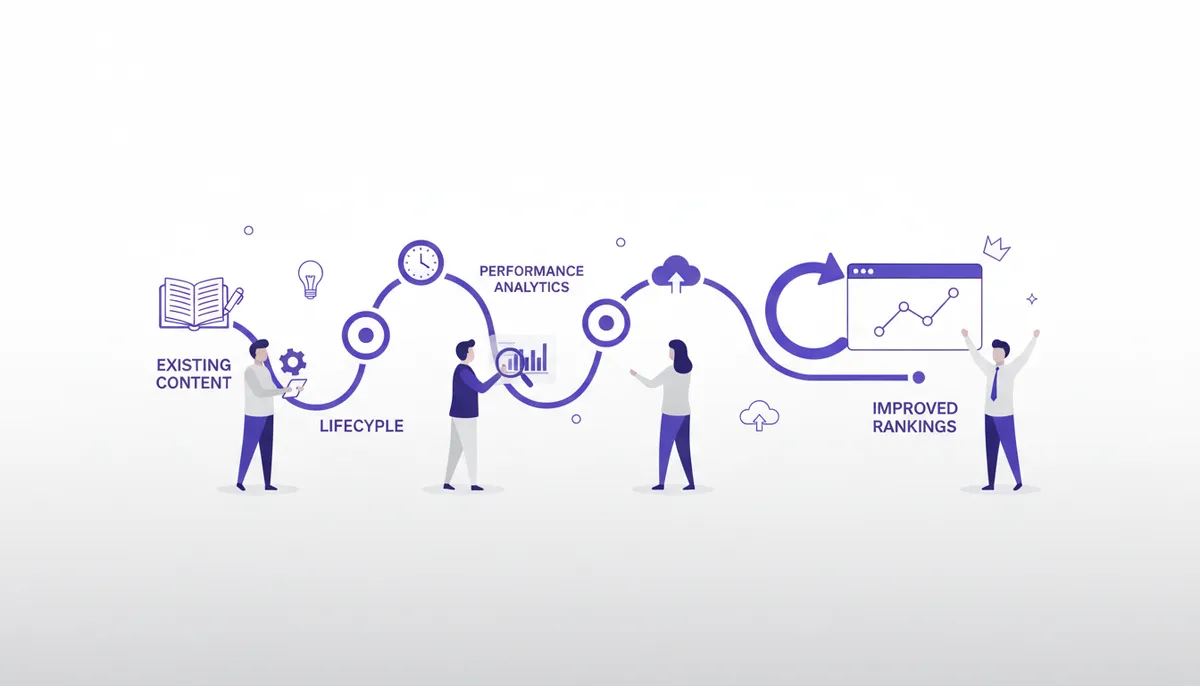
Effective content freshness SEO is a critical ranking factor in 2026, involving strategically updating existing content and publishing new material to signal timeliness and relevancy to search engines. Prioritizing freshness improves SEO performance, boosts SEO rankings, and enhances user trust, directly impacting your bottom line.
Key Takeaways
- Freshness is a Core Ranking Signal: Google explicitly uses content freshness as a signal to determine a page’s relevance, especially for queries where recency matters (Query Deserves Freshness).
- Not All Updates are Equal: Meaningful, substantial updates that improve accuracy and depth have a greater impact on rankings than minor tweaks like fixing a typo or changing a date.
- AI Search Amplifies Freshness: In 2026, AI-driven search and answer engines heavily rely on the most current and verifiable information. Fresh content is essential for earning valuable AI citations and maintaining AI visibility.
- User Experience is Key: Fresh content leads to an increased user engagement and a decreased bounce rate, as users find the up-to-date information they expect. These positive user signals reinforce your page’s authority to search engines.
- Strategic Refreshing is Efficient: Applying the 80/20 rule to your content allows you to focus your efforts on updating the 20% of pages that drive 80% of your traffic and conversions for maximum SEO impact.
- Content Decay is Real: Without regular updates, even top-performing content will lose traffic and rankings over time as information becomes outdated and competitors publish newer, more relevant material.
- Combine Freshness with Fundamentals: Content freshness is not a silver bullet. It must be part of a holistic strategy that includes strong on-page, off-page, and technical SEO best practices.
Introduction: Why Content Freshness SEO is Your Growth Lever in 2026
In the hyper-competitive digital landscape of 2026, B2B SaaS founders are constantly seeking an edge to dominate the SERPs. The answer isn’t just about creating more content; it’s about creating smarter content. This is where content freshness SEO becomes a cornerstone of any successful digital strategy. It’s the practice of keeping your website content current, accurate, and relevant to both users and search engines. This focus on timeliness and relevancy is a powerful lever for improving your SEO performance and securing higher SEO rankings.
As Google and AI systems become more sophisticated, they place an immense value on content that reflects the most current state of the world. Outdated statistics, old software screenshots, and obsolete advice don’t just frustrate users—they send negative signals to search engines, telling them your content is no longer the best answer. This guide will break down what content freshness means today, how to implement a sustainable update strategy, and why it’s more critical than ever for achieving your growth targets.
What is Content Freshness in SEO? A 2026 Perspective
Content freshness refers to how recently a web page has been published or updated. It’s a ranking factor that search engines like Google use to evaluate the relevance of a page for a given search query. However, it’s not just about changing the “last updated” date; it’s about the significance of the changes made.
Content Freshness is a search engine optimization (SEO) signal that measures the recency, timeliness, and relevance of a web page’s content. It involves both publishing entirely new content and making substantial updates to existing pages to ensure they remain accurate and valuable to the user.
Defining Content Freshness vs. Content Decay
Content Freshness is the proactive effort to keep your digital assets valuable. This can take several forms:
- Major Content Overhaul: Rewriting large sections, adding new chapters, and updating all data and examples.
- Significant Update: Adding new, relevant information, updating statistics, and replacing outdated images or links.
- Minor Update: Correcting inaccuracies, fixing broken links, or rewriting a few sentences for clarity.
Conversely, Content Decay is the natural degradation of a page’s SEO value over time. A 2026 study from Ahrefs indicates that the average top-10 page is over two years old, but for competitive keywords, newer content often pushes older, un-updated pages down the SERP. Decay happens when information becomes obsolete, competitors create better content, or search intent for the keyword evolves. Regularly updating website content is the only antidote.
Google’s QDF (Query Deserves Freshness) Algorithm
Not every search query requires a brand-new result. Someone searching for “history of the Roman Empire” doesn’t need a page created yesterday. However, a user searching for “best B2B marketing automation software 2026” absolutely does.
This is where Google’s Query Deserves Freshness (QDF) model comes in. QDF is a part of the core algorithm that identifies searches for which users expect the most recent information. These often include:
- Recent events or hot topics (e.g., “AI Model Context Protocol updates”)
- Recurring events (e.g., “SaaStr Annual conference 2026”)
- Topics with frequently changing information (e.g., “latest SEO trends,” “best project management tools”)
For these types of queries, a recently updated page receives a significant ranking boost. Ignoring QDF means you’re automatically disqualified from ranking for a huge number of valuable, timely search terms.
The Role of Timeliness and Relevancy in Modern Search
In 2026, search is no longer just about matching keywords. It’s about satisfying user intent comprehensively. Timeliness and relevancy are two sides of the same coin.
- Timeliness: Is the information current? Does it reflect the latest industry data, software versions, and best practices?
- Relevancy: Does the content accurately and deeply answer the user’s question right now?
A guide to email outreach from 2022 might be well-written, but it’s no longer relevant in a world with advanced AI personalization tools and stricter deliverability standards. Ensuring your content is both relevant and accurate for the current year is non-negotiable for maintaining top rankings.
The Impact of Keeping Content Fresh and Up-to-Date on SEO
The benefits of maintaining fresh content extend far beyond a simple date stamp on your blog posts. A commitment to freshness creates a positive feedback loop that strengthens your entire SEO foundation and has a significant impact on rankings.
Boosting SEO Rankings and SERP Visibility
The most direct benefit of content freshness is its impact on your position in the Search Engine Results Page (SERP). Search engines use several signals to gauge freshness:
- Inception Date: The date a page was first indexed.
- Last Updated Date: The date significant changes were last made.
- Frequency of Updates: How often a page is updated.
- Rate of New Page Creation: The pace at which you publish new content.
A well-executed content refresh acts as a powerful signal to Google that your page is a living document and a reliable source of up-to-date information. A 2026 HubSpot analysis found that refreshing and republishing old blog posts can increase their organic traffic by as much as 106%.
Enhancing User Engagement and Decreasing Bounce Rate
Modern Search Engine Optimization (SEO) is intrinsically linked to user experience. When a user clicks on your link and finds outdated data or broken links, they’ll leave immediately. This action increases your Bounce Rate, a negative signal to Google that your page didn’t satisfy the user’s need.
Conversely, fresh, accurate, and comprehensive content captivates the reader. This leads to:
- Increased Dwell Time: Users spend more time on your page, consuming the valuable information.
- Increased User Engagement: Users are more likely to click internal links, watch embedded videos, or download resources.
- Decreased Bounce Rate: Users find what they were looking for and don’t immediately return to the search results.
These positive engagement metrics are crucial ranking factors that validate the quality of your content to search engines.
Earning AI Citations and Improving AI Visibility
The rise of AI-powered search and answer engines (like Perplexity and Google’s SGE) has introduced a new layer to SEO: AI Visibility. These models synthesize information from multiple top-ranking sources to provide a direct answer to the user.
To be included in these answers—and earn valuable AI citations—your content must be seen as impeccably current and authoritative. AI models are trained to detect and prioritize the most recent, factual data. A page with statistics from 2023 is far less likely to be cited than a competitor’s page with verified 2026 data. Keeping your content fresh and up-to-date is therefore essential for being a primary source in the AI-driven information ecosystem.
Strategic Approaches to Smarter Content Updates
Consistently creating new content is important, but the real leverage comes from making smarter content updates. A strategic approach ensures you’re investing your resources where they will generate the highest return on your SEO efforts.
What is the 80/20 rule for SEO?
The 80/20 rule, or the Pareto Principle, is highly applicable to SEO and content strategy. In this context, it suggests that approximately 80% of your organic traffic and conversions come from the top 20% of your content.
Instead of trying to update every single blog post on your site, the 80/20 rule advises you to focus your energy on that top 20%. These are your “money pages”—the high-performers that are already driving results. By keeping these critical assets perpetually fresh and up-to-date, you protect and grow your most important revenue streams. Use Google Analytics 4 to identify these pages by filtering for organic traffic and goal completions.
Identifying Content for a Refresh vs. Creating New Content
How do you decide whether to update an old post or write a new one? Use this framework:
- Refresh Existing Content When:
- The page already has some keyword rankings (page 1-3) and existing backlinks.
- The core topic is still highly relevant, but the details (stats, examples, tools) are outdated.
- The search intent for the primary keyword has remained stable.
- The URL is strong and has authority.
- Create New Content When:
- You are targeting a completely new keyword or topic cluster.
- The search intent for an old topic has fundamentally shifted, requiring a new angle.
- The old content is so outdated that a refresh would require a complete rewrite, making a fresh start easier.
- You need to cover a breaking news event or a new trend.
A Step-by-Step Guide to Updating a Recently Updated Page
Updating a page goes beyond fixing typos. A substantial refresh that moves the needle on your SEO rankings involves a structured process:
- Analyze SERP and Competitors: Search for your target keyword in 2026. What are the top-ranking pages covering? What new subtopics, data, or formats are they using?
- Gather New Data and Statistics: Find the latest reports, studies, and statistics for the current year. Replace all outdated numbers and cite your new sources.
- Expand and Deepen Content: Add new sections to cover angles your competitors are missing. Answer more user questions. Add a FAQ section using questions from the “People Also Ask” box on Google.
- Update Visuals: Replace old screenshots with new UI from 2026. Create new graphs with the latest data. Add a relevant video if possible.
- Optimize On-Page SEO: Re-evaluate your title tag, meta description, headers, and internal linking to ensure they are still optimized and compelling.
- Check for Accuracy and Broken Links: Run a link check and meticulously review the entire article to ensure every statement is relevant and accurate.
- Republish and Promote: Change the “last updated” date. In some platforms, you can republish with the current date. Promote the newly updated article on social media and to your email list as if it were new content.
The Evolving Landscape: Is SEO Dead or Evolving in 2026?
The question “Is SEO dead?” appears every year, and the answer in 2026 is a definitive no. SEO is not dead; it is evolving at an unprecedented pace, driven by the integration of Google and AI.
The Symbiosis of Google and AI Search
Traditional SEO focused on ranking a list of ten blue links. Today, the goal is broader: achieving visibility across a diverse SERP that includes AI-powered overviews, featured snippets, video carousels, and “People Also Ask” sections.
AI visibility and traditional SEO are now two sides of the same coin. The same signals that Google uses to determine quality, authority, and relevance—including content freshness—are the signals AI models use to select sources for their answers. Optimizing for one inherently helps the other. A strategy that ignores content freshness is a strategy that will fail in both traditional and AI-driven search environments.
What are the 4 types of SEO?
To succeed, your content freshness strategy must be supported by a solid foundation in the four core pillars of SEO. Keeping a regularly updating website is part of on-page SEO, but it relies on the other three.
- On-Page SEO: Optimizing individual web pages to rank higher and earn more relevant traffic. This includes content quality, keyword optimization, title tags, internal links, and content freshness.
- Off-Page SEO: Actions taken outside of your own website to impact your rankings. This is primarily driven by building high-quality backlinks from other authoritative sites. Fresh, data-rich content is more likely to earn these valuable links.
- Technical SEO: Improving the technical aspects of a website to help search engines crawl and index the site more effectively. This includes site speed, mobile-friendliness, structured data, and XML sitemaps.
- Local SEO: Optimizing your online presence to attract more business from relevant local searches. This is critical for brick-and-mortar businesses and service-area businesses.
Why Regularly Updating Website Content is More Critical Than Ever
In 2026, the pace of change is faster than ever. New technologies emerge, new data is published, and consumer behavior shifts. A regularly updating website signals to users and search engines that your brand is active, engaged, and authoritative. It builds trust and demonstrates that you are a reliable source of up-to-date information in your industry. For B2B SaaS, where technology and best practices evolve quarterly, maintaining fresh content isn’t just an SEO tactic—it’s a business imperative.
Tools and Technologies for Mastering Content Freshness SEO
Manually tracking and updating hundreds of articles is inefficient. Leveraging the right technology is key to implementing a scalable and effective content freshness strategy.
AI-Powered Content Optimization Tools
These platforms analyze top-ranking content for a given search query and provide data-driven recommendations to help you create more comprehensive and competitive content. They are invaluable for identifying gaps in your existing articles during a refresh.
| Tool | Key Feature | Best For |
|---|---|---|
| Surfer SEO | Real-time content editor with term frequency suggestions and a content score. | On-page optimization and ensuring comprehensive coverage of a topic during a content refresh. |
| MarketMuse | AI-driven content briefs, topic modeling, and personalized difficulty metrics. | Building long-term content strategies and identifying high-opportunity keywords and clusters. |
| Clearscope | A streamlined editor that focuses on LSI keywords and content grading. | Content writers and teams looking for a simple, effective tool to optimize individual articles. |
Analytics and Monitoring Platforms
You can’t improve what you don’t measure. These tools help you identify which pages are decaying, which keywords are losing rank, and where your best update opportunities lie.
- Google Analytics 4 (GA4): Essential for tracking traffic, user engagement, and conversions on a per-page basis. Use it to find your top 20% of content.
- Semrush: An all-in-one SEO suite that offers robust rank tracking, keyword research, and a “Content Audit” tool specifically designed to help you find pages that need an update.
- Ahrefs: Another industry-leading SEO platform known for its powerful backlink index and “Content Gap” analysis, which helps you see what competitors rank for that you don’t.
Leveraging AI for Scalable Content Refreshes
Generative AI tools can act as a powerful assistant in the content refresh process, helping you scale your efforts without sacrificing quality.
- Jasper: An advanced AI writing assistant that can help you rewrite outdated paragraphs, brainstorm new sections, summarize recent research, and expand on existing points in your brand voice.
- Copy.ai: Excellent for generating new headlines, meta descriptions, and social media copy to promote your newly updated content.
Remember, AI should be used to augment, not replace, human expertise. Use these tools to accelerate research and drafting, but always have a human subject matter expert review and edit for accuracy and nuance.
How MSH Can Elevate Your Content Strategy
Implementing a sophisticated content freshness SEO strategy requires expertise, data analysis, and consistent execution. It’s more than just changing a few words; it’s a core component of a modern growth engine.
At MSH, we specialize in building AI-powered SEO and marketing automation systems for ambitious B2B SaaS companies. We don’t just write blog posts; we build content ecosystems that attract, engage, and convert your ideal customers. We integrate content freshness into a holistic strategy that includes technical SEO, authority building, and conversion rate optimization.
Explore our services to see how we can help you build a content program that dominates the SERPs in 2026 and beyond. If you’re ready to turn your website into a predictable growth channel, contact us today for a consultation.
Essential Elements for Success
A winning strategy must account for: ongoing effort, site’s SEO performance, recent developments. Each of these elements strengthens your content freshness seo and ensures comprehensive market coverage.
Additional Strategic Considerations
Don’t overlook: demanding niches, publish dates. Integrating these components into your content freshness seo creates a well-rounded approach that outperforms competitors.
To maximize results, focus on smarter content updates as part of your overall framework.
Frequently Asked Questions (FAQ)
What is content freshness in SEO?
Content freshness is a search ranking factor that refers to the timeliness of information on a web page. Search engines like Google favor fresh, updated content for queries where recency is important, as it provides a better user experience.
Is SEO dead or evolving in 2026?
SEO is not dead; it is rapidly evolving. In 2026, SEO success requires a holistic strategy that integrates traditional best practices with optimization for AI-driven search, voice search, and rich SERP features. Core principles like content quality and freshness are more important than ever.
How often should you update content for SEO?
This depends on the topic. For fast-moving topics like technology or marketing trends, a quarterly or bi-annual review is ideal. For more evergreen topics, an annual review may suffice. Use analytics to prioritize updating pages that are showing signs of traffic decay.
What is the 80/20 rule for SEO?
The 80/20 rule for SEO, or the Pareto Principle, suggests that roughly 80% of your organic traffic and results come from 20% of your content. This principle guides content strategy by focusing update efforts on the most valuable and impactful pages first.
Does updating the publish date help SEO?
Simply changing the date without making significant changes to the content is an old tactic that no longer works and can be seen as manipulative. To get a ranking boost, you must make substantial, meaningful updates that improve the content’s quality, accuracy, and comprehensiveness.
What are the 4 types of SEO?
The four main types of SEO are: 1) On-Page SEO (content, keywords, HTML tags), 2) Off-Page SEO (backlinks, brand mentions), 3) Technical SEO (site speed, crawlability, indexing), and 4) Local SEO (for geo-specific searches).
How does content freshness impact AI Visibility?
AI search models and answer engines are designed to provide the most accurate, current information. They heavily favor and cite sources that are demonstrably up-to-date. Maintaining content freshness is therefore critical for earning AI citations and ensuring your brand is visible in AI-generated search results.
Sources & Further Reading
- Google Search Quality Rater Guidelines: https://static.googleusercontent.com/media/guidelines.raterhub.com/en//searchqualityevaluatorguidelines.pdf
- Semrush – Google Algorithm Updates: https://www.semrush.com/blog/google-algorithm-updates/
- Backlinko – Search Engine Ranking Factors Study: https://backlinko.com/search-engine-ranking
- Ahrefs – Content Decay Study: https://ahrefs.com/blog/content-decay/
- HubSpot – The Benefits of Historical Optimization: https://blog.hubspot.com/marketing/historical-blog-post-optimization-stats


0 Comments